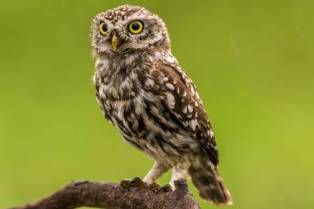
Shelf read
From Twilight to Midnight: Revealing the Enigmatic Universe of Owls
As the golden sun bows down and veils the world in darkness, a mystical presence takes to the skies. This enigmatic figure is no caped hero from a silver screen, but rather nature's own superhero – the owl. With an uncanny ability to navigate unseen and to hunt with unparalleled precision, these feathered nocturnal beings have ignited our collective imagination since time immemorial. Woven into myths and folklore from around the globe, owls carry profound cultural significance, embodying wisdom, magic, and, at times, a harbinger of doom. With adaptations fine-tuned for survival in both daylight and darkness, owls have intrigued and captivated humanity in countless ways.
Aurora Lux
Library note
Reading tip
The full chapter continues below on the soft reading shelf.
Stack
Pocket Library
As the golden sun bows down and veils the world in darkness, a mystical presence takes to the skies. This enigmatic figure is no caped hero from a silver screen, but rather nature's own superhero – the owl. With an uncanny ability to navigate unseen and to hunt with unparalleled precision, these feathered nocturnal beings have ignited our collective imagination since time immemorial. Woven into myths and folklore from around the globe, owls carry profound cultural significance, embodying wisdom, magic, and, at times, a harbinger of doom. With adaptations fine-tuned for survival in both daylight and darkness, owls have intrigued and captivated humanity in countless ways.
On International Owl Awareness Day, let's embark on a journey into the intricate world of these raptors. Join us as we unravel the secrets of their vision, habitats, diets, and the formidable challenges they encounter in our ever-evolving world.
Where to Cross Paths with Them?
The quest to spot owls can be an enthralling adventure, as these birds inhabit a diverse spectrum of landscapes. From lush woodlands and expansive grasslands to rugged mountain ranges and the marshy fringes of rivers, owls have adeptly adapted to a multitude of habitats. Remarkably, these avian enigmas also thrive amidst the hustle and bustle of urban landscapes.
The Uniqueness of Their Vision
Owls are endowed with extraordinary vision that sets them apart from their avian counterparts. Their binocular vision, characterized by a narrow field of view, affords them unparalleled depth perception, a vital asset for hunting in low-light conditions. With large, immobile eyes set in fixed sockets, they possess the inability to roll their eyes. However, the remarkable capacity to swivel their heads up to 270 degrees is a biological adaptation that enables them to observe their surroundings from numerous angles without moving the rest of their bodies.
This head-turning prowess, unaffected by damage to blood vessels, is made possible by the presence of 14 vertebrae in the neck region. Various owl species, such as the Indian eagle owl, exploit this exceptional ability to become proficient hunters, detecting even the slightest motions of their prey.
What Nourishes Them?
Owls showcase a captivating array of dietary preferences meticulously tailored to their specific habitats and hunting techniques. Fish owls, closely associated with aquatic environs, predominantly feed on fish and amphibians. Mottled wood owls, renowned for their adept hunting skills, favor a diet comprised of small mammals, including rodents and hares.
The versatile barn owls, celebrated for their efficiency as pest controllers, target rodents, bats, frogs, and lizards to satiate their appetites. In a single breeding season, a family of five owls can devour up to 3,000 rodents, a role that diminishes the need for pesticides and insecticides, thereby promoting a healthier ecosystem. Moreover, these raptors contribute to disease prevention, acting as a bulwark against the propagation of zoonotic diseases.
Intriguingly, owls lack a crop, a specialized sac present in the throats of many birds for food storage. Instead, they ingest their prey whole or in parts, subsequently regurgitating indigestible remnants, including bones, fur, and teeth, in the form of pellets.
Masters of Camouflage
Owls have honed the art of camouflage to perfection, transforming themselves into masters of concealment. Scops owls adorn themselves with feathers that range in shades of brown, black, and grey, allowing them to seamlessly blend into their surroundings. This exceptional ability renders them nearly invisible against the backdrop of tree bark, where they prefer to roost. The collared scops owl and the Indian scops owl epitomize this remarkable camouflage. When threatened, they remain motionless, contorting their bodies to mimic a branch, thereby confounding predators and inquisitive observers.
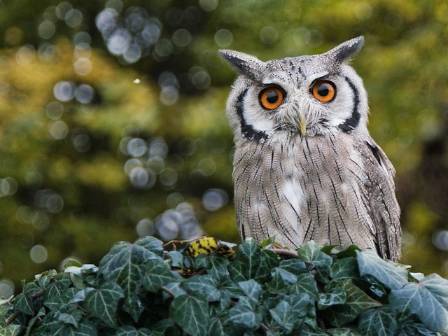
Diverse Avian Portraits
India plays host to a staggering array of owls, with over 32 distinct species inhabiting its varied landscapes. While they may appear indistinguishable to the untrained eye, each of these species possesses unique and captivating traits.
Owls are categorized into two families – true owls (Strigidae) and barn owls (Tytonidae). True owls are defined by distinct features, including large, vividly colored eyes and the presence of ear tufts. Barn owls, on the other hand, are recognized by their smaller size, small dark eyes, and heart-shaped facial features.
Several owl species in India boast pronounced characteristics. For instance, the spot-bellied eagle owl is adorned with heart-shaped spots and a prominent yellow beak, while the dusky eagle owl sports distinctive ear tufts. The Asian barred owlet, with its distinct barred and streaked plumage, exemplifies the remarkable diversity of appearances within the owl kingdom.
The Symphony of Owl Calls
In spite of their stealthy flight, owls are vocal creatures, renowned for their unique and sometimes eerie vocalizations, which exhibit remarkable variations among species. While hooting is the most commonly associated sound with owls, depicted extensively in popular culture, not all owls are known for this particular call. These birds orchestrate a wide range of sounds, spanning hoots, whistles, screeches, screams, purrs, snorts, and chitters to hisses.
Barn owls, with their screeching and hissing calls, can be heard over substantial distances, even in urban settings. The mottled wood owl employs loud and distinct hoots as its signature call, divulging its location. Hoots frequently serve as territorial calls and are often entwined with courtship rituals.
Diverse Activity Patterns
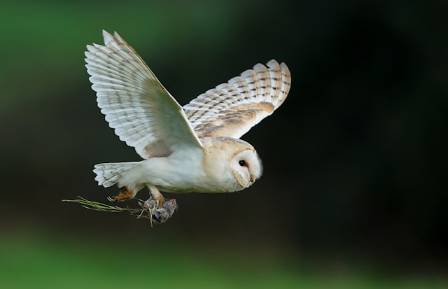
While the phrase "night owl" may create a specific image, it can be misleading since not all owls are strictly nocturnal. These birds exhibit a fascinating array of activity patterns, with some adhering solely to nocturnal hunting while others are active during both day and night. Classic examples of nocturnal raptors include the great horned owl and the barn owl.
In contrast, the Indian scops owl is a crepuscular species, actively hunting during the transitional periods of dawn and dusk. The brown fish owl can be observed hunting both day and night, capitalizing on the availability of fish and aquatic crustaceans. The varied activity patterns of owls are often influenced by the abundance of their prey.
For most species, a reliable indicator of when owls embark on their hunting endeavors is the color of their eyes. Dark eyes typically signify a nocturnal bird, while orange eyes denote a crepuscular raptor, and yellow eyes indicate a diurnal bird.
Under Threat
Similar to numerous species, owls face a myriad of threats that imperil their existence in the wild. In addition to falling victim to illegal trade, their habitats are besieged by widespread deforestation, urbanization, pollution, and the impacts of climate change. These disruptions in their natural surroundings present significant challenges in locating suitable nesting sites and productive hunting grounds for these raptors.
Moreover, one of the most pressing threats is the illegal trade in owls, driven by superstitious beliefs and the practices of black magic. Different parts of these birds, including their ear tufts, bones, and organs, are sought after for use in rituals, perpetuating harmful myths. This alarming trade exacerbates the pressures on their populations, rendering them more vulnerable to extinction.
On this International Owl Awareness Day, let us deepen our appreciation for these magnificent creatures, learning more about the intricate web of their existence. As guardians of our ecosystems and bearers of ancient wisdom, owls deserve our respect, understanding, and unwavering protection in the face of a changing world.
COVER · en

8 Wooden Chair Designs That Will Transform Your Home
Wooden chairs are a classic addition to any home, bringing warmth, durability, and a natural touch to your decor. Whether you're looking to upgrade your living room, bedroom, or dining area, a wooden chair can elevate the overall aesthetic. From minimalist designs to rustic finishes, there’s a wide range of options to suit every style. Below, we explore some of the most popular wooden chair designs that can add personality and comfort to your home.
COVER · en
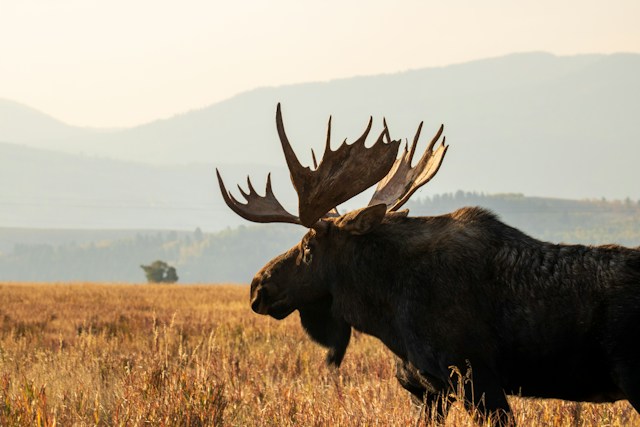
Moose: The Giant of the Deer Family
A moose can often be seen crossing a mountain lake, paddling toward the forested shore. As it leaves the water, droplets fall from its massive antlers, which can measure nearly six feet (1.8 meters) across. Once it reaches land, the animal disappears among the surrounding trees.
COVER · en

Best Off-Road Vehicles in 2026
The best off-road vehicles are designed to match different levels of driver experience, from casual weekend trail users to serious overlanding enthusiasts. A strong foundation is essential, and most capable models use rugged body-on-frame construction paired with advanced 4WD systems.
COVER · en

The Beauty of Crevice Gardens
Who hasn’t been amazed by a dandelion pushing through a small sidewalk crack or a tree surviving on a rocky cliff? These examples remind us that plants can adapt to environments that seem impossible for growth. Many species have evolved to live in harsh conditions, and the combination of delicate foliage and flowers against rugged stone creates a unique visual effect. Crevice gardening gives gardeners the opportunity to recreate these natural scenes while experimenting with an unusual and artistic style of planting.
COVER · en

10 Epic Coastal Cliffs
Coastal cliffs exist all over the globe, shaped slowly over time by powerful natural forces. Most are formed through long-term erosion or sudden large-scale rock collapses. Relentless ocean waves—especially during storms—continually strike the shoreline, breaking down rock and soil and carrying the debris back into the sea.
COVER · en

What Is Sea Surface?
The ocean surface forms the transition zone between the marine environment and the atmosphere. It extends from the air–water boundary downward several meters into the upper ocean and upward into the lowest region of the atmospheric boundary layer. This dynamic interface is where energy, momentum, moisture, gases, and heat are constantly transferred between two interacting fluid systems that influence Earth’s climate.