Shelf read
What Is Sea Surface?
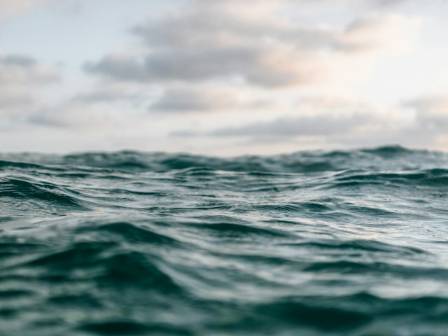
The ocean surface forms the transition zone between the marine environment and the atmosphere. It extends from the air–water boundary downward several meters into the upper ocean and upward into the lowest region of the atmospheric boundary layer. This dynamic interface is where energy, momentum, moisture, gases, and heat are constantly transferred between two interacting fluid systems that influence Earth’s climate.
Ophelia Crane
Library note
Reading tip
The full chapter continues below on the soft reading shelf.
Stack
Pocket Library
The ocean surface forms the transition zone between the marine environment and the atmosphere. It extends from the air–water boundary downward several meters into the upper ocean and upward into the lowest region of the atmospheric boundary layer. This dynamic interface is where energy, momentum, moisture, gases, and heat are constantly transferred between two interacting fluid systems that influence Earth’s climate.
Because the sea surface plays a major role in controlling radiation exchange, evaporation, atmospheric gas transfer, and the formation of waves, studying its physical characteristics is essential for understanding both ocean processes and atmospheric behavior.
The sea surface is shaped by multiple connected processes, including wind-driven gravity waves, temperature and salinity variations in the upper ocean, sea surface temperature (SST), and floating surface materials such as organic films that can modify surface roughness. These elements influence one another, with wind acting as the main source of mechanical energy while sunlight determines the thermal conditions near the uppermost layer of the ocean.
Surface Waves
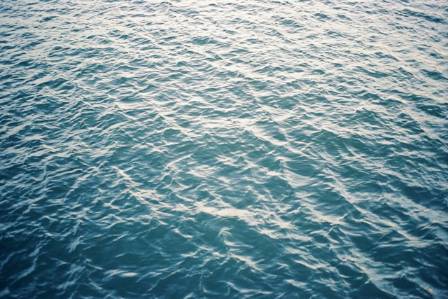
Waves are among the most noticeable features of the ocean surface. They develop when wind transfers energy and momentum to the water through pressure forces and friction occurring at the air–sea boundary.
The formation and growth of waves are mainly determined by three conditions: wind strength, the length of time the wind continues to blow, and fetch, which refers to the uninterrupted distance across the water where wind energy is applied. When wind conditions remain consistent for a long period, waves gradually reach a fully developed state with a predictable energy distribution pattern.
Ocean waves carry energy across large distances while the water itself does not move forward with the wave as a whole. Instead, individual water particles follow circular or orbital movements and return close to their original locations after the wave passes. When waves approach shallow coastal areas, interaction with the seabed changes their motion, leading to wave steepening, bending, and eventually breaking. This process releases energy and contributes to the movement of sediments and the mixing of coastal ecosystems.
Air-Sea Interaction
The movement of heat, momentum, and materials across the ocean surface has a significant impact on global climate systems. Wind-driven stress on the surface generates ocean circulation patterns, including major gyres and equatorial currents that transport heat from warmer tropical regions toward higher latitudes.
Heat exchange between the ocean and atmosphere occurs through different processes, including latent heat transfer caused by evaporation and sensible heat exchange through direct conduction. These interactions regulate sea surface temperature, which then affects atmospheric circulation, cloud formation, and rainfall patterns.
Small-scale turbulent movements near the surface also control the absorption and release of carbon dioxide, making the ocean surface a vital component of the global carbon cycle. Modern oceanographic research uses tools such as drifting buoys, Argo profiling floats, and airborne instruments to observe these exchanges in detail under a wide range of conditions, from calm ocean environments to powerful storms.
Advanced models, including large-eddy simulations, are used to examine how wind interacts with waves and surface structures at small scales. These studies improve understanding of air–sea coupling and help enhance weather forecasting and climate prediction systems.
Remote Sensing of the Sea Surface
Satellite technology has greatly expanded scientists’ ability to observe the ocean surface across the globe. Space-based instruments provide continuous measurements of important surface characteristics over large areas that would be difficult to monitor using only ships and buoys.
Infrared and microwave sensors are used to measure sea surface temperature worldwide, while satellite altimeters monitor changes in sea level and ocean circulation by detecting variations in surface height.
Synthetic Aperture Radar (SAR) technology captures detailed patterns of surface roughness, allowing researchers to estimate wind conditions, wave characteristics, and surface current features. Passive microwave instruments can also determine sea surface salinity by analyzing the L-band brightness temperature emitted from the ocean surface.
Together, these remote sensing methods provide valuable information about ocean dynamics, climate processes, and the ongoing interactions between the sea and atmosphere.
COVER · en

Stunning Ways To Fill An Awkward Corner In Your Entryway
Entryways and foyers often contain strange corners that are surprisingly difficult to decorate. Furniture may be too large, too narrow, or simply not practical enough for the available area. Odd angles, limited floor space, and inconvenient dimensions can make finding the right piece feel almost impossible.
COVER · en

Best parrots to have as pets
The diversity found among parrot species is much like the diversity among dog breeds. A Great Dane and a Pekingese are both dogs, but the type of home that works well for one may be completely unsuitable for the other. Parrots are much the same, with different species having very different requirements, personalities, and lifestyles.
COVER · en
King Penguin
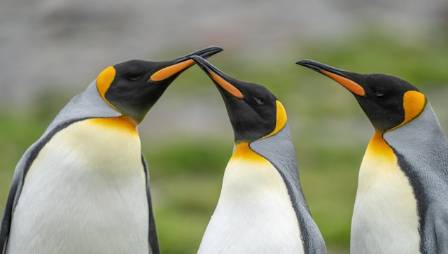
King penguins occupy a broad range across the sub-Antarctic region, forming large breeding colonies on islands scattered in a rough circle around the Antarctic continent. Their primary habitats include the Crozet Islands, Falkland Islands, Heard Island, Kerguelen Islands, Macquarie Island, Prince Edward Islands, South Georgia, and the South Sandwich Islands. These remote locations provide the cold but relatively stable environments that the species depends upon.
COVER · en

3 ways make Birthday a Shared Experience
Early childhood and adolescent birthdays often center around specific legal and societal milestones, such as enjoying a first slice of cake, entering the teenage years, gaining driving privileges at sixteen, or reaching legal adulthood. Eventually, the focus shifts away from numerical age toward the accumulation of meaningful life chapters. Annual markers transform into a collective memory of adventures, challenges, and shared laughter. These celebrations provide an annual opportunity to honor an individual's distinct identity and appreciate the journey of life itself, rather than simply counting the passage of time.
COVER · en
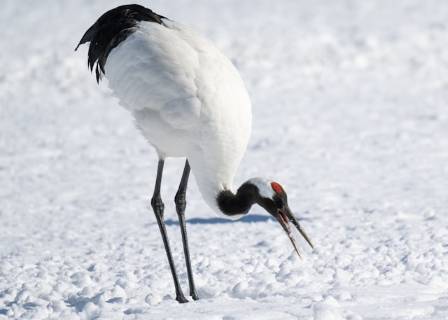
The Majestic Red-Crowned Crane
The red-crowned crane is one of the largest and heaviest crane species in the world. Adults usually reach a height of approximately 150 to 158 cm (4 ft 11 in to 5 ft 2 in) and weigh between 4.8 and 10.5 kg (11 to 23 lbs). Their impressive wingspan can extend from 220 to 250 cm (7 ft 3 in to 8 ft 2 in), giving them a powerful and elegant presence in flight.
COVER · en

Choosing a Floor Lamp
A floor lamp is one of those home accessories that combines practicality with style. It can provide useful lighting while also serving as an attractive decorative feature that complements the rest of a room. Since floor lamps come in countless shapes, sizes, and designs, it’s easy to find an option that works with almost any decorating style.