Shelf read
The Majestic Red-Crowned Crane
The red-crowned crane is one of the largest and heaviest crane species in the world. Adults usually reach a height of approximately 150 to 158 cm (4 ft 11 in to 5 ft 2 in) and weigh between 4.8 and 10.5 kg (11 to 23 lbs). Their impressive wingspan can extend from 220 to 250 cm (7 ft 3 in to 8 ft 2 in), giving them a powerful and elegant presence in flight.
Noah Bennett
Library note
Reading tip
The full chapter continues below on the soft reading shelf.
Stack
Pocket Library
The red-crowned crane is one of the largest and heaviest crane species in the world. Adults usually reach a height of approximately 150 to 158 cm (4 ft 11 in to 5 ft 2 in) and weigh between 4.8 and 10.5 kg (11 to 23 lbs). Their impressive wingspan can extend from 220 to 250 cm (7 ft 3 in to 8 ft 2 in), giving them a powerful and elegant presence in flight.
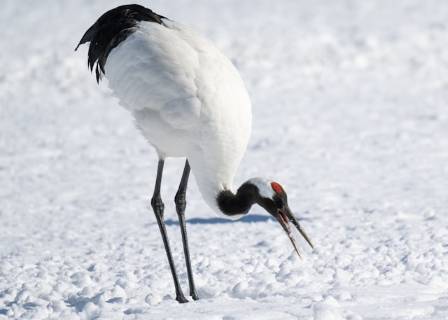
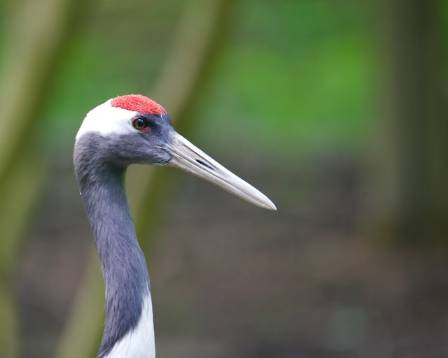
The bird’s most recognizable feature is the vivid red patch of bare skin on the top of its head, which becomes especially bright and noticeable during the breeding season. Most of the body is covered with brilliant white feathers, while the black secondary wing feathers create the illusion of a black tail when the crane is standing still.
Male red-crowned cranes have black feathers covering their cheeks, throat, and neck, while females display softer pearly gray tones in these areas. Their beaks range from olive green to greenish horn-colored, their legs are slate gray to dark gray-black, and their eyes feature deep brown irises.
Habitat and Distribution Across East Asia
Red-crowned cranes have a relatively restricted distribution in East Asia. Their breeding areas include southeastern Russia, northeastern China, and parts of Mongolia. During the winter months, they migrate to rivers, coastal wetlands, freshwater marshes, and other suitable habitats across Japan, China, and the Korean Peninsula.
There are two major populations of this species. One is a migratory population that moves throughout mainland East Asia, while the other is a non-migratory population that lives year-round on Japan’s northern island of Hokkaido.
These cranes rely heavily on wetlands, marshes, and river areas with deep water and abundant vegetation for nesting. In winter, they are commonly found in rice fields, grassy coastal areas, and muddy tidal flats, where they search for food. The destruction and separation of wetland habitats have become some of the greatest challenges affecting their survival.
Diet and Feeding Habits of Red-Crowned Cranes
Red-crowned cranes are omnivorous birds with a varied diet that includes both plant and animal materials. They consume foods such as rice, parsley, carrots, acorns, buckwheat, and aquatic vegetation. They also hunt animals including fish, frogs, snails, crabs, insects, shrimp, small reptiles, and occasionally small birds.
Among crane species, red-crowned cranes are considered highly carnivorous, sharing this characteristic with species such as the whooping crane.
When searching for food, these cranes often walk slowly with their heads lowered close to the ground. Once they detect prey, they quickly thrust their bills into mud or shallow water to capture it. Their long necks allow them to strike rapidly, much like herons. Larger prey items are often pulled apart by gripping them with the bill and shaking them forcefully.
Their main feeding areas include wet grasslands, agricultural fields, shallow streams, and the edges of lakes where food sources are plentiful.
Breeding Patterns and Social Behavior
Red-crowned cranes are monogamous birds that usually form lifelong pair bonds. Their courtship rituals are among the most beautiful behaviors displayed by cranes. During these performances, pairs move together in coordinated steps, throw their heads backward, and produce synchronized musical calls.
This graceful dancing behavior helps strengthen the relationship between partners and plays an important role in pair formation.
The breeding season generally takes place between April and May. During this period, crane pairs establish territories ranging from about 1 to 7 square kilometers (0.39 to 2.70 square miles). Both parents participate in building nests, which are usually constructed in open areas on wet ground or in shallow water.
Females typically lay two eggs, and both parents share incubation duties for approximately 30 days. After hatching, chicks remain near the nest during their early weeks and begin following their parents while searching for food at around three months old. Young cranes become capable of flight after roughly 95 days but often continue staying with their parents for about nine months.
Cultural Importance in China, Japan, and Korea
The red-crowned crane has deep cultural meaning throughout East Asia, especially in China, Japan, and Korea. In Chinese traditions, particularly Taoism, cranes symbolize longevity and immortality. Ancient artwork often portrays immortals riding cranes, and the bird has long been associated with wisdom, nobility, and a long life.
In Japan, the red-crowned crane is called “tancho” and is traditionally believed to live for a thousand years. It is featured on the 1,000-yen banknote and appears in the emblem of Japan Airlines. The folded paper crane, or origami crane, represents peace and hope, while the tradition of folding one thousand cranes is believed to bring good fortune and fulfill wishes.
In Korean culture, the crane is known as “durumi” and represents qualities such as purity, peace, and longevity. Its elegant appearance has made it an important symbol in traditional art and storytelling.
Conservation Status and Major Threats
The red-crowned crane is currently listed as Vulnerable on the IUCN Red List. According to population estimates from 2020, approximately 3,050 individuals remain worldwide.
The main threats affecting red-crowned crane populations include:
Habitat destruction and fragmentation caused by farming expansion, industrial growth, and increasing human activity
Disturbance from people near breeding and nesting locations
Illegal hunting and the collection of eggs
Exposure to pesticides and other environmental pollutants
Collisions with electrical power lines
Changes in farming methods that reduce available food sources
The possibility of disease spreading at artificial feeding areas
The continued decline of suitable wetland environments remains one of the greatest concerns for the future of this species.
Conservation Efforts to Save the Red-Crowned Crane
Many conservation programs have been established to protect red-crowned cranes and preserve their natural habitats. In Japan, the Hokkaido population was once close to extinction during the early 20th century, but protective laws, winter feeding programs, and public conservation efforts have helped the population recover. However, suitable breeding areas remain limited.
Across China, Russia, and the Korean Peninsula, cooperation between countries is essential because many crane populations migrate across international borders. Important conservation actions include:
Protecting and restoring wetland ecosystems
Creating nature reserves and protected areas
Promoting environmentally responsible farming and water management
Studying crane populations through research and long-term monitoring
Educating local communities and encouraging public participation in conservation
Improving enforcement against illegal hunting and egg collection
Working internationally to protect migration routes and wintering habitats
Organizations such as the International Crane Foundation and WWF cooperate with governments, scientists, and communities to support the survival of this remarkable bird. Protecting red-crowned cranes also helps preserve the wetlands they depend on, benefiting many other species and maintaining important ecological systems.
The Future of the Red-Crowned Crane
The red-crowned crane is one of East Asia’s most iconic and treasured birds. With its brilliant red crown, pure white feathers, and graceful movements, it has become a symbol of happiness, loyalty, peace, and long life in many cultures.
Despite its beauty and cultural importance, the species continues to face serious challenges from habitat loss and human disturbance. Continued conservation work and international cooperation are essential to ensure that future generations can continue to admire these magnificent cranes in the wild.
COVER · en
Sting Rays at California State Beaches
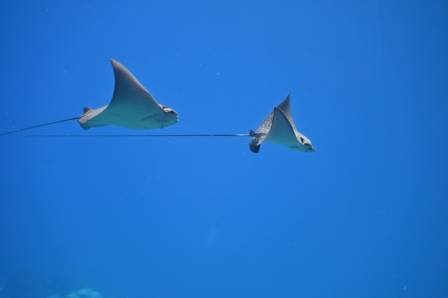
Stingrays are bottom-dwelling fish that are often found partially hidden beneath the sand in shallow coastal waters. Their bodies are broad and flattened, with their eyes and nostrils positioned on the upper surface, while their mouths and gill openings are located underneath.
COVER · en

Defining the Nature and Classification of Planets
The term "planet" originates from the Greek word planētes, which translates to "wanderers." In a broad scientific sense, a planet is a substantial natural satellite that revolves around a star, such as our Sun, but does not generate its own light through internal nuclear fusion. Beyond this basic description, the scientific community often applies specific criteria regarding an object's dimensions, mass, and physical form to distinguish it from smaller celestial debris.
COVER · en

9 Amazing Secrets of Snowy Mountain Ranges
Snowy mountain landscapes are far more than just stunning scenic spots. They generously supply pure water resources for nature and human communities, shelter one-of-a-kind highland wildlife, and offer fun and exciting outdoor activities including snow sports and peak hiking. These wonderful natural landforms effectively stabilize global climate conditions and spark endless creative ideas for creators with their grand and elegant scenery. Serving as nature’s high-altitude water storage systems, melting snow on mountain tops feeds countless rivers and streams on Earth. These highland areas are also habitats for rare alpine creatures and unique plants, bringing diverse and thrilling outdoor challenges for adventure lovers of all ages.
COVER · en
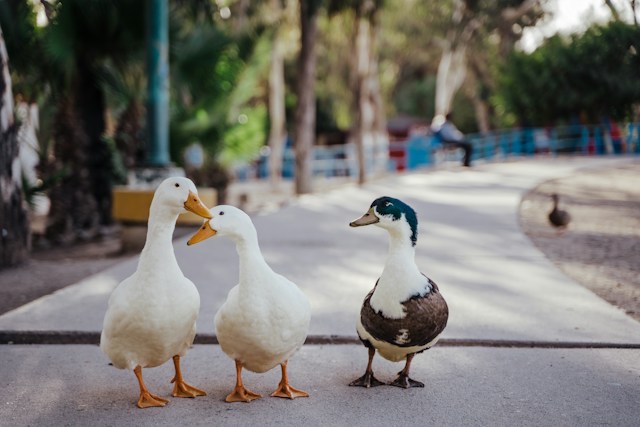
The Familiar Wild Duck of the Northern Hemisphere
Mallard ducks are among the most common and recognizable wild ducks throughout the Northern Hemisphere. They thrive in a wide range of freshwater habitats, including ponds, marshes, streams, rivers, and lakes.
COVER · en

Ten Ways the Ocean Boosts Your Well-Being
Seawater is a treasure trove of minerals like potassium, magnesium, chloride, and sodium. These not only work wonders for your hair and skin but also bolster your immune system by combating infections and reducing inflammation. It's no wonder individuals with skin conditions like eczema are often advised to take a dip in the sea as part of their treatment.
COVER · en

Fascinating Insights and Historical Tidbits Regarding Buses
Buses are remarkable vehicles that play a vital role in global mobility and education. From their humble beginnings as horse-drawn carriages to the massive articulated machines of today, the history of the bus is filled with unique milestones. Exploring these facts reveals how transportation has evolved to serve the public more efficiently across different eras and continents.