Shelf read
Essential Facts and Unique Behaviors of Global Seabirds
The classification of avian species near the ocean—often categorized as seabirds, shorebirds, or waterbirds—can be quite fluid. For the purpose of understanding these remarkable creatures, we use the term "seabird" as a broad category to explore the fascinating biological adaptations and lifestyles that allow them to thrive in maritime environments.
Grace Hill
Library note
Reading tip
The full chapter continues below on the soft reading shelf.
Stack
Pocket Library
The classification of avian species near the ocean—often categorized as seabirds, shorebirds, or waterbirds—can be quite fluid. For the purpose of understanding these remarkable creatures, we use the term "seabird" as a broad category to explore the fascinating biological adaptations and lifestyles that allow them to thrive in maritime environments.
Extraordinary Avian Navigators and Divers
If there were an olympic competition for long-distance travel, the Arctic Tern would undoubtedly secure the gold medal annually. This bird completes a round-trip migration between the Arctic and the Antarctic, covering a staggering distance of over 22,000 miles each year. Equally impressive is the Sooty Tern, which is known to remain airborne for several years at a time without ever touching land.
Seabirds also possess unique physiological traits that allow them to survive on the open ocean. They are able to drink salt water exclusively because of specialized desalinization glands located in their heads. These glands filter out excess salt, which is then excreted through the bird's nostrils.
When it comes to exploring the depths, the Emperor Penguin is the champion diver, reaching depths of up to 870 feet. Among flying species, loons are the most proficient, diving as deep as 262 feet. Other species, such as cormorants, are "pursuit divers" that use their feet to propel themselves underwater to snag fish. Meanwhile, "plunge divers" like pelicans, gannets, and boobies use vertical momentum—sometimes starting from 150 feet in the air—to drive themselves up to 50 feet below the water's surface.
Cultural History and Specialized Hunting Tactics
The cormorant has a long history of partnership with humans; for over 1,300 years in Asia, fishermen have trained these birds to hunt. By placing a small snare at the base of the bird's neck to prevent it from swallowing large prey, fishermen can retrieve the bigger fish the cormorant catches. In Mexico, four of the world's 38 cormorant species can be found.
Pelicans, often seen gliding over the Sea of Cortez, are celebrated for their aerial hunting skills. Interestingly, the name "Alcatraz"—used in Portuguese and Spanish—originates from an Arabic word meaning "water carrier." This stems from an ancient belief that pelicans used their large bills to transport water to their offspring.
The Frigate bird represents a unique case of "aerial piracy." Despite being a tropical sea bird, its feathers are not waterproof. Because it cannot swim or take off from a flat surface, it has evolved into an agile flyer with the largest wingspan-to-body-weight ratio of any bird. To feed, it often bullies other birds in mid-air, forcing them to regurgitate their catch, which the Frigate bird then snatches before it hits the water.
Evolutionary Protections and Biological Traits
Seabirds have evolved built-in "sunglasses" to handle the intense reflection of light off the sand and water. Their retinas contain droplets of red oil that act as a natural filter against glare. Furthermore, birds in general possess the most highly developed color vision in the animal kingdom.
Other biological wonders include the flamingo, whose iconic pink hue is derived from pigments in the microscopic aquatic plants and animals it consumes. The Sea of Cortez is also home to the world's smallest seabird, the Least Storm Petrel, which weighs a mere one ounce.
Instincts for Survival and Propagation
The survival of a species depends heavily on the protection of its young. Nature has provided birds with various defensive instincts. For instance, the Mute Swan may seem graceful, but it can deliver a blow with its wings powerful enough to break a human arm if its nest is threatened. Smaller birds, such as the plover, utilize deception; they will feign a broken wing to lure predators away from their ground nests.
The kingfisher, known scientifically as "halcyon," is another master of the sea. Ancient Greek mythology claimed the kingfisher built floating nests on the ocean during periods of perfect calm, leading to the phrase "halcyon days." These birds possess incredible vision that functions perfectly both in the air and underwater. Of the 93 kingfisher species globally, five reside in Mexico.
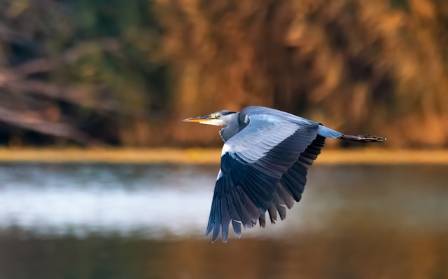
Finally, observing birds like the Blue Heron provides a glimpse into the social structure of waders. While often seen alone spearing fish, they are social creatures. While a group of most birds is called a colony, a gathering of herons is formally known as a "siege," and their specific breeding grounds are referred to as a "heronry."
COVER · en

Choosing a Floor Lamp
A floor lamp is one of those home accessories that combines practicality with style. It can provide useful lighting while also serving as an attractive decorative feature that complements the rest of a room. Since floor lamps come in countless shapes, sizes, and designs, it’s easy to find an option that works with almost any decorating style.
COVER · en

Harnessing AI To Elevate Safety Performance and Culture
In today’s rapidly evolving technological landscape, many organizations are turning to artificial intelligence (AI) as a powerful tool to drive change across industries. One particularly impactful area is safety management, where AI offers new ways to enhance performance and foster a stronger safety culture. Below are several key ways AI can be used to improve safety standards and promote a culture of continuous safety improvement.
COVER · en

Masterpieces of the Golden Hour: Iconic Sunset Paintings
Nature, with its grand forms and ephemeral beauty, has remained a central preoccupation for artists across the centuries. Sunset paintings, in particular, demonstrate the incredible versatility of the artistic gaze. Whether rendered as a meticulous sketch, a vibrant play of pure pigment, a majestic landscape, or a suggestive abstraction, these works represent far more than the simple conclusion of a day.
COVER · en

The Ultimate Guide to Hibiscus Care
Hibiscus is much more than an attractive tropical blossom. It serves as the state flower of Hawaii, the national flower of South Korea, and is widely regarded as a symbol of affection, appreciation, and resilience.
COVER · en

10 Stunning Types of Suits Every Woman Needs in Her Wardrobe
Suits are no longer reserved just for office boardrooms. Today, they’ve become versatile staples that allow women to transition seamlessly from professional settings to social events and even casual weekends. The right suit can elevate your style, add sophistication, and give you the confidence to own every room. Here are ten essential types of suits worth adding to your closet.
COVER · en
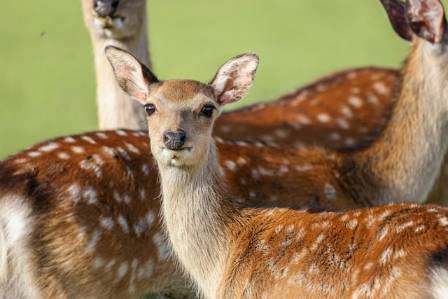
The sika deer : A fascinating species native to East Asia
The sika deer (Cervus nippon) is a medium-sized deer native to much of East Asia, including Japan, Taiwan, eastern China, Korea, and parts of Russia. Although their original distribution has decreased in some areas, sika deer have been introduced to numerous regions around the world, including Europe, Australia, New Zealand, and the United States.