Shelf read
7 Most Expensive Skyscrapers Ever Built
Skyscrapers are not only feats of engineering but also financial marvels. Some towers cost billions to complete, combining cutting-edge technology, bold design, and staggering amounts of material. Here’s a look at seven of the priciest skyscrapers on Earth and what makes them stand out.
Sydney
Library note
Reading tip
The full chapter continues below on the soft reading shelf.
Stack
Pocket Library
Skyscrapers are not only feats of engineering but also financial marvels. Some towers cost billions to complete, combining cutting-edge technology, bold design, and staggering amounts of material. Here’s a look at seven of the priciest skyscrapers on Earth and what makes them stand out.
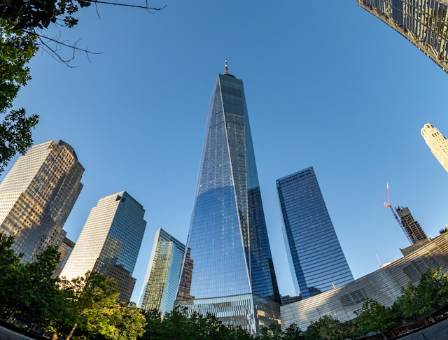
One World Trade Center – $4bn
Rising 541 meters above Manhattan, One World Trade Center is the tallest building in the Western Hemisphere. Completed in 2014 on the site of the destroyed Twin Towers, it stands as both a commercial hub and a symbol of resilience. With 104 floors and 3.5 million square feet of space, its faceted exterior is made of eight elongated triangles, giving it a crystalline appearance. More than 95% of the steel used in its construction was recycled, helping the building earn LEED Gold certification.
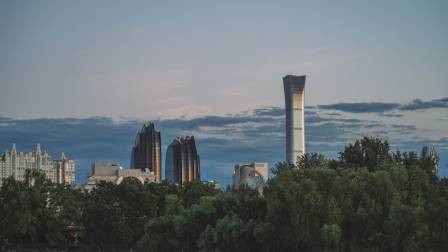
China Zun – $3.35bn
Beijing’s tallest building, the 528-meter China Zun, was finished in 2018. Officially called CITIC Tower, it cost $3.35 billion and serves as headquarters for CITIC Group and CITIC Bank. Its curving shape was inspired by an ancient Chinese wine vessel called a zun. The design widens at the top, not only maximizing floor space but also improving stability. Advanced digital modeling and BIM technology were central to bringing this 109-story tower to life.
One Vanderbilt – $3.2bn
Completed in 2020, One Vanderbilt reshaped New York City’s skyline near Grand Central Terminal. At 427 meters tall, this skyscraper cost $3.2 billion and offers 1.7 million square feet of prime office space. Its four tapering planes spiral skyward, while features like rainwater harvesting and cogeneration systems contribute to sustainability goals. A three-floor observation deck crowns the tower, giving visitors sweeping views of Manhattan.
Lotte World Tower – $3.18bn
Soaring 555 meters in Seoul, the Lotte World Tower is South Korea’s tallest building and the fifth tallest worldwide. Completed in 2017, this $3.18 billion structure has 123 stories and spans 5.43 million square feet. Inside, it houses luxury residences, a high-end hotel, retail centers, cultural facilities, and an observation deck. Its design, inspired by traditional Korean art, also integrates green technologies such as solar panels, wind turbines, and water collection systems.
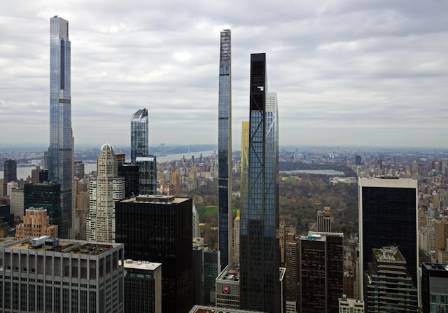
Central Park Tower – $3bn
Known as the tallest residential skyscraper in the world, Central Park Tower reaches 472 meters along Manhattan’s Billionaire’s Row. Completed in 2019, the $3 billion project includes 179 ultra-luxury condos and a flagship Nordstrom store at its base. Residents enjoy private amenities such as the Central Park Club, which stretches across three floors with exclusive dining and leisure spaces.
Haeundae LCT The Sharp Landmark Tower – $2.64bn
In Busan, South Korea, the Haeundae LCT complex features three striking towers. The tallest, a 411-meter landmark tower, is flanked by two residential buildings of 333 and 339 meters. Completed in 2019 at a cost of $2.64 billion, it contains hotels, luxury apartments, and entertainment spaces, including a shopping mall and water park. Its structural design ensures stability against strong winds and salt corrosion from the nearby sea.
Shanghai Tower – $2.54bn
At 632 meters, Shanghai Tower is China’s tallest building and the second tallest in the world. Completed in 2015 for $2.54 billion, the 121-story tower offers more than four million square feet of space. Its spiraling, double-layered glass facade helps conserve energy, while interior sky gardens provide social spaces filled with greenery. The LEED Platinum-certified tower also uses wind turbines, water recycling, and advanced smart systems to manage energy efficiently.
Conclusion
From New York to Shanghai, these billion-dollar towers show how architecture, engineering, and immense investment come together to shape skylines. Each one pushes the limits of design while reflecting the cultural and economic ambitions of its city. These skyscrapers are more than buildings—they’re monumental statements of human ingenuity and ambition.
COVER · en

The Ultimate Guide to Crafting Personalized Yogurt Bowls
Yogurt bowls have emerged as a premier choice for a quick, nutrient-dense breakfast or satisfying snack. While a simple bowl of yogurt is a healthy start, transforming it with a variety of textures and flavors elevates it into a gourmet experience. This guide explores the essential components of a perfect bowl and provides eight distinct flavor inspirations to suit any palate.
COVER · en

Pothos Plant Care: The Easiest Trailing Houseplant
Looking for a hanging houseplant that is attractive, forgiving, and simple to care for? Pothos is an excellent choice. With its long trailing vines and lush foliage, it can bring a tropical feel to an indoor space without requiring complicated maintenance.
COVER · en

Cream Bedroom Ideas for a Restful Sleep
There’s something undeniably stunning about a cream-toned bedroom. When every surface—walls, flooring, upholstery, bedding, curtains or blinds, wardrobes, and furniture—stays within a soft neutral palette, the space becomes a peaceful sanctuary. A cream bedroom feels soothing, light on the eyes, and naturally easy to unwind in. By blending warm cream shades with layered textures and soft tonal variations, you can create a refined and balanced bedroom design that remains stylish year after year.
COVER · en
Fascinating Facts About the World of Crabs
With thousands of identified species spanning the globe, crabs are among the most successful and intriguing crustaceans in our oceans. These animals are more than just coastal inhabitants; they are vital engineers of marine ecosystems, helping to sustain coral reefs and seafloor health. Despite their importance, they face increasing pressure from environmental changes, pollution, and habitat disruption.
COVER · en
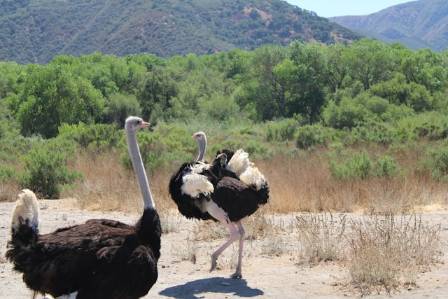
5 Fascinating Facts About the Ostrich: The World’s Largest Flightless Bird
The ostrich (Struthio camelus) stands unrivaled as the largest and heaviest living bird on Earth, a towering icon of Africa’s savannas and arid landscapes. Belonging to the ratite family—a group of flightless birds characterized by flat breastbones—ostriches share their lineage with equally unique relatives like emus, cassowaries, rheas, and kiwis, each adapted to thrive in distinct corners of the globe. In recent decades, taxonomic research has led authorities to classify the Somali ostrich (Struthio molybdophanes), native to the dry regions of East Africa, as a separate species from the common ostrich found across sub-Saharan Africa. Beyond their imposing size, ostriches hold a host of remarkable records and evolutionary quirks that set them apart from all other avian species. Below are five captivating facts that shed light on these extraordinary birds.
COVER · en
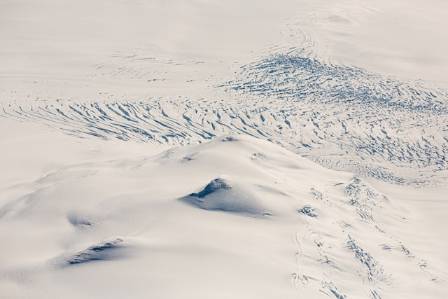
Earth’s Largest Deserts: From Ice to Sand
Deserts are landscapes defined by extreme dryness—typically receiving less than 250 mm of precipitation annually—and often losing more moisture via evaporation than they gain from rainfall. While many imagine deserts as endless seas of sand, dunes actually cover only around ten percent of desert terrains. Deserts can be classified into four main types: hot and dry (aka subtropical), semi arid, coastal and cold (polar) environments. Below is a portrayal of the ten largest deserts on Earth by total area, following the same order as in the original piece, with each section heading freshly worded.