Shelf read
Robotic Arms: Different Types and When to Use Them
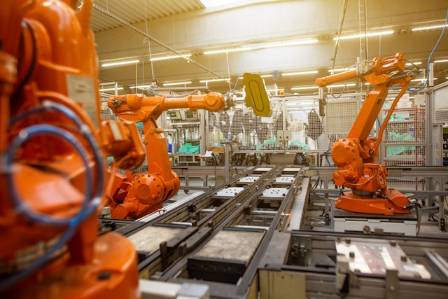
Robotic arms are among the most recognizable types of robotic equipment used in modern industrial environments. Their remarkable speed, precision, and strength often capture people’s attention, yet many are still unfamiliar with their actual functions and practical applications. This article provides a general overview of robotic arms in industrial fields, helping you understand their capabilities and determine whether they are suitable for your needs.
Axel Morgan
Library note
Reading tip
The full chapter continues below on the soft reading shelf.
Stack
Pocket Library
Robotic arms are among the most recognizable types of robotic equipment used in modern industrial environments. Their remarkable speed, precision, and strength often capture people’s attention, yet many are still unfamiliar with their actual functions and practical applications. This article provides a general overview of robotic arms in industrial fields, helping you understand their capabilities and determine whether they are suitable for your needs.
Types of Robotic Arms
The phrase “robotic arm” refers to a wide range of robotic systems designed for different tasks. Although many robotic arms share similar functions, each design has unique characteristics that make it better suited for specific applications. Common types of robotic arms include:
Articulated arms
Six-axis robots
Collaborative robots
SCARA robots
Cartesian robots
Cylindrical robots
Spherical or polar robots
Parallel or Delta robots
Anthropomorphic robots
Articulated Robotic Arms
Articulated robotic arms are versatile machines that usually contain five or more joints or movement axes. This category represents a broad family of industrial robots, including six-axis robots and collaborative robots.
Because of their high flexibility and wide range of motion, articulated arms are used in many different industries. They are capable of performing various tasks and are among the most widely adopted robotic solutions in manufacturing environments.
Six-Axis Robots
Six-axis robots are the most common form of articulated robotic arms used today. Their six degrees of freedom provide excellent flexibility, allowing them to move similarly to a human arm.
Due to their adaptability and ability to handle many different applications, six-axis robots have become a standard choice in industrial automation. They are easily recognized as the classic robotic arms commonly seen in factories.
Collaborative Robots
Collaborative robots, often called cobots, are robotic arms specifically designed to operate alongside human workers. Unlike traditional industrial robots that usually require safety barriers, cobots include advanced safety features that reduce risks when working in shared spaces.
This type of robot is relatively new compared with traditional robotic systems, and industries continue to discover new ways to apply them. As more companies recognize their advantages, collaborative robots are becoming increasingly important in modern manufacturing.

SCARA Robots
SCARA stands for Selective Compliance Assembly Robot Arm. These robotic systems are designed with limited flexibility compared with articulated robots.
Although their movement range is more restricted, this specialized design provides advantages in certain applications. SCARA robots are particularly effective for tasks that require fast and precise horizontal movements, such as assembly and pick-and-place operations.
Cartesian Robots
Cartesian robots are rigid robotic systems that operate within a three-dimensional coordinate system. They are typically built using three linear actuators that control movement along the X, Y, and Z axes.
One actuator controls side-to-side movement, another manages vertical motion, and the third controls forward and backward movement. Because of their straightforward design and accuracy, Cartesian robots are commonly used for smaller-scale industrial applications.
Cylindrical Robotic Arms
Cylindrical robots are designed around a vertical structure that allows the robotic arm to move upward and downward while rotating horizontally. The arm can also extend and retract to complete assigned tasks.
These robots have a compact structure and are generally used for simple operations that do not require complex movements. Their smaller footprint makes them suitable for limited-space applications.
Spherical or Polar Robots
The first modern industrial robots were based on spherical, also known as polar, designs. Although they are less common today, they played an important role in the development of industrial automation.
Spherical robots are similar to cylindrical robots, but instead of using a vertical linear axis, they include an additional rotating axis that allows vertical movement. Their simple construction makes them suitable for basic tasks that do not require extremely high speed or complicated motions.
Parallel or Delta Robots
Parallel robots, also known as Delta robots, are designed for high-speed automation tasks. Their unique mechanical structure allows them to achieve extremely fast movement while maintaining accuracy.
These robots are especially suitable for lightweight operations that require rapid handling, such as sorting, packaging, and picking small objects. Their speed makes them valuable in industries where efficiency is a priority.
Anthropomorphic Robots
Anthropomorphic robots are among the less common robotic systems found in industrial environments. These robots are designed with human-like features, often including two or more arms and a friendly appearance.
They are usually used in collaborative settings where robots interact closely with human operators. Their human-inspired design allows them to perform tasks in environments where cooperation between people and machines is necessary.

COVER · en

Understanding a Dog's Slumber: How Much Sleep Do They Need?
Dogs lead a life many humans would envy. They slumber through the night and while away their days napping in sunlit spots or lounging on the couch. Their transitions from sleep to play are marked by bursts of energy and enthusiasm. Yet, the way dogs sleep is distinct from our own, and this dissimilarity often leaves pet owners pondering whether their furry companions are snoozing excessively or insufficiently.
COVER · en

Best Classic British Cars in History
From Sean Connery’s unforgettable drives in the legendary Aston Martin DB5 as James Bond, to the timeless Mini and the elegant curves of the Jaguar E-Type, British automotive history is filled with iconic machines. These remarkable vehicles easily earn a place among the greatest classic cars ever produced in the UK. Let’s explore the top 10—see which legends made the cut and which ones didn’t. The choices are tough…
COVER · en

Beautiful Baisha Beach in Kending
Baisha Beach, also known as Bai Sha Wan, is one of the most beloved seaside destinations among both locals and foreign residents visiting Kending. Its popularity comes from several factors, including its beautiful location, high-quality sandy shoreline, and the laid-back coastal lifestyle surrounding it. The beach gained even more international attention after appearing in several scenes of Taiwanese director Ang Lee’s famous film “Life of Pi.”
COVER · en

5 Penguin Species You Won’t Want to Miss When Traveling!
Who doesn’t love penguins? These adorable creatures overflow with cuteness—whether waddling, swimming, nesting, or napping, they’re a delight to watch. I’ve been lucky enough to encounter 5 penguin species up close, and each one is absolutely amazing!
COVER · en

Essential Vessels: A Guide to Curating the Perfect Vase Collection
Many homeowners possess a cluttered cabinet of mismatched containers that never quite seem to highlight their floral arrangements. However, you don't need a vast warehouse of glassware to display your flowers professionally. By focusing on six fundamental silhouettes, you can ensure that every bouquet—from a single garden rose to a grand celebratory display—looks its absolute best. The golden rule is simple: let the scale of the stem dictate the vessel, and prioritize pieces that possess sculptural beauty even when they stand empty.
COVER · en

Why Mountain Lakes are Canaries in the Coal Mine
The isolation of mountain lakes is precisely what makes them so valuable to scientists. Positioned high in watersheds, they receive inputs primarily from the atmosphere, making them perfect natural laboratories for studying the far-reaching effects of human activity. Their ecological simplicity means that disturbances are not diluted by complex interactions, allowing researchers to clearly trace cause and effect. The program is designed to track the impacts of several pressing threats.