PL
pipilandbook.com
Tokyo Tower: A Nation Reborn, Standing 333 Meters Tall

Shelf read

Tokyo Tower: A Nation Reborn, Standing 333 Meters Tall

Tokyo Tower, a 333-meter symbol of Japan's post-war rebirth, was the nation's tallest structure from 1958 until 2012 and remains a beloved landmark, broadcast antenna, and registered cultural property. The article explores its history, engineering secrets, night illuminations, observation decks, and the ongoing maintenance that keeps this "Japanese brother of the Eiffel Tower" alive.

E

Emily Richardson

Library note

Reading tip

The full chapter continues below on the soft reading shelf.

Stack

Pocket Library
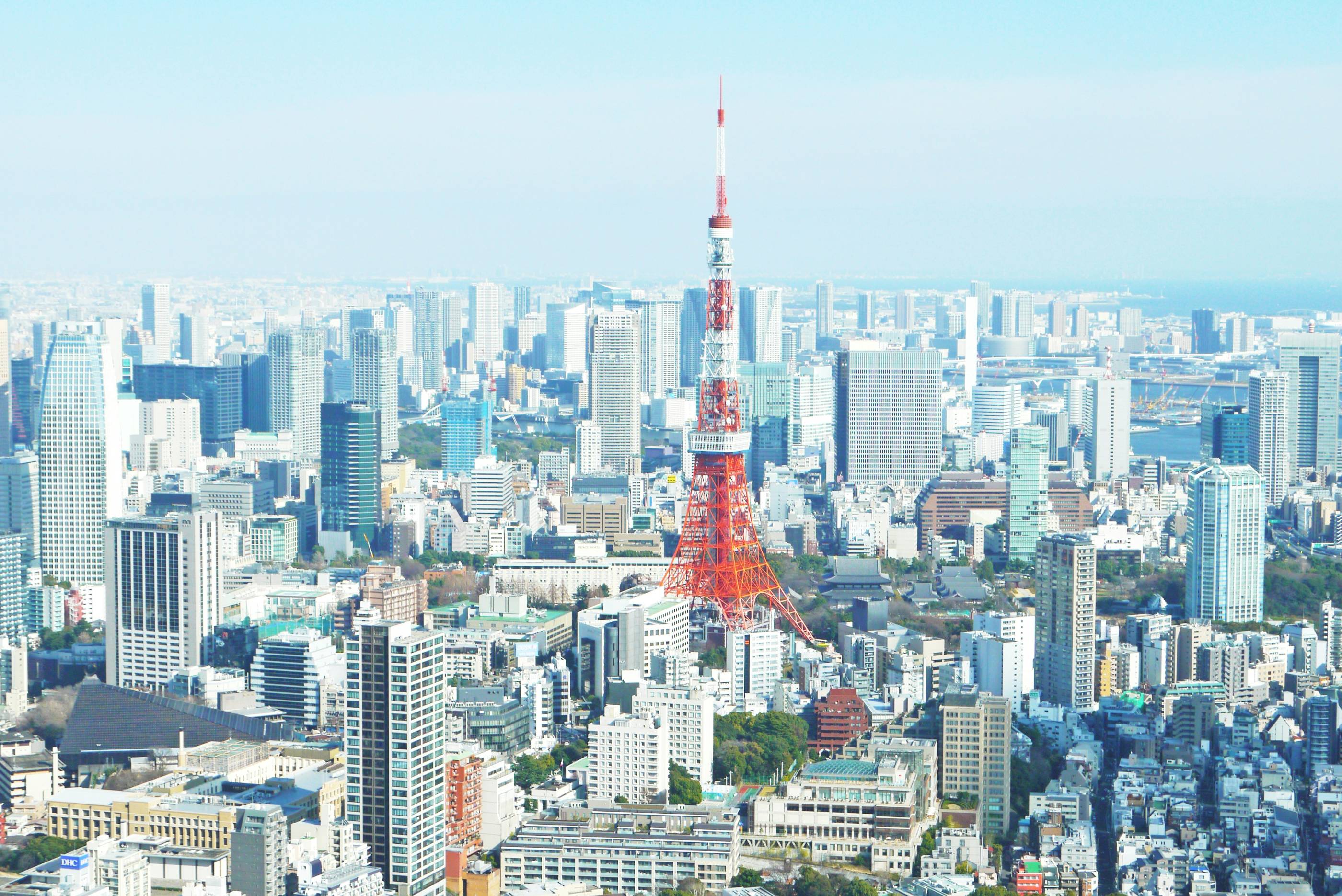
Luftaufnahme des Roten Turms, der tagsüber von Gebäuden umgeben ist
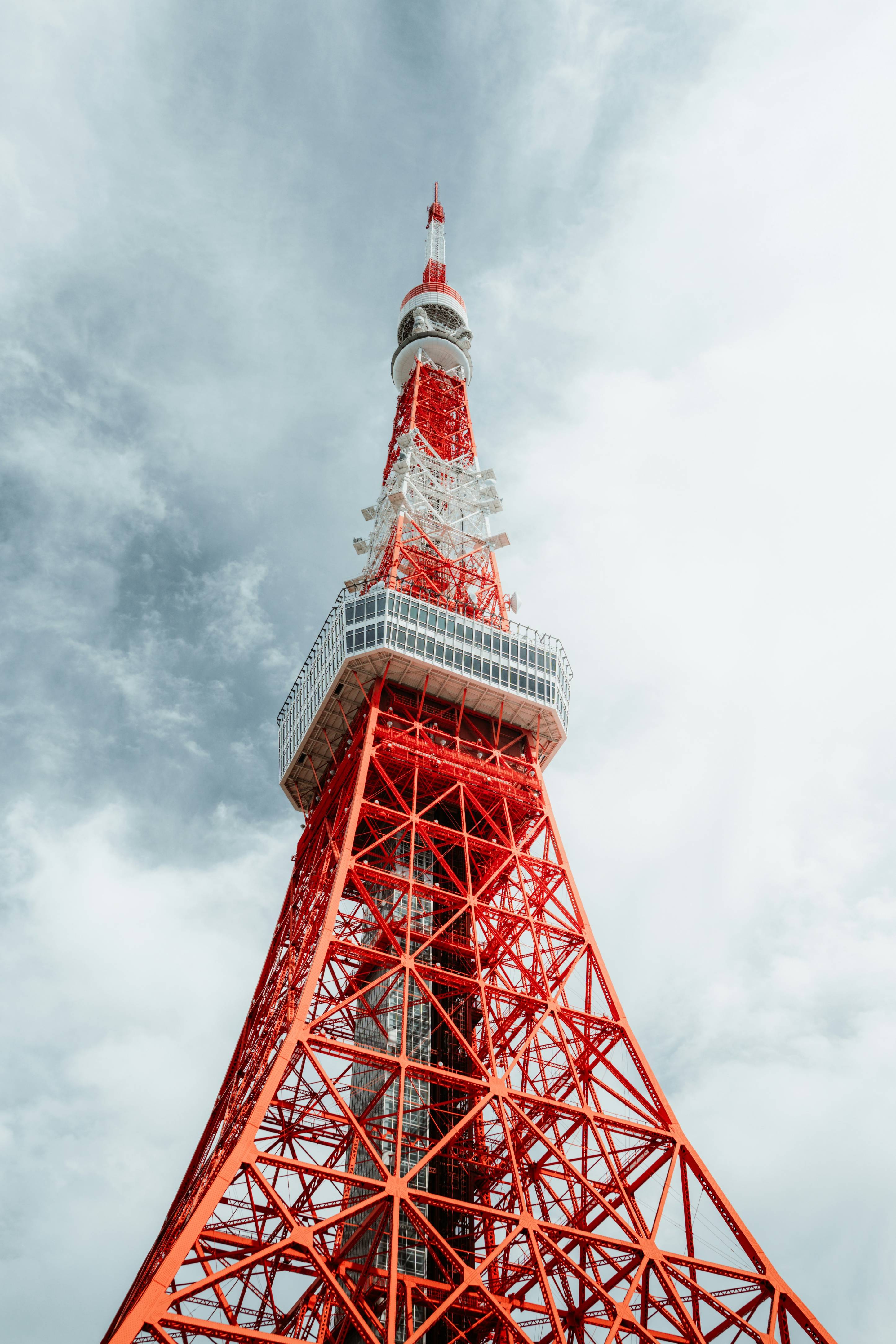
Tokyo Tower rises 333 meters above central Tokyo, making it the world's tallest self-supported steel tower—and 13 meters taller than its inspiration, the Eiffel Tower. More than an engineering marvel, it stands as a symbol of Japan's post-war rebirth as an economic power. From its completion in 1958 until 2012, when it was surpassed by the Tokyo Skytree, it was the country's tallest structure. Today, it remains a beloved tourist destination, a working broadcast antenna, and—since 2013,a registered National Tangible Cultural Property of Japan.

A Media Mogul's Daring Bet

In the mid-1950s, television broadcasting was spreading rapidly across Japan, but each station built its own signal tower, cluttering Tokyo's skyline with a chaotic tangle of antennas. Hisakichi Maeda, president of the Osaka News and later known as the "News King of Osaka," proposed a bold idea: build one giant tower to consolidate all broadcast signals, and add observation decks to attract tourists.
His vision was simple and audacious: "If we're going to build it, let's build one taller than the Eiffel Tower—the tallest in the world." He hired Tachū Naitō, revered as the "father of earthquake-resistant architecture in Japan," to design it. Naitō faced an extraordinarily difficult challenge: post-war Japan was resource-poor, and he had to build a taller tower than the Eiffel Tower using far less steel—while withstanding earthquakes.
The result was astonishing. Construction began in June 1957 and was completed in just over a year and a half, employing roughly 220,000 workers at peak and costing about 3 billion yen. The final structure used only about 4,000 tons of steel—less than half of the Eiffel Tower's 7,300 tons—yet stood 13 meters taller. On December 23, 1958, Tokyo Tower was officially completed at 333 meters.

The Secret Behind 333 Meters

Why exactly 333 meters? The official explanation is pragmatic: to cover the entire Kanto Plain with television signals—from central Tokyo north to Mito, east to Choshi, south to Numazu, and west to Kofu—broadcast engineers calculated that precisely 333 meters was needed. That it also surpassed the Eiffel Tower's 320 meters was, in Maeda's eyes, a delightful bonus.
The tower's paint job holds its own secrets. Though it appears simply red and white, the colors are officially "International Orange" and "White," mandated by aviation law to ensure flight safety. The sections above the main deck were originally divided into 11 bands of alternating color; since 1986, this was changed to 7.

Blood Ties with the Eiffel Tower—and Beyond

Tokyo Tower is often called the "Japanese brother" of the Eiffel Tower, but this brother is lighter, taller, and more earthquake-resistant. Naitō made critical improvements to the Eiffel Tower's structure, enabling it to withstand Japan's frequent earthquakes. This lightweight, seismic-resistant design later became a model for Japan's supertall buildings.
The New York Times wrote in a 2008 feature: "It was built in a city still bearing the scars of war, on the grounds of an ancient Buddhist temple, using steel salvaged from decommissioned American tanks." This history adds a complex undertone to Tokyo Tower—its steel contains recycled metal from the post-war era, including armor from tanks shipped back from the Korean War. It was both a necessity of scarce resources and a defining part of its symbolism as a symbol of rebirth.

Once Tokyo's Only Skyline

In the 1960s, Tokyo had no forest of skyscrapers like today. Tokyo Tower was the only structure piercing the sky, visible from every corner of the city. When the 1964 Tokyo Olympics were held and the Shinkansen opened, Tokyo Tower joined these national projects as a symbol of Japan's rapid economic growth.
After completion, about 10,000 people visited daily, with annual attendance approaching 4 million in some years. By 1998, cumulative visitors had surpassed 130 million, with a single-day record of 40,000. It appeared frequently in films and television dramas—some works were even titled after it.
ein sehr hoher roter Turm mit einem Himmel im Hintergrund

Two Faces After Dark

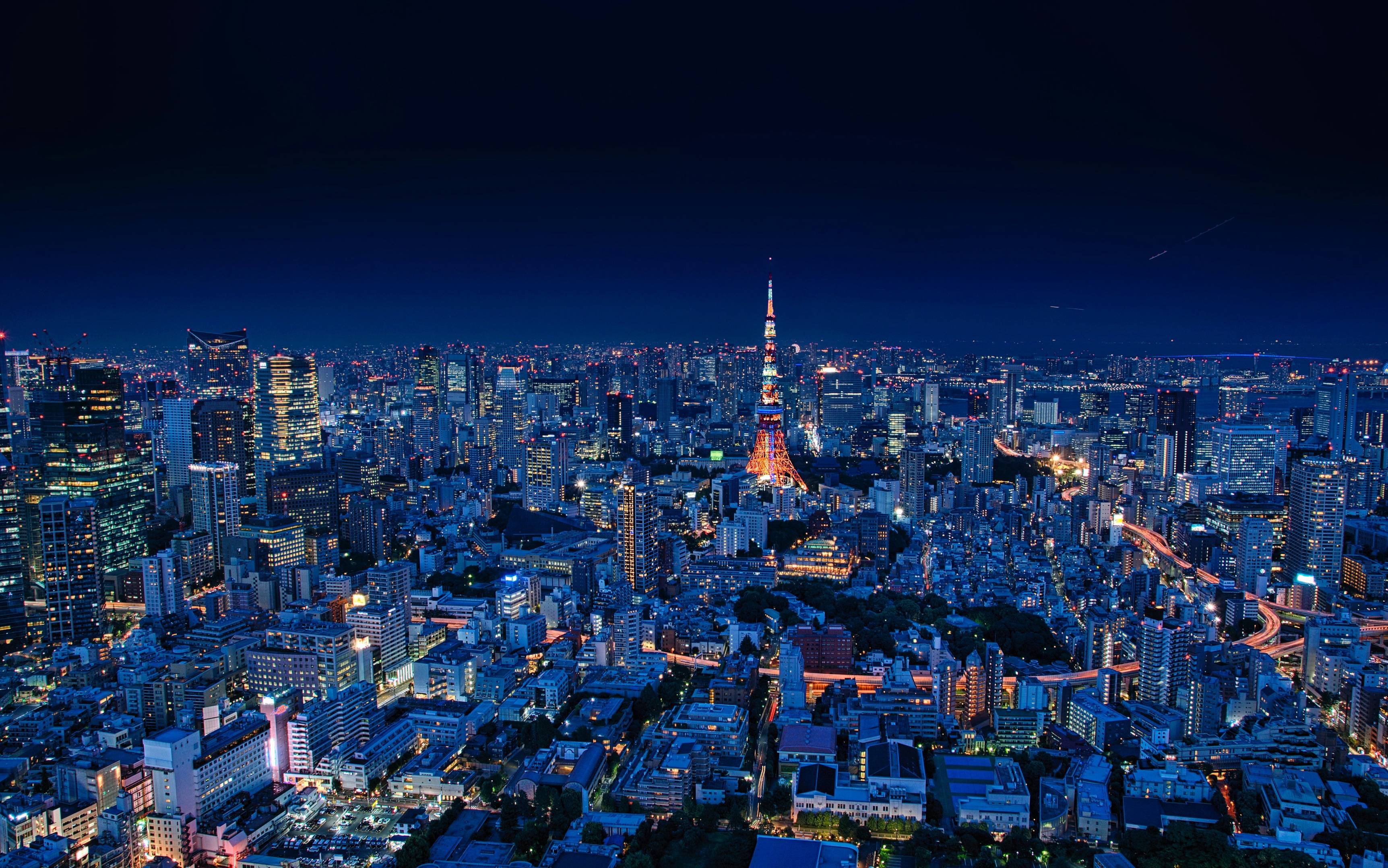
Tokyo Tower's nighttime illumination is a world-class spectacle. The "Landmark Light," introduced in 1989, consists of 180 lights, glowing warm orange in spring, autumn, and winter, and switching to cool silver in summer. The "Infinity Diamond Veil," introduced for the tower's 50th anniversary in 2008, is even more stunning—268 LED bulbs can create infinite color combinations, often used to convey specific messages, such as raising breast cancer awareness or honoring medical workers.
A long-circulating romantic legend says that couples who witness the moment Tokyo Tower's lights go out together will find happiness. As a result, every night before midnight, crowds of couples gather at the tower's base, looking up and waiting for that moment.

More Than an Observation Deck

The main deck at 150 meters is reached by elevator or by climbing 600 steps. The staircase is usually open on weekends and holidays, and even kindergarten children can climb it in about 15 minutes. Standing on the "lookdown windows" in the floor, you watch the traffic below shrink to points of light—a thrill not easily forgotten.
The top deck at 250 meters opened to the public in 1967, originally just a maintenance platform for antennas. From here, on clear days, visitors can see the Tokyo Skytree and Mount Fuji in the distance. It is the third-highest observation deck in Tokyo, after the two at Tokyo Skytree.
Inside Foot Town, the complex at the tower's base, visitors find shops, restaurants, and the Red Tokyo Tower e-sports entertainment complex. Spanning multiple floors, it offers a variety of interactive games and e-sport activities, and admission tickets allow visitors to play any game during the ticket's validity period.

A Living Cultural Property

In 2013, Tokyo Tower was officially registered as a National Tangible Cultural Property of Japan. The Agency for Cultural Affairs gave a straightforward reason: it is a symbol of Japan's post-war revival, the starting point of high economic growth, and the public holds deep affection for it.
That same year, Tokyo Skytree took over the primary television signal transmission, and Tokyo Tower's broadcast role shifted to backup. But the tower did not fall silent. The main deck was transformed into a flexible space for corporate events and various happenings, and the top deck was renovated to offer a "Top Deck Tour" experience.
Maintenance never stops. The steel frame is repainted every five years, with workers manually brushing the entire 94,000-square-meter surface—using approximately 340,000 liters of paint and 4,200 workers in total. If stacked in 18-liter cans, the paint used would reach twice the height of Tokyo Tower itself.
Tokyo Tower's lights come on every night. Its 333 meters still stand at the center of Tokyo. And the city has long since grown countless taller skylines beneath its feet.
Luftaufnahme von Stadtgebäuden bei Nacht

More on this shelf

CV

COVER · en

Next-Generation Surface Metrology: The Evolution of Autonomous Spherometry

Next-Generation Surface Metrology: The Evolution of Autonomous Spherometry

Advanced spherometers represent the pinnacle of precision instrumentation, engineered to quantify the microscopic curvature of spherical topographies. These systems have become indispensable in high-tech sectors such as aerospace optics, semiconductor lithography, and advanced material science, where sub-micron surface fidelity dictates mission-critical performance. By leveraging ultra-sensitive hardware and intelligent processing, modern spherometry platforms allow researchers to achieve unprecedented levels of quality control and surface characterization.

CV

COVER · en

What Is Sea Surface?

What Is Sea Surface?

The ocean surface forms the transition zone between the marine environment and the atmosphere. It extends from the air–water boundary downward several meters into the upper ocean and upward into the lowest region of the atmospheric boundary layer. This dynamic interface is where energy, momentum, moisture, gases, and heat are constantly transferred between two interacting fluid systems that influence Earth’s climate.

CV

COVER · en

Badminton Made Simple

Badminton Made Simple

Badminton is among the world's most widely played sports, enjoyed by millions of people across different countries and cultures. Its fast pace, simple setup, and exciting rallies have helped it gain a large international following.

CV

COVER · en

Beautiful Baisha Beach in Kending

Beautiful Baisha Beach in Kending

Baisha Beach, also known as Bai Sha Wan, is one of the most beloved seaside destinations among both locals and foreign residents visiting Kending. Its popularity comes from several factors, including its beautiful location, high-quality sandy shoreline, and the laid-back coastal lifestyle surrounding it. The beach gained even more international attention after appearing in several scenes of Taiwanese director Ang Lee’s famous film “Life of Pi.”

CV

COVER · en

Sandy Yet Snowy: Beaches Next to Snow-Capped Mountains

Sandy Yet Snowy: Beaches Next to Snow-Capped Mountains

Across the planet, some landscapes create a stunning contrast by placing warm sandy beaches beside towering snow-covered peaks. These rare destinations combine two completely different environments, where visitors can enjoy sunshine by the shore and winter adventures in the mountains within the same day.

CV

COVER · en

Bavarian Forest Excursions: Nature, Culture, and Hidden Gems

Bavarian Forest Excursions: Nature, Culture, and Hidden Gems

In the southeastern corner of Germany, where the border with the Czech Republic gently winds through wooded hills, the Bavarian Forest unfolds as a realm of unhurried charm. Here, dense forests meet tranquil streams, ancient traditions blend with modern wellness, and every trail promises a discovery—whether a thundering waterfall, a centuries-old glassmaking workshop, or a summit with panoramic views of rolling peaks. This expansive region caters to every traveler: nature lovers chasing untouched wilderness, adventure seekers craving hikes and ski runs, families hunting for interactive fun, and culture enthusiasts delving into Bavaria’s rich heritage.