Shelf read
The Most Unique Lighthouses in the World
Lighthouses once played a vital role in coastal navigation. Far from mere decorative structures, they acted as beacons, guiding ships safely through darkness and storms while marking hazardous rocks, reefs, and shorelines. Lighthouse keepers were the maritime equivalent of air traffic controllers, ensuring vessels reached their destinations safely. Today, electronic navigation systems have largely replaced them, yet lighthouses remain as historic, picturesque landmarks—symbols of maritime heritage and captivating coastal scenery.
Ella Jordan
Library note
Reading tip
The full chapter continues below on the soft reading shelf.
Stack
Pocket Library
Lighthouses once played a vital role in coastal navigation. Far from mere decorative structures, they acted as beacons, guiding ships safely through darkness and storms while marking hazardous rocks, reefs, and shorelines. Lighthouse keepers were the maritime equivalent of air traffic controllers, ensuring vessels reached their destinations safely. Today, electronic navigation systems have largely replaced them, yet lighthouses remain as historic, picturesque landmarks—symbols of maritime heritage and captivating coastal scenery.
1. Eldred Rock Lighthouse, Alaska
Located on Eldred Rock in Lynn Canal near Haines, Alaska, this octagonal lighthouse was built between 1902 and 1905 following a series of shipwrecks. First illuminated in 1906 and decommissioned in 1973, Eldred Rock Lighthouse is Alaska’s oldest original lighthouse and among the most isolated in North America. Its dramatic backdrop of rugged mountains makes it especially scenic. The Eldred Rock Lighthouse Preservation Association works to maintain and restore this historic site.
2. Tower of Hercules, Spain
Perched at the entrance to La Coruña Harbor in Galicia, the Tower of Hercules is the only fully intact Roman lighthouse still in operation. Constructed in the late 1st century AD atop a 187-foot-high rocky promontory, it was renovated in the 18th century. Today, it is a UNESCO World Heritage site and open to visitors every day, offering a glimpse into ancient maritime engineering.
3. Les Eclaireurs Lighthouse, Argentina
Situated in the Beagle Channel near Ushuaia at the southern tip of Argentina, this red-and-white striped lighthouse is nicknamed “The Lighthouse at the End of the World” (though it’s not the one in Jules Verne’s novel). Commissioned in 1920, it sits on a small island surrounded by Tierra del Fuego’s snow-capped peaks. Fully automated, it cannot be visited, but it is visible during regional boat tours.
4. Tourlitis Lighthouse, Greece
Set on a narrow rocky spire off Andros Island in the Aegean Sea, the Tourlitis Lighthouse resembles something out of a fantasy novel. Built in 1897, destroyed in WWII, and rebuilt in the early 1990s, the lighthouse sits atop a naturally sculpted stone pedestal. A spiral staircase carved into the rock provides access, making it Greece’s first automated lighthouse.
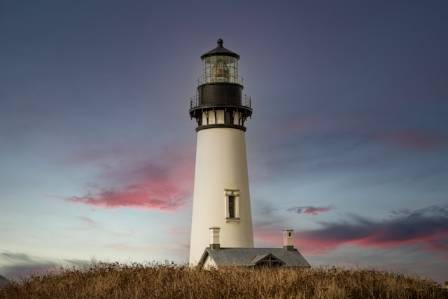
5. Pigeon Point Light Station, California
One of the tallest lighthouses in the U.S., the 115-foot Pigeon Point Lighthouse is part of a state historic park 50 miles south of San Francisco. First lit in 1872, it remains an active aid to navigation. Visitors can stay at the nearby Hostelling International Pigeon Point Lighthouse for spectacular views of both the tower and the Pacific Ocean.
6. Whiteford Point Lighthouse, Wales
The Whiteford Lighthouse off Wales’ Gower Peninsula is the UK’s only cast-iron lighthouse fully surrounded by water at high tide. Constructed in 1865 to mark Whiteford Point’s shallow waters, it operated until 1926. Used as a bombing target during WWII, it survived and was sold in 2000 to a TV company for renovation. Accessible on foot at low tide, caution is needed due to mud and rising waters.
7. Earhart Light, Howland Island
Located on the remote 648-acre Howland Island between Hawaii and Australia, Earhart Light is named after Amelia Earhart. A 1937 airstrip was built for her around-the-world flight, but she and navigator Fred Noonan never arrived. Briefly occupied during WWII, the lighthouse was partially destroyed and rebuilt in the 1960s. Today it serves as a day beacon in poor condition. Access requires a permit as Howland Island is a U.S. National Wildlife Refuge.
8. Chania Lighthouse, Crete, Greece
Originally built in the 16th century at Crete’s old port of Chania, this lighthouse sits opposite Firkas Fortress. Renovated between 1824–1832 in an Egyptian style during Ottoman occupation, it is sometimes called the “Egyptian Lighthouse.” Visitors can walk along the harbor and climb the exterior steps for excellent views of the Sea of Crete.
9. Portland Head Light, Maine
Located on Cape Elizabeth, Maine, Portland Head Light was first lit in 1791 and automated in 1989. It is one of Maine’s oldest lighthouses. The former keepers’ quarters, built in 1891, now house a museum showcasing lenses and maritime history. Access to the tower is limited to September’s Open Lighthouse Day, offering a breathtaking view of Maine’s rugged coastline and the Atlantic Ocean.
COVER · en

Vietnamese Fresh Spring Rolls
These light Vietnamese fresh spring rolls offer a refreshing alternative to the traditional deep-fried version and have become a beloved dish for many households. They make an excellent light appetizer, especially when paired with one or both dipping sauces included in the recipe. They are also ideal for gatherings since they can be prepared in advance.
COVER · en
7 Exciting Finds When Collecting Rocks on Ocean Beaches
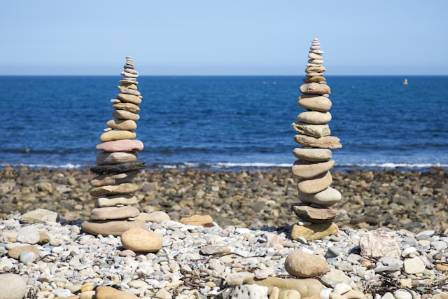
Walking along an ocean beach can be a peaceful and exciting experience for rockhounding enthusiasts. With the gentle sound of waves in the background, every step along the shore could reveal a hidden treasure. Whether you're looking for stones that have been naturally polished by the ocean or fossils that have survived for centuries, beaches offer a variety of collectible items. Below are seven of the most common treasures you can find while rockhounding on the beach.
COVER · en
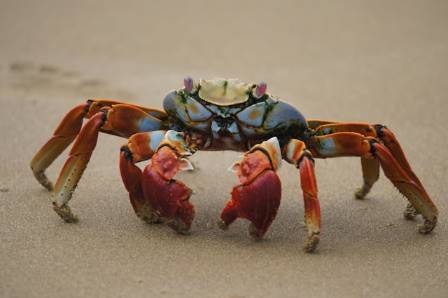
Fascinating Facts About the World of Crabs
With thousands of identified species spanning the globe, crabs are among the most successful and intriguing crustaceans in our oceans. These animals are more than just coastal inhabitants; they are vital engineers of marine ecosystems, helping to sustain coral reefs and seafloor health. Despite their importance, they face increasing pressure from environmental changes, pollution, and habitat disruption.
COVER · en
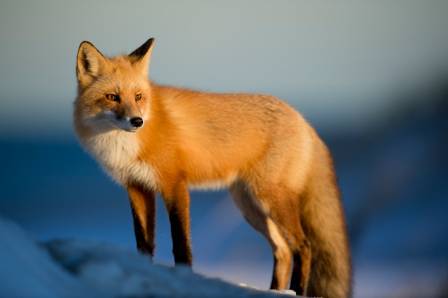
The Clever Red Fox: Nature’s Adaptive Mastermind
Red foxes (Vulpes vulpes) are celebrated for their sharp intelligence and extraordinary adaptability, thriving in habitats ranging from remote wilderness areas and snow-covered forests to bustling suburban neighborhoods and urban parklands. As the largest member of the “true foxes” family, they boast the widest natural distribution of any land mammal except humans, cementing their status as one of nature’s most successful and resilient species. Far from the oversized predators of popular imagination, these cunning creatures are surprisingly compact, a trait that only adds to their ability to navigate diverse environments with stealth and ease.
COVER · en

Perfect Sushi Rice Recipe
We love sushi, and sometimes we make various types at home, such as maki rolls, chirashi, hand rolls, nigiri, and other sushi styles. To make great sushi at home, the key is perfect sushi rice, also called sushimeshi or vinegared rice.
COVER · en

Botanical Realism in Paper
On Instagram, I discovered the exquisite floral paper creations of Marlene from Denmark, and I was instantly captivated. What strikes me most about her work is how she embraces every phase of a plant’s life, from budding flowers to wilted petals and autumnal browning leaves. Marlene’s goal is always to craft botanically accurate representations.