PL
pipilandbook.com
The Clever Red Fox: Nature’s Adaptive Mastermind

Shelf read

The Clever Red Fox: Nature’s Adaptive Mastermind

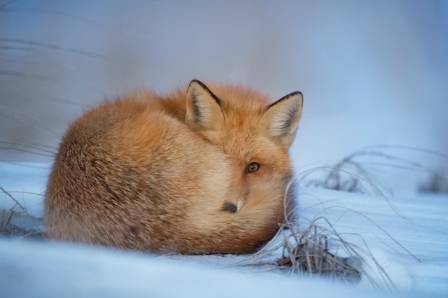
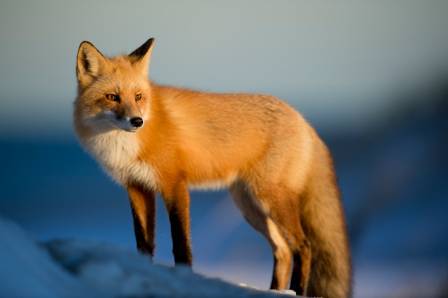
Red foxes (Vulpes vulpes) are celebrated for their sharp intelligence and extraordinary adaptability, thriving in habitats ranging from remote wilderness areas and snow-covered forests to bustling suburban neighborhoods and urban parklands. As the largest member of the “true foxes” family, they boast the widest natural distribution of any land mammal except humans, cementing their status as one of nature’s most successful and resilient species. Far from the oversized predators of popular imagination, these cunning creatures are surprisingly compact, a trait that only adds to their ability to navigate diverse environments with stealth and ease.

C

Charlotte

Library note

Reading tip

The full chapter continues below on the soft reading shelf.

Stack

Pocket Library


Red foxes (Vulpes vulpes) are celebrated for their sharp intelligence and extraordinary adaptability, thriving in habitats ranging from remote wilderness areas and snow-covered forests to bustling suburban neighborhoods and urban parklands. As the largest member of the “true foxes” family, they boast the widest natural distribution of any land mammal except humans, cementing their status as one of nature’s most successful and resilient species. Far from the oversized predators of popular imagination, these cunning creatures are surprisingly compact, a trait that only adds to their ability to navigate diverse environments with stealth and ease.

Size and Distribution: A Small Predator with a Global Footprint

Despite their legendary reputation as crafty hunters, red foxes are much smaller than most people expect. Male foxes, known as “dogs,” weigh an average of 11 pounds, while females, called “vixens,” tip the scales at around 9 pounds—many domestic house cats are actually heavier than these wild predators. This modest size belies their impressive range, which spans across North America, Europe, Asia, and even parts of North Africa, with populations introduced to Australia and South America as well. Their adaptability allows them to exploit a vast array of ecosystems, from the frozen boreal forests of the Arctic Circle to the temperate grasslands of the Midwest and the leafy suburbs of major cities. Unlike highly specialized species that depend on narrow habitat conditions, red foxes thrive wherever there is access to small prey, shelter, and a reliable food supply, making them a ubiquitous and fascinating presence across the globe.

An Unexpected American Legacy: From Boreal Forests to East Coast Suburbs

The history of red foxes in North America holds a surprising twist rooted in European colonization. Before the arrival of settlers, red foxes were native only to the boreal forests and mountainous regions of the continent, rarely venturing into the temperate lowlands of the East Coast. That changed in the mid-1800s, thanks to the preferences of European aristocrats who viewed fox hunting as a beloved sport. They found the native gray foxes to be “unsporting” opponents, as these clever creatures would climb trees to escape the pursuit of hunting hounds, frustrating the hunters’ efforts. To solve this problem, colonists imported red foxes from Europe, which were less likely to climb trees and thus provided a more satisfying challenge for the hounds. These imported foxes interbred with the native red fox populations that were expanding into cleared farmlands as forests were cut down, ultimately establishing the thriving red fox populations that now inhabit the East Coast and much of the United States today.

Magnetic Hunting: A Game-Changing Survival Strategy
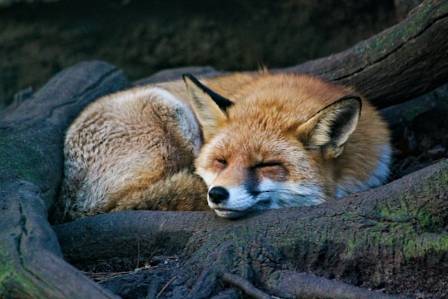
Red foxes possess one of the most remarkable hunting abilities in the animal kingdom, a skill that combines acute hearing with an almost supernatural sense of direction: they use the Earth’s magnetic field to align their hunting leaps with pinpoint accuracy. Their auditory prowess is already extraordinary—they can detect high-frequency mouse squeaks and low-frequency gnawing sounds from prey hiding under several feet of snow, even from 100 feet away. But Czech scientists uncovered an even more astonishing adaptation: red foxes rely on magnetoreception to optimize their hunting success. When the foxes leap toward the northeast direction, aligned with magnetic north, they catch their prey an impressive 73% of the time. In contrast, jumps in any other direction result in a success rate of only 18%. This makes red foxes the first known predator to use the Earth’s magnetic field to enhance their hunting efficiency, allowing them to calculate the exact angle and distance needed to pounce on hidden prey with lethal precision, even landing headfirst into snowdrifts from as far as 16 feet away.

Sensory Superpowers: Eyes, Ears, and Noses That Outperform Most Mammals

Beyond their magnetic hunting trick, red foxes are equipped with a suite of sensory adaptations that make them formidable nocturnal predators. Their bright amber eyes feature vertical pupils that can constrict more tightly than the round pupils of many mammals, allowing them to regulate the amount of light entering their eyes with incredible precision. This adaptation enables them to hunt effectively in extreme light conditions, from the dazzling brightness of snow-covered landscapes during the day to the pitch-black darkness of moonless nights. Their true visual advantage lies in the tapetum lucidum—a reflective layer behind the retina that acts like a biological mirror, bouncing unabsorbed light back through the eye to maximize light absorption. This not only doubles the available light for night vision but also creates the characteristic glowing eyeshine when a fox is caught in the beam of a headlight or flashlight. Complementing their vision and hearing is a sophisticated sense of smell, which they use to maintain complex social structures through scent marking. Both males and females strategically deposit urine and scat on prominent landmarks like tree stumps, rocks, and trail intersections, leaving chemical “signposts” that convey detailed information about their gender, social status, and individual identity to other foxes. During the February mating season, male fox urine develops an intensely musky, skunk-like odor rich in volatile sulfur compounds, signaling their readiness to breed. The frequency of scent marking varies dramatically with territory quality: in productive hunting grounds with abundant prey, foxes may mark their territory up to 70 times per hour, while poor-quality territories receive little attention and may even be shared with other foxes.

Color Variation: More Than Just Red

While the classic red coat with black legs and white chest markings is the most recognizable, red foxes exhibit a stunning diversity of color variations that reflect their adaptability to different environments. In colder climates, their coats grow thicker and darker during the winter months, providing better insulation and camouflage against snow and frost. Some of the most fascinating color morphs include cross foxes, which have striking black faces and distinctive dark stripes running across their backs; melanistic foxes, which are completely black and blend seamlessly into dense forests; and silver foxes, whose black coats are tipped with shimmering silver guard hairs, a trait that was once highly prized by fur trappers. This incredible variation in fur color and texture has led scientists to classify red foxes into 45 distinct subspecies worldwide, each uniquely adapted to its specific habitat—from the pale, desert-dwelling subspecies of North Africa to the thick-furred, snow-adapted foxes of the Arctic. These color variations are not just cosmetic; they play a critical role in survival, helping foxes hide from predators, stalk prey undetected, and regulate body temperature in extreme climates.

More on this shelf

CV

COVER · en

Top-Rated 30-Minute Chicken Dishes for Effortless Weeknight Meals

Top-Rated 30-Minute Chicken Dishes for Effortless Weeknight Meals

A glance at the most popular culinary trends of the year reveals a clear preference: home cooks adore chicken. More specifically, they favor recipes that deliver high-quality flavor in 30 minutes or less. These reader-approved dishes have earned permanent spots in kitchen rotations across the country. Whether you are seeking a fiery stir-fry or a comforting creamy classic, these quick meals offer the perfect solution for busy evenings.

CV

COVER · en

10 Intriguing Insights Into the American Robin

10 Intriguing Insights Into the American Robin

While they are frequently observed in many environments, there is much to discover about this specific thrush species. The American Robin is among the most recognized and widely distributed songbirds in North America. Occupying habitats ranging from dense woodlands and open meadows to suburban gardens and city parks across Canada, the United States, and Mexico, this bird also serves as the state symbol for Wisconsin, Michigan, and Connecticut. While many recognize their cheerful, rhythmic caroling, here are several lesser-known details about this celebrated avian species.

CV

COVER · en

Next-Generation Surface Metrology: The Evolution of Autonomous Spherometry

Next-Generation Surface Metrology: The Evolution of Autonomous Spherometry

Advanced spherometers represent the pinnacle of precision instrumentation, engineered to quantify the microscopic curvature of spherical topographies. These systems have become indispensable in high-tech sectors such as aerospace optics, semiconductor lithography, and advanced material science, where sub-micron surface fidelity dictates mission-critical performance. By leveraging ultra-sensitive hardware and intelligent processing, modern spherometry platforms allow researchers to achieve unprecedented levels of quality control and surface characterization.

CV

COVER · en

Guide to the Tokyo Tower Area and Nearby Things to Do

Guide to the Tokyo Tower Area and Nearby Things to Do

Completed in 1958, Tokyo Tower rises to a height of 333 meters and stands as a lasting emblem of Japan’s recovery and renewal after World War II. At the time it was finished, it held the title of the tallest tower in the world, even exceeding its inspiration, the Eiffel Tower. Around 220,000 workers contributed to its construction, which was completed in roughly 18 months, much of it carried out using manual labor.

CV

COVER · en

What is the Coolest Saltwater Aquarium Fish

What is the Coolest Saltwater Aquarium Fish

Throughout this article, you will discover a selection of some of the most interesting and eye-catching saltwater aquarium fish. The seven species below can serve as a useful reference if you are planning to start a marine aquarium or are looking for new fish to add to an established system.

CV

COVER · en

How Robotic Arms Work

How Robotic Arms Work

Robotic arms are programmable machines designed to perform precise, repeatable movements using a combination of motors, sensors, and controllers. They play a critical role in industries ranging from automobile manufacturing to food packaging and medical procedures, delivering consistent accuracy in tasks that demand reliability.