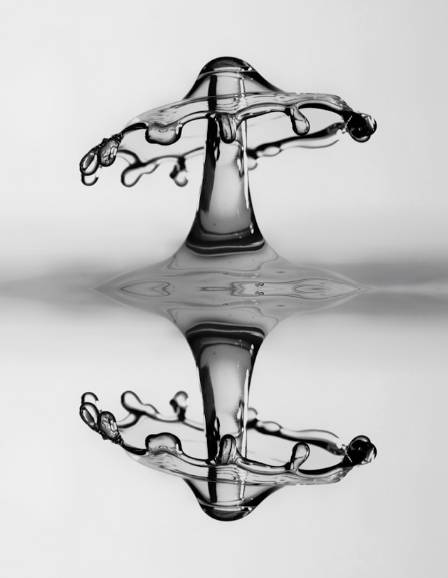
Shelf read
Master the Art of Drawing Water: Techniques for Ripples, Reflections, and Splashes
Capturing the essence of water in a pencil drawing is a skill that relies on a few fundamental optical principles. Whether you are illustrating a serene lake or a violent ocean spray, understanding how light interacts with liquid is the key to authenticity.
Caleb Montgomery
Library note
Reading tip
The full chapter continues below on the soft reading shelf.
Stack
Pocket Library
Capturing the essence of water in a pencil drawing is a skill that relies on a few fundamental optical principles. Whether you are illustrating a serene lake or a violent ocean spray, understanding how light interacts with liquid is the key to authenticity.
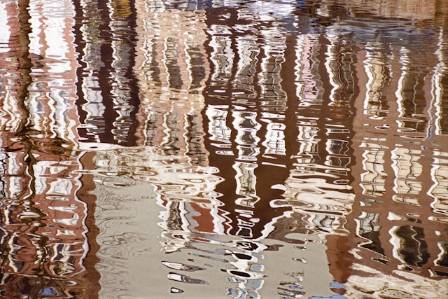
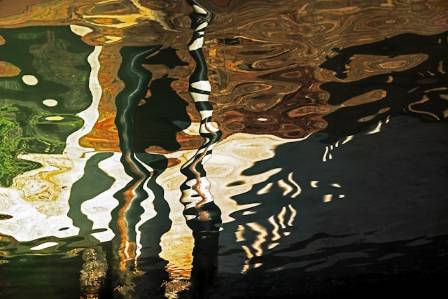
To successfully render water, keep these core guidelines in mind: dark objects will reflect lighter than their original tone, while light objects will reflect darker. Generally, the surface of the water will appear deeper in value than the sky above it. Furthermore, a reflection is not a simple mirror image; it reveals the underside of an object rather than just a vertical flip. Finally, remember that clarity is always sacrificed in the transition from object to surface—reflections invariably lose detail.
Mastering Water Reflections
Reflections in calm, stationary water are the most straightforward to execute because the rules of physics are not obscured by motion. In a still environment, a dark treeline along a lake will appear noticeably lighter in its watery counterpart. Conversely, a bright white boat will manifest in the reflection as a muted grey.
A Step-by-Step Approach to Still Water
When constructing a landscape from your imagination, following a logical sequence ensures the perspective remains believable:
-
Establish the Waterline: Begin by sketching your primary subjects, such as a cluster of trees, and define where the land meets the water.
-
Define the Bank: Create a thin, diffused reflection right at the water’s edge to ground the scene.
-
Vertical Inversion: Flip the shape of the subject vertically, starting exactly from its base.
-
Adjust Tone and Clarity: Blur the details of the reflected shape and adjust the lightness or darkness based on the rules mentioned above. For example, distant foliage might reflect higher up the waterline, showing only the upper leaves.
-
Apply Gradients: Adding a subtle grey gradient to the water surface creates a lifelike appearance. Since light skies reflect darker in the water, this contrast provides necessary depth.
Creating Dynamic Splashes and Droplets
While a scene of crashing waves or splashing animals may look intimidatingly complex, it is often easier to master than still water because it relies more on specific erasure techniques than perfect anatomical copying. The goal is to capture the "feel" of the movement rather than achieving photographic precision.
The Erasure Method
To draw chaotic water, such as a shark breaching the surface or a predator leaping into a river, follow this technical workflow:
-
Render the Subject First: Complete the animal or central object to your satisfaction before attempting the water.
-
Lay a Base Tone: Block in the water area with a mid-grey graphite base.
-
Lifting Highlights: Instead of drawing the white of the water, "lift" the graphite out using various erasers. A precision eraser pen works well for small ripples, while a kneadable eraser can dab away larger areas.
-
The Role of the Battery Eraser: This tool is a significant advantage for creating high-energy detail. Use it to "draw" sharp white dots and squiggles at the very end to simulate sparkling highlights and moving spray.
For individual droplets, such as those flying off a jaguar's fur, use a battery eraser to create irregular, "wonky" shapes rather than perfect circles. Add "tails" to some drips to indicate direction. To make them pop, shade one side of the droplet dark and the other light, leaving a thin white rim around the edge.
Challenges of Water Ripples and Transparency
Drawing ripples—such as the concentric circles around a swimming duck—can be deceptively difficult. The challenge lies in the precision of the elliptical shapes. If an ellipse is even slightly off-center or unevenly spaced, the illusion of a liquid surface is instantly broken.
Achieving Smoothness and Perspective
When drawing ripples, choose a smooth paper over a textured one to avoid a grainy appearance in the water. Ripples in the foreground should be sharper and more defined, while those in the distance should lose detail and become lighter in tone.
Using a blending tool, such as a cotton swab, can help smooth the graphite to create a glassy surface. This prevents the "paper grain" from distracting the viewer.
Drawing Objects Beneath the Surface
The most complex task is drawing an animal in clear, rippling water. This requires balancing three elements: the part of the body above water, the distorted body underwater, and the reflections on the surface.
To make clear water look convincing, emphasize high contrast. Bright sparkles look most effective when placed directly against a dark background. It is vital to preserve the white of the paper for the brightest highlights. If you are drawing an animal like a dolphin, use a paper stump to smooth the skin while perhaps leaving a bit of grain in the background to suggest a sandy seabed. This textural contrast helps separate the subject from its environment in a monochrome medium.
By breaking the process down into stages—starting with dark tones and progressively lifting out the light—even the most daunting aquatic scene becomes an achievable project.
COVER · en

Best American muscle cars of all time
American muscle cars have never truly captured the hearts of UK drivers. Their large dimensions aren’t ideal for narrow British roads, and the big engines guzzle fuel — a pricey prospect with our current fuel costs.
COVER · en

Top 10 fastest cars in the world
Since the birth of the automobile, humanity has chased the thrill of greater speed. The 1885 Benz Patent-Motorwagen—the world’s first motorized carriage—topped out at a modest 10mph. Fast forward to 2025, and road-legal cars now reach speeds over 30 times that figure.
COVER · en
Dorayaki with Custard Cream Filling
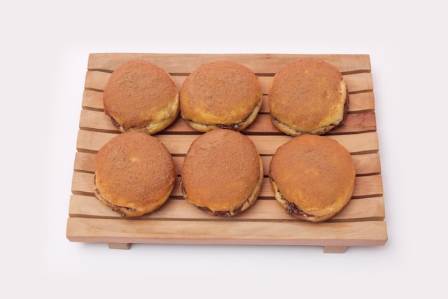
Dorayaki is a classic Japanese sweet made with two soft, pancake-like cakes sandwiched together with a sweet filling. In this version, the pancakes are filled with smooth homemade custard cream, creating a rich and comforting dessert that’s perfect for tea time, snacks, or special occasions.
COVER · en
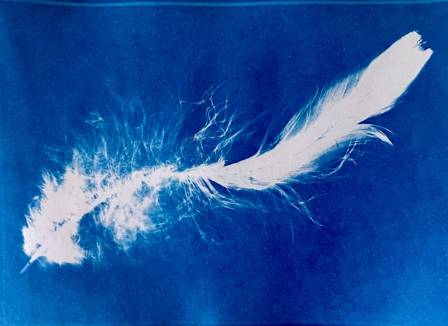
Comprehensive Guide to Artistic Painting on Feathers
Feathers offer a remarkable and unconventional medium for artists, serving as both a naturally beautiful object and a versatile canvas for creative expression. Whether you are illustrating realistic wildlife or abstract patterns, painting on feathers requires a specific set of techniques to handle the delicate texture of the quills while ensuring a lasting finish.
COVER · en
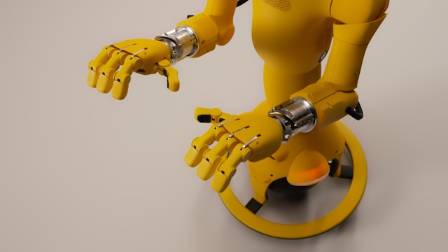
Key Facts About the Technology Powering Our Modern World
The rapid advancement of electronics, robotics, and connectivity is driven by several foundational technologies. From the microscopic architecture of semiconductors to the global reach of satellite networks, understanding these systems reveals the complexity behind the devices we use daily. This overview explores the critical developments in semiconductors, the mechanics of orbital satellites, and the integration of robotics into modern industry.
COVER · en
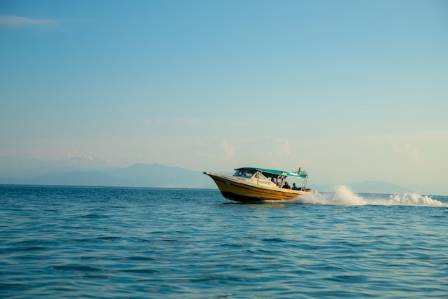
The 9 Best Boats for Ocean Boating
The article begins by emphasising that ocean conditions vary widely — tidal inlets, open sea, strong winds, large swells — and so selecting a proper boat for ocean use is more involved than a simple recreational day-boat.