Shelf read
Key Facts About the Technology Powering Our Modern World
The rapid advancement of electronics, robotics, and connectivity is driven by several foundational technologies. From the microscopic architecture of semiconductors to the global reach of satellite networks, understanding these systems reveals the complexity behind the devices we use daily. This overview explores the critical developments in semiconductors, the mechanics of orbital satellites, and the integration of robotics into modern industry.
Sophia Margaret Redford
Library note
Reading tip
The full chapter continues below on the soft reading shelf.
Stack
Pocket Library
The rapid advancement of electronics, robotics, and connectivity is driven by several foundational technologies. From the microscopic architecture of semiconductors to the global reach of satellite networks, understanding these systems reveals the complexity behind the devices we use daily. This overview explores the critical developments in semiconductors, the mechanics of orbital satellites, and the integration of robotics into modern industry.
The Foundation of Modern Electronics: Semiconductor Insights
Every electronic tool we use is built upon semiconductors. These components utilize materials with electrical conductivity that sits between that of a conductor and an insulator. A primary feature of these materials is that their conductivity can be manipulated by adding specific elements, allowing for the precise control of electrical signals. Modern microchips are incredibly dense, containing billions of transistors connected by intricate circuitry. This complexity is achieved through a rigorous manufacturing process in specialized facilities known as "fabs." These environments must be cleaner than a hospital operating room, as a single speck of dust can destroy a circuit. The production of a silicon wafer can involve over 500 individual steps, including chemical etching and cleaning, resulting in features as small as 7 nanometers—nearly 10,000 times thinner than a human hair.
Connecting the Globe: The Science of Satellite Orbits
Satellites are the backbone of global communication and navigation. Their ability to stay in space is a constant balance between their forward momentum and the pull of Earth's gravity, a principle first theorized by Isaac Newton in the 17th century. Operators utilize different orbital tiers based on the mission's needs. Low-Earth Orbit (LEO) is used for smaller satellites requiring high-speed data, while Geostationary Orbit (GEO) allows a satellite to appear stationary over the equator at an altitude of 22,236 miles. Because space in GEO is limited, satellites must occupy strictly regulated "slots." To stay in these positions, they perform "station keeping," using small thrusters to correct for slight wobbles caused by gravitational changes. At the end of their lifecycle, satellites in high orbits are moved to a "graveyard orbit" to prevent them from becoming hazardous space debris.
The Rise of Industrial and Humanoid Robotics

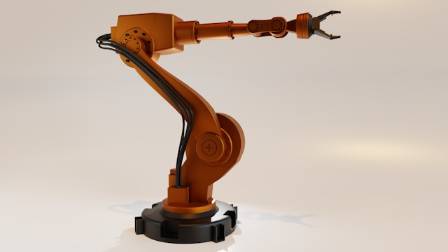
Robotics has transitioned from a specialized industrial tool to a versatile technology capable of performing complex human tasks. Articulated robots, characterized by their rotary joints, are the workhorses of the manufacturing sector, performing welding, assembly, and packaging with extreme precision. While these machines are powerful, they are not yet fully autonomous and rely on precise programming to function.
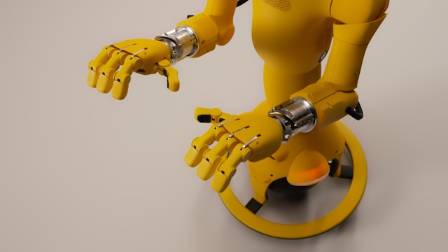
The newest frontier is the development of humanoid robots. Unlike traditional industrial arms, these machines are designed to operate in environments built for humans, such as warehouses and retail spaces. Recent milestones show that humanoids are moving beyond simple demonstrations; some have already processed over 100,000 containers in commercial facilities. As production scales and costs decrease—with some models now priced similarly to high-end laboratory equipment—robotics is becoming an accessible solution for high-volume, repetitive labor. Furthermore, the advent of collaborative robots (cobots) allows these machines to work safely alongside humans without the need for traditional safety cages, marking a significant shift in how we interact with automated technology.
COVER · en

The Remarkable Journey and History of Human Flight
Humanity has dreamed of soaring through the skies for over two thousand years. The long journey began with ancient kites and dangerous tower leaps. It eventually evolved into supersonic jetliners and advanced unmanned drones. Early inventors in ancient China created the first flying objects. Renaissance thinkers like Leonardo da Vinci later sketched complex aeronautical concepts. Hot air balloons made human flight a reality during the late eighteenth century. Scientists soon formulated the basic physical laws of modern aerodynamics. Glider experiments in the nineteenth century laid the ground work for winged aircraft. The Wright brothers achieved controlled powered flight in nineteen hundred three. Rigid airships dominated long distance travel until airplanes and jet engines took over. Digital flight control systems and computer automation revolutionized modern aviation in recent decades. The word aviation originates from the Latin word avis, which means bird. French writer Guillaume Joseph Gabriel de La Landelle coined the term in eighteen sixty-three.
COVER · en

Pottery Art: Traditions and Modernity
Pottery is among the most ancient and significant creative practices in global culture. It merges practical use with artistic expression, and for millennia it has reflected humanity’s deep connection with the natural world. In this article, we look at the history and modern developments of pottery, and how it continues to transform through innovation and contemporary creativity.
COVER · en

6 Thrilling US Destinations for Your Next Off-Road 4x4 Adventure
When it comes to off-road adventures, the excitement is palpable, regardless of the season. However, as winter blankets much of the northern US in snow, some might find their adventurous spirit hibernating. But fear not! Planning your next 4x4 escapade should always be on your radar. So let’s ignite that wanderlust! Here’s a curated list of 6 exhilarating off-road destinations across the United States that are bound to deliver unforgettable experiences.
COVER · en

Top High-Tech Pickup Trucks Today
Looking for a pickup truck that’s more than just a workhorse? Today’s trucks blend rugged utility with cutting-edge technology, creating a driving experience that feels more like handling a high-tech device than a traditional pickup. Whether navigating city streets, towing heavy loads, or exploring off-road trails, modern high-tech pickups offer comfort, innovation, and features you never thought you needed.
COVER · en

Badminton Made Simple
Badminton is among the world's most widely played sports, enjoyed by millions of people across different countries and cultures. Its fast pace, simple setup, and exciting rallies have helped it gain a large international following.
COVER · en

Draw a Fawn
Learn how to illustrate a fawn with this detailed step-by-step tutorial. Follow along as we guide you through the process of creating a realistic and charming drawing of this delicate woodland creature.