Shelf read
Best parrots to have as pets
The diversity found among parrot species is much like the diversity among dog breeds. A Great Dane and a Pekingese are both dogs, but the type of home that works well for one may be completely unsuitable for the other. Parrots are much the same, with different species having very different requirements, personalities, and lifestyles.
Sebastian Cole
Library note
Reading tip
The full chapter continues below on the soft reading shelf.
Stack
Pocket Library
The diversity found among parrot species is much like the diversity among dog breeds. A Great Dane and a Pekingese are both dogs, but the type of home that works well for one may be completely unsuitable for the other. Parrots are much the same, with different species having very different requirements, personalities, and lifestyles.
The price of a parrot can also differ dramatically. A budgerigar may cost only around £10, while a Green-winged Macaw can cost approximately £2,500.
Best Parrots for First-Time Owners
For someone keeping a parrot for the first time, the budgerigar and cockatiel are often the most straightforward choices. Their smaller size also makes them appealing to people who need to keep initial purchase and setup expenses relatively low.
However, the species itself does not determine whether a bird will make a good companion. A parrot that has not learned to step onto a hand when leaving its cage and return when asked can be difficult to manage. Anyone who cannot devote sufficient time to interaction and supervised time outside the cage may find that a parrot is not the right pet.
Ultimately, the best parrot depends on how much time you can dedicate to it, how much you are prepared to learn about parrot behavior and care, and which species best matches your circumstances.
Budgerigars as Pets
Budgerigars are widely regarded as excellent starter parrots, and many experienced parrot owners began their lives with birds of this species, Melopsittacus undulatus.
Together with canaries and cockatiels, budgerigars have been domesticated for considerably longer than many other companion bird species.
Budgerigars were first bred in the United States during the 1850s. They are small birds, generally weighing between 30 and 40 grams and measuring around 18 centimeters in length.
They are readily available, relatively inexpensive, and do not require an especially large cage. Many budgies and canaries continue to receive seed-based diets rather than pellets, although they can sometimes be selective about what they are willing to eat.
Some individual budgerigars can be particularly suspicious of unfamiliar foods. A bird may refuse to sample something new until it sees its owner eating the same food first.
In their natural habitat, budgerigars consume a range of grass seeds, fruits, berries, and other vegetation. In captivity, young, well-socialized birds can be wonderfully curious and playful companions. They are generally neither excessively destructive nor particularly loud.
Their lifespan is relatively short, and reaching ten years is uncommon. This can be especially difficult for children who become attached to them. Like larger Australian parrots such as Galahs, budgerigars should also have their fat consumption monitored because they can be susceptible to lipomas and tumors.
A tame budgerigar may learn to imitate human speech in addition to singing. Their voice tends to be high and delicate. A solitary bird may even spend considerable amounts of time singing to its own reflection in a cage mirror.
Many parrot keepers believe that parrots benefit from having another compatible bird as a companion, whether of the same sex, the opposite sex, or, in suitable circumstances, another compatible species. Some owners worry that a second bird will make their parrot less attached to them, but observing two birds communicate, play, and interact can provide a different and equally rewarding experience.
This can be particularly important because many companion parrots are left alone for eight to ten hours while their owners are working. Providing an appropriate companion may therefore be a kinder arrangement for a social bird.
Choosing a Healthy Budgerigar
Before purchasing a budgerigar, prospective owners should find out whether the bird comes from a responsible breeding program. Excessive inbreeding can contribute to poorer health and a shorter lifespan, so it is worth checking that the bird has not been produced from overly close relatives.
Cockatiels as Pets
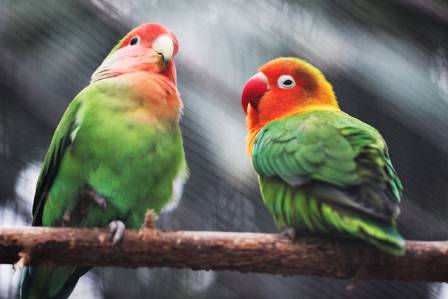
Cockatiels, like budgerigars, are among the most affordable and accessible companion parrots. Many are raised by their parents and can still become tame with appropriate handling, making them appealing choices for first-time bird owners.
Another advantage is that cockatiels generally do not produce the piercing screams associated with some larger parrot species. Birds that have been hand-reared may cost somewhat more.
Cockatiels, Talking and Training
Cockatiels usually prefer whistling and singing rather than extensive talking, although males in particular can learn and reproduce a small number of human words.
They are also relatively easy to train to wear a harness, allowing owners to take them outdoors under controlled conditions. Some keepers even practice free flight with their cockatiels, although this carries considerable danger from predators such as hawks and crows and is not recommended here.
Bird insurance policies may also exclude birds that are free flown, meaning owners could lose their insurance protection if the bird is injured, becomes ill, disappears, or dies while flying freely.
Cockatiels originated in Australia and are related to cockatoos. Their traditional coloration is grey, with males typically developing distinctive yellow facial markings. Selective breeding has since produced attractive variations, including white and pearly color forms.
Are African Grey Parrots Good Pets?
African grey parrots, including the Timneh variety, are particularly celebrated for their remarkable ability to imitate speech. Like many parrots, however, they can become distressed when kept isolated in a restrictive cage for extended periods.
They can potentially be suitable for someone keeping a first parrot, provided the owner has taken the time to understand their needs and can recognize and respond appropriately to their body language.
As with other larger parrots, African greys require several hours of daily interaction with their human family. They also benefit greatly from substantial time outside their cage, with three to four hours of supervised activity each day being a reasonable amount.
If circumstances permit, a spacious aviary can be an excellent investment. A suitably designed aviary allows the birds to experience sunlight, rain, fresh air, and natural activities such as chewing branches. Exposure to sunlight can also help provide vitamin D.
Anyone considering an African grey may benefit from reading Rosemary Low's A Guide to Grey Parrots as Pets and Aviary Birds as an introduction to keeping the species.
Irene Pepperberg's research with the famous African grey Alex greatly influenced our understanding of parrot intelligence and communication. Pepperberg also wrote the biography Alex and Me, published in 2008. Alex died at the age of 30, sadly before reaching the longer lifespan that African greys can potentially achieve.
Cockatoos as Pets
Cockatoos are exceptionally engaging birds, although in the United Kingdom the species most commonly available as pets are generally the white cockatoos.
Hand-reared cockatoos can become extremely affectionate, but this very strong attachment is one of the reasons so many eventually become difficult to manage. They are challenging companion birds and are generally not recommended for beginners.
A young cockatoo may look like a soft, cuddly teddy bear, but as it matures it can develop a powerful personality and demand far more attention and companionship than many people are able to provide.
Some cockatoos become intensely attached to one particular person and may exclude other members of the household. In extreme cases, they can become highly protective of their chosen person.
Cockatoos, Talking and Screaming
Cockatoos can have pleasant voices and may learn a limited number of words. Talking, however, is very different from screaming.
Their natural morning and evening flock calls can be extraordinarily loud. These vocalizations are normal communication, but their volume can become difficult for people living with them.
The intensity of their calls is one of the reasons many cockatoos ultimately have to be rehomed. Anyone considering one needs to be prepared for this aspect of their behavior.
Cockatoos are also remarkably responsive to rhythm and can display a strong interest in music and dancing.
Macaws as Pets
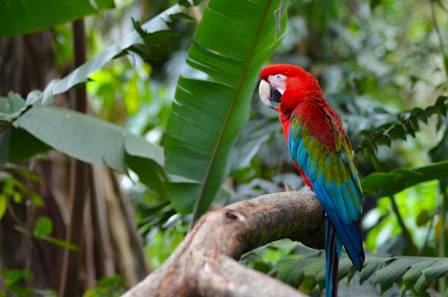
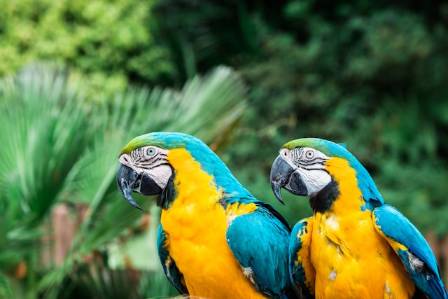
Macaws are among the most visually spectacular parrots. The Scarlet Macaw is especially famous for its striking appearance and has sometimes been described as the quintessential pirate's parrot.
There are 17 recognized macaw species, and most have appeared in the companion bird trade.
A macaw would generally not be my recommendation for someone's first parrot. However, an experienced and well-prepared owner who has thoroughly researched the species and has enough space and time can potentially keep one successfully.
Like African greys, Amazons, and cockatoos, macaws may develop feather-plucking behavior when their physical or psychological needs are not adequately met. Their purchase price and the expense of providing suitably large accommodation can also make them inaccessible to many prospective owners.
Their considerable body size means that macaws require substantially more living space than many other parrots. Some experienced keepers choose to train macaws for controlled free flight because these large birds are relatively trainable and are less vulnerable to certain predators than smaller parrots.
Free flight is nevertheless a highly specialized activity and is not appropriate for inexperienced owners. Some UK keepers have developed outdoor flight programs using an Aviator harness and tracking equipment before progressing toward carefully controlled flights without restraints.
Anyone considering this activity should understand that standard bird insurance may not provide protection if a bird is lost, injured, becomes ill, requires veterinary treatment, or dies while being free flown.
Macaws and Talking
Macaws are not particularly famous for their speech abilities, although many individuals can learn several words.
Individual birds can also develop amusing habits. For example, a macaw may imitate the bark of a dog while sitting high in a tree, potentially confusing or exciting dogs nearby that hear the unexpected sound.
Conures as Pets
Conures have become increasingly popular as more people live in apartments and other homes where space is limited.
Several different conure species are available. Sun Conures are particularly striking, with vivid yellow and orange plumage, but their vocalizations can be extremely loud.
The smaller Pineapple Conure is less visually dramatic but can be somewhat quieter, making it more appealing in situations where noise is a concern.
Conures, Talking and Training
Conures are not generally considered among the strongest talking parrots, but they can be excellent candidates for clicker training.
They often learn tricks readily, and teaching tricks through positive reinforcement provides an effective and enjoyable way for owners to interact with their birds.
Parrots remain capable of learning new behaviors throughout their lives. Training is often easier when started at a young age, but older birds can still learn new activities with patience and consistency.
Ringnecks and Alexandrines as Pets
Flocks of green Ringneck and Alexandrine parakeets have established semi-feral populations in parts of the United Kingdom, and these birds have also become increasingly popular as indoor companion birds.
Although they can develop strong relationships with their owners, some keepers believe that these long-tailed parakeets are better suited to aviary environments than to being kept primarily indoors.
Selective breeding, together with naturally occurring blue mutations, has produced Ringnecks in numerous colors.
Their ability to imitate human speech is relatively limited compared with some other parrot species, but they can learn tricks when their owner has sufficient time, patience, skill, and consistency.
Kakariki as Pets
Kakariki are energetic little parrots native to New Zealand. The word Kakariki is already plural, and the name comes from the Maori language.
They are typically green with red markings around the crown, although yellow pied and blue color mutations are also available.
Their popularity as indoor companion birds has been increasing, but their extremely active nature can make an indoor lifestyle less than ideal. Their constant movement, curiosity, and enthusiasm for flying are often better accommodated in a spacious aviary.
Normal-colored Kakariki may cost around £25, while rare blue specimens can reach approximately £150.
As with lovebirds and cockatiels, Kakariki generally benefit from living with a compatible companion. They pair readily, breed successfully, and are regarded as capable parents.
Other Medium-Sized Parrot Species
Other medium-sized parrots, including Senegal Parrots, Caiques, Quakers, and Pionus parrots, each have dedicated groups of admirers.
These species can make charming companion birds and may present fewer difficulties than some of their larger relatives.
One useful way to learn about a particular species before making a decision is to watch videos showing that species in everyday situations. Seeing their behavior, vocalizations, activity levels, and interactions can provide a much better impression than photographs alone.
CITES and Legal Documentation
Several parrot species, including African Greys, Timneh Greys, Umbrella Cockatoos, and certain macaw species, are included under Annex A of CITES.
This means prospective owners may need documentation demonstrating that the bird was legally obtained. The relevant document is known as an Article 10 certificate, and when one is required, the seller should provide it with the bird.
Checking the legal paperwork before purchasing is an important part of responsible parrot ownership.
COVER · en

The World's 5 Most Exquisite Architectural Marvels
For those passionate about architecture, these monuments and sites are indispensable on your global exploration. Each structure represents a unique blend of history, culture, and artistic brilliance, making them must-see destinations for any avid traveler.
COVER · en

Simple and Tasty Seafood Ideas for Any Night of the Week
While chicken often dominates the dinner table, seafood offers a versatile and nutritious alternative that shouldn't be overlooked. From buttery salmon and flaky cod to mild mahi-mahi and robust tuna, there is a vast array of flavors to explore. Even those who discovered their love for fish later in life can find plenty of ways to incorporate this lean protein into their regular rotation.
COVER · en

How Robots Are Pioneering Space Exploration
Space exploration has traditionally been the realm of intrepid astronauts and cutting-edge spacecraft. Yet, in recent years, a new kind of explorer has emerged—robots that surpass human physical limits to venture into the far reaches of the cosmos.
COVER · en

The Benagil Sea Cave Adventure
Portugal’s Algarve coastline is an incredible destination filled with beautiful beaches, secluded coves, charming villages, and countless sea caves. Some of these caves are easy to reach, while others require more effort. Some are fairly ordinary, but others are remarkably beautiful.
COVER · en

10 Interesting facts about the Moon
Astronomy Photographer of the Year photographers share their top facts about the Moon.
COVER · en

Ten Ways the Ocean Boosts Your Well-Being
Seawater is a treasure trove of minerals like potassium, magnesium, chloride, and sodium. These not only work wonders for your hair and skin but also bolster your immune system by combating infections and reducing inflammation. It's no wonder individuals with skin conditions like eczema are often advised to take a dip in the sea as part of their treatment.