
Shelf read
Chinese Folk Clay Art Guide
Chinese folk clay sculpture—often referred to as clay figurine art—is a handcrafted sculptural tradition grounded in everyday experience. Created from natural clay through shaping by hand, carving, and gradual drying, and sometimes strengthened through high-temperature firing, these works preserve impressions of daily life, local traditions, and collective memory.
Carter Wave
Library note
Reading tip
The full chapter continues below on the soft reading shelf.
Stack
Pocket Library

Chinese folk clay sculpture—often referred to as clay figurine art—is a handcrafted sculptural tradition grounded in everyday experience. Created from natural clay through shaping by hand, carving, and gradual drying, and sometimes strengthened through high-temperature firing, these works preserve impressions of daily life, local traditions, and collective memory.
Rather than adhering to a single uniform style, this art form has evolved into diverse regional expressions, each shaped by local environments, materials, and cultural habits.
1. Origins: The Role of Environment and Materials
The development of folk clay sculpture is deeply tied to geography. Areas rich in workable clay and supportive craft traditions tend to sustain this art across generations. The relationship between environment, material, craftsmanship, and daily life explains why regional styles vary so widely.
2. Clay Sculpture vs. Fired Clay Figurines
Though closely related, these two forms are not identical:
Clay sculpture: Focuses on shaping and expression. Some pieces remain air-dried, while others proceed to firing.
Fired clay figurines: After shaping and drying, they are kiln-fired, making them stronger and more suitable for long-term preservation.
In reality, the two often overlap. The same sculptural approach can result in very different textures and visual weight depending on firing methods and clay composition.
3. Materials and Process: More Than Just Soil
The clay used in figurative works must balance flexibility and stability. Its composition affects how well it holds detail and how it behaves during drying and firing.
A typical workflow includes:
Selecting and preparing clay: Cleaning and kneading for consistency
Hand shaping: Building forms through modeling, carving, or pressing
Controlled drying: Reducing moisture slowly to prevent cracking
Firing (optional): Enhancing durability and structure
Finishing touches: Some pieces may include glaze or surface treatments, though many remain raw
4. Everyday Themes and Subjects
Folk clay figures rarely depict grand narratives. Instead, they focus on ordinary people, familiar environments, and daily actions—working, resting, playing, or socializing. Their strength lies not in technical perfection but in how quickly they convey personality and atmosphere.
5. Aesthetic Characteristics: Intentional Simplicity
Many works avoid strict realism, choosing instead to highlight expression and movement:
Natural warmth: Visible handwork retains a human touch
Emphasis on expression: Simplified details still convey strong character
Decisive lines: Clear contours create rhythm and structure
Playfulness and symbolism: Subtle exaggeration adds charm and meaning
In essence, these works aim to evoke lived experience rather than replicate reality.

6. How to Appreciate the Work
For viewers and collectors, several aspects can guide appreciation:
Focus on facial expression, posture, and gaze
Recognize intentional distortion of proportions
Observe the confidence and flow of carved lines
Examine surface qualities, including raw clay or glaze
Consider the implied story or moment behind the figure
7. Care and Display
To preserve these works:
Avoid cleaning with water; use a soft dry brush
Keep away from humidity and temperature fluctuations
Limit exposure to direct sunlight and heat
Ensure stable placement to prevent damage
8. Contemporary Continuation
Folk clay sculpture is not confined to history. Today, it thrives through studios, exhibitions, educational programs, and digital platforms. Modern works often blend traditional roots with contemporary artistic expression, offering collectors pieces that are both historical and current.

Conclusion
The enduring value of Chinese folk clay figurative art lies not in perfect realism but in its ability to express character, memory, and human warmth through simple materials. By understanding its regional diversity, material qualities, and visual language, one can better appreciate its depth—and recognize why it leaves such a lasting impression.
COVER · en

10 Remarkable Architectural Wonders Around the World
Great architecture can transform a city and leave a lasting impression on everyone who sees it. Behind every iconic structure are architects and engineers who combine creativity, technology, and precision to turn bold ideas into reality.
COVER · en

Hanuman Langurs: The Sacred Monkeys of India
The story of the sacred monkey reaches back more than two thousand years and is closely associated with the ancient Hindu epic centered on Hanuman, the revered monkey deity.
COVER · en

8 Fascinating Facts About Kyiv’s Motherland Monument
Kyiv's Motherland Monument, towering over the city, is one of Ukraine's most iconic landmarks, symbolizing strength and resilience. The monument has sparked numerous discussions, particularly with the ongoing change of its Soviet-era symbolism to something more reflective of modern Ukraine. Here are eight intriguing facts about this colossal structure that might surprise even the locals.
COVER · en

Earth’s Largest Deserts: From Ice to Sand
Deserts are landscapes defined by extreme dryness—typically receiving less than 250 mm of precipitation annually—and often losing more moisture via evaporation than they gain from rainfall. While many imagine deserts as endless seas of sand, dunes actually cover only around ten percent of desert terrains. Deserts can be classified into four main types: hot and dry (aka subtropical), semi arid, coastal and cold (polar) environments. Below is a portrayal of the ten largest deserts on Earth by total area, following the same order as in the original piece, with each section heading freshly worded.
COVER · en

Moss-backed Tanager
The Moss-backed Tanager is a classic member of the chunky-bodied Bangsia tanager group. It has a relatively large head covered in violet-blue feathers, which creates a strong contrast with its mostly muted green body. A bright yellow patch in the center of the upper breast adds another distinctive feature to its appearance.
COVER · en
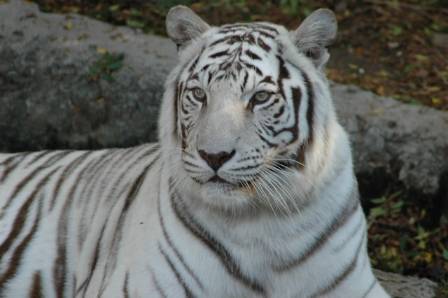
The White Tiger: Genetics, Myths, and Conservation—Unveiling Nature’s Rare Marvel
Few creatures command attention like the white tiger. With its snow-white fur, jet-black stripes, and piercing blue eyes, this big cat stands as one of nature’s most captivating spectacles, weaving a spell over anyone fortunate enough to see it. Found in select conservation parks worldwide—including Taman Safari Bali—white tigers have long been surrounded by myths, from being revered as divine beings in ancient cultures to being misunderstood as a distinct tiger species. Yet beyond their breathtaking appearance lies a fascinating story of genetics, adaptation, and conservation. Contrary to popular belief, white tigers are not a separate subspecies nor albino; they are a rare genetic variant of the Bengal tiger (Panthera tigris tigris), shaped by a recessive gene that alters their pigmentation. Their existence highlights the complexity of natural genetics, while their presence in zoos and conservation centers plays a pivotal role in raising awareness about the broader threats facing all tiger populations. In this exploration, we delve into the science behind their unique coloration, their physical traits, the challenges they face in the wild, and their vital role in conservation education—separating fact from fiction to celebrate one of nature’s most extraordinary creations.