Shelf read
Overview of the Belted Kingfisher
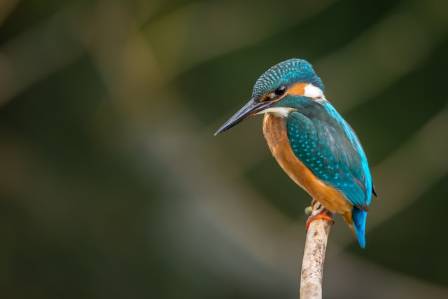
The belted kingfisher (Megaceryle alcyon) is a bird that is relatively easy for beginner birdwatchers to identify because of its unusual shape and distinctive call.
Zachary Bell
Library note
Reading tip
The full chapter continues below on the soft reading shelf.
Stack
Pocket Library
The belted kingfisher (Megaceryle alcyon) is a bird that is relatively easy for beginner birdwatchers to identify because of its unusual shape and distinctive call.
This medium-sized bird has a sturdy body, a large head, and a noticeable crest on top of its head. Its bill is long, straight, thick, and sharply pointed, while its tail is short and square-shaped.
One interesting feature of the species is that females are more brightly colored than males, which is uncommon among many bird species. Both sexes have blue-gray feathers on their backs with white markings on their wings. Their undersides are white with a broad blue-gray band across the chest, while females also have an additional reddish-brown band on their chest.
Feeding Behavior and Diet
Belted kingfishers usually search for food by sitting on branches, posts, or structures near the water and watching for prey below. They may also hover above the water before suddenly diving down to capture food.
Fish make up the main part of their diet, with preferred prey including sticklebacks, mummichogs, trout, and stonerollers. However, they are opportunistic feeders and consume a wide range of other animals.
Their diet may also include crayfish and other crustaceans, mollusks, insects, amphibians, reptiles, small birds, small mammals, and occasionally berries.
Classification and Distribution
The belted kingfisher belongs to the family Alcedinidae within the order Coraciiformes. This group contains about 91 species across 17 genera worldwide.
Kingfishers are distributed across much of the world, except for polar regions and some isolated islands. The greatest diversity of species occurs in the Australasian region.
Six kingfisher species are found in the Americas, and three of these occur in the United States. Among them, the belted kingfisher has the widest distribution throughout the country.
Learning the unique call of the belted kingfisher can greatly improve birdwatching experiences, allowing observers to recognize this species even before seeing it.
Size
Belted kingfishers typically measure between 11 and 14 inches in length.

Habitat and Range
Belted kingfishers are commonly found near aquatic environments, including streams, rivers, ponds, lakes, and estuaries. They usually prefer areas with relatively open water and limited vegetation.
The species includes both migratory and non-migratory populations. During breeding season, some individuals move into northern regions of the United States and Canada, while others remain in southern states, Mexico, and Central America.
Some populations live in the United States year-round. During winter, many kingfishers move to areas where water remains unfrozen, ensuring they can continue accessing their aquatic food sources.
Life Cycle and Breeding Behavior
For most of the year, belted kingfishers are solitary birds. They only form pairs during the breeding season.
During breeding, they are generally monogamous, although they usually choose a new mate each year. When attracting a female, males often present food as part of the courtship process.
Both males and females defend their nesting territories during the breeding period. Their nests are usually located inside burrows dug into the banks of rivers, lakes, or other bodies of water. The pair works together to create the nesting tunnel.
Females typically produce one or two broods per breeding season, with each clutch containing about five to eight eggs. The eggs are incubated for approximately 22 to 24 days, and young birds remain inside the nest for around 27 to 29 days after hatching.
Unique Adaptations of Young Kingfishers
One fascinating characteristic of belted kingfishers is the digestive system of their young.
While nestlings are still developing, their stomachs contain high levels of acidity, allowing them to break down hard materials such as bones, fish scales, and shells from their prey.
By the time young birds leave the nest, their digestive systems have changed. They can no longer dissolve these hard parts, so instead they produce and regurgitate pellets containing undigested material, similar to many other birds of prey and fish-eating species.

COVER · en

The fascinating lives of badgers
Badgers are compact, strong, and muscular mammals famous for their powerful digging abilities and underground homes known as “setts.” Some badger tunnel systems can stretch for more than 50 meters beneath the ground. They belong to the mustelid family, a group that also includes pine martens, otters, ferrets, polecats, and wolverines.
COVER · en

5 Fascinating Secrets Behind Paris’ Icon: Notre Dame Cathedral
Notre Dame Cathedral is more than just a Gothic masterpiece; it is the beating heart of Paris and one of the most recognized landmarks in the world. Construction spanned nearly two centuries, from the 12th to the 14th, and its soaring towers, intricate sculptures, and stained-glass windows have inspired millions of visitors for over 850 years. Yet behind its grandeur lie surprising tales that many travelers overlook. Here are five little-known stories that reveal a different side of this legendary monument.
COVER · en

Stunning Ways To Fill An Awkward Corner In Your Entryway
Entryways and foyers often contain strange corners that are surprisingly difficult to decorate. Furniture may be too large, too narrow, or simply not practical enough for the available area. Odd angles, limited floor space, and inconvenient dimensions can make finding the right piece feel almost impossible.
COVER · en

10 Ways to Master Urban Fashion
Urban fashion is one of the most versatile styles, effortlessly combining comfort with trendiness. Once considered fringe, streetwear has now become a staple in mainstream fashion, with many high-end designers incorporating street-inspired looks into their collections.
COVER · en

Whipped Cream Vodka Cocktails for Bars & Cafés: Menu-Worthy Recipes & Profit Tips
Whipped cream vodka cocktails are standout menu items for bars, cafés, and dessert shops—they blend playful nostalgia, visual appeal, and high profit margins, while remaining easy to execute consistently. The key to their success lies in stable, picture-perfect whipped cream toppings (powered by professional dispensers and N₂O chargers) and strategic flavor pairings that cater to diverse guest preferences.
COVER · en

Effects on Your Body When You Increase Fruit and Vegetable Intake
Within the realm of nutrition, debates abound about what's truly beneficial or detrimental. However, one consensus prevails: a call to incorporate more fruits and vegetables into our diets. You don't need to be a math whiz to grasp the notion of consuming five daily servings of fruits and veggies, but do you know what this recommendation truly entails?