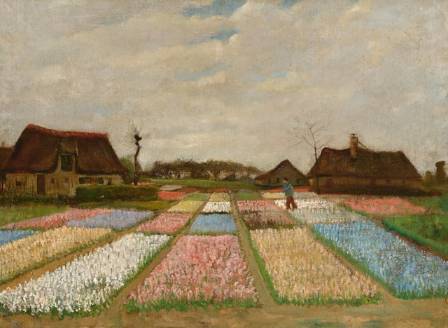
Shelf read
Floral Landscape Composition: Designing a Field Study in the Wildflower Meadows
When it comes to the artistic design of floral landscapes, painters often develop personal methods to ensure their work succeeds, yet several fundamental principles remain constant. Creating a compelling study of a flower field requires a balance between observing nature and applying intentional artistic structure.
Gladys Irene Thornton
Library note
Reading tip
The full chapter continues below on the soft reading shelf.
Stack
Pocket Library
When it comes to the artistic design of floral landscapes, painters often develop personal methods to ensure their work succeeds, yet several fundamental principles remain constant. Creating a compelling study of a flower field requires a balance between observing nature and applying intentional artistic structure.
Design is a discipline of many moving parts, and mastering it is often a lifelong pursuit. This ongoing challenge is precisely what keeps the craft engaging. If nature handed us perfectly composed scenes, we would soon tire of the process. Instead, the world offers us infinite complexity to keep us focused and inspired from youth to old age. An old artist once noted that there are no dull subjects, only uninspired ways of looking at them—a sentiment that rings especially true when standing before the vast, chaotic beauty of a meadow in bloom.
The Art of Interpretation Over Imitation
Beginning artists often assume that success lies in making a painting look exactly like the scene before them. While a reasonable starting point, true artistry goes much deeper. Most floral landscapes do not appear as ready-made motifs. In fact, a field of flowers is often a tangle of textures and colors that requires a "translation" into art.
A helpful philosophy for the field is to paint what you see in terms of color and light, but paint what you know when it comes to design. The initial impulse is always to capture the specific energy of a blooming location, but beginners often find their skills lagging behind their vision. With dedicated practice, this gap closes. There is no end to the quest for understanding, which is something for which every artist should be grateful.
Creating Ordered Beauty in the Meadow
A successful floral landscape depends more on its abstract qualities than on a literal count of every petal. As artists, we are interpreters rather than recorders. We must make adjustments to a scene to enhance its inherent beauty and create a sense of order amid the randomness of a wildflower field. This "ordered beauty" satisfies a fundamental human need to find meaning and structure in the world around us.
There are several principles—not rigid rules—that guide good taste in painting. While lists of these principles can grow to be overwhelming, they can largely be distilled into a single, vital concept: Patterns.
The Power of Patterns in Design
In landscape design, patterns serve two main purposes: creating focal points and guiding the viewer’s eye on a journey through the meadow. These areas of interest are attractive because they provide contrast and movement.
To be effective, patterns require a mix of value, color, and shape contrast, balanced with just enough repetition to provide stability. In a flower field, identify the most significant contrasts—perhaps a cluster of bright poppies against a dark thicket of grass—and then emphasize these elements. By organizing the natural chaos into intentional shapes, you elevate the study from a mere sketch to a work of art.
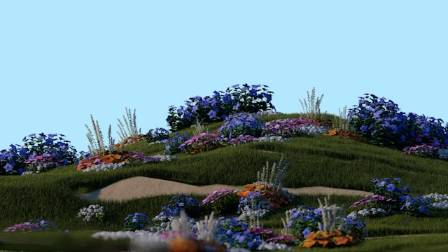
Case Study: Analyzing a Field Location
Consider a typical meadow scene. While beautiful, a vast field of flowers often presents a challenge: a large, uninteresting foreground or a lack of a clear path for the eye to follow. The goal is to identify these problem areas early.
For instance, a field might have beautiful silhouetted blooms in the middle distance, but the foreground may feel cluttered and flat. By using your imagination, you can organize random clumps of flora into a rhythmic pattern that leads the viewer toward the background trees or mountains. You might also choose to crop the scene, removing unnecessary foreground to focus on a more compelling wide-ratio view.
Executing the Field Study
When performing a study on location, the goal is to grab the essentials of the light and atmosphere quickly. By pulling scattered elements together into organized shapes, you turn the randomness of the site into an artistic narrative. You might move a mountain peak slightly to the right or adjust the curve of a floral path to better frame the center of interest.
The process of recording a feeling about nature is both a technical exercise and a restorative one. Setting up in a quiet spot allows you to capture the morning light as a readable design. These small outings are vital for any artist, providing a focused way to interact with the world and bringing a sense of clarity and purpose to the day's creative work.
COVER · en

10 Intriguing Insights Into the American Robin
While they are frequently observed in many environments, there is much to discover about this specific thrush species. The American Robin is among the most recognized and widely distributed songbirds in North America. Occupying habitats ranging from dense woodlands and open meadows to suburban gardens and city parks across Canada, the United States, and Mexico, this bird also serves as the state symbol for Wisconsin, Michigan, and Connecticut. While many recognize their cheerful, rhythmic caroling, here are several lesser-known details about this celebrated avian species.
COVER · en

How to Paint Like Hayao Miyazaki
If you’ve ever seen Miyazaki’s watercolor sketches, like the one above, you already know how extraordinary they are. He has an uncanny ability to transform rough pencil marks and washes of color into lively, energetic drawings that practically seem to move. Miyazaki has been working in this style for decades—going back at least to the 1970s, well before Future Boy Conan (1978).
COVER · en

Top 10 Easy Drink Recipes for Every Occasion
Whether you’re craving a morning pick-me-up, a refreshing poolside sip, or a festive mocktail for a holiday gathering, these 10 easy drink recipes balance flavor, simplicity, and versatility. They span matcha-based energizers, fruity spritzers, and cozy lattes—with options for both caffeinated and non-alcoholic needs:
COVER · en

Manned Combat Submersibles
Lockheed Martin collaborated with Submergence Group, LLC to design and, in partnership with Germanischer Lloyd, to commercially classify the S301i dry manned submersible. Following this, Lockheed Martin and Submergence Group advanced the design to the next-generation vehicle, the S302.
COVER · en

The Five Most Renowned Landmarks in France
France is renowned for its rich history and stunning landmarks, many of which are concentrated in Paris. However, beyond the capital city, the entire country boasts a wealth of historical treasures, each telling a unique story and leaving a lasting impression on visitors. Here are five must-visit landmarks that epitomize France's cultural and architectural significance:
COVER · en

What Is Ice Cream?
How Ice Cream is Made and How to Store It