Shelf read
The Honeyeater: Australia's Nectar-Loving Aviators
Australia's rich birdlife includes one of the continent's most widespread and successful families: the honeyeaters. These fascinating birds have diversified into an impressive range of species, each adapted to take advantage of the abundant nectar produced by Australia's distinctive native plants. From tiny species to large wattlebirds, honeyeaters are an outstanding example of evolutionary adaptation within Australian wildlife.
Gideon Cross
Library note
Reading tip
The full chapter continues below on the soft reading shelf.
Stack
Pocket Library
Australia's rich birdlife includes one of the continent's most widespread and successful families: the honeyeaters. These fascinating birds have diversified into an impressive range of species, each adapted to take advantage of the abundant nectar produced by Australia's distinctive native plants. From tiny species to large wattlebirds, honeyeaters are an outstanding example of evolutionary adaptation within Australian wildlife.
What Are Honeyeaters?
Honeyeaters are members of the Meliphagidae family, which is found primarily in Australia and nearby regions such as New Guinea, New Zealand, and several Pacific islands. Around 70 honeyeater species occur in Australia, making this family one of the country's most diverse groups of birds. Their body sizes vary considerably, from the tiny 8-gram Mistletoebird to the much heavier Yellow Wattlebird, which can reach approximately 60 grams.
The term "honeyeater" comes from the birds' well-known habit of feeding on floral nectar with their specialized brush-ended tongues. However, nectar is not their only source of food. Most honeyeaters also consume insects and spiders, while some occasionally eat seeds or fruit. Nectar supplies a rapid source of energy, whereas invertebrates provide important protein and other nutrients.
Physical Characteristics and Adaptations
Honeyeaters possess a variety of specialized physical features that help them obtain nectar. Their most distinctive adaptation is their tongue, which is long, extendable, and divided into fine strands at the end, giving it a brush-like appearance. This structure enables the birds to collect nectar efficiently from deep inside flowers. The tongue can extend considerably beyond the end of the bill, allowing access to nectar that may be unavailable to other birds.
Most species also have elongated, curved bills that work together with their specialized tongues. These bills are particularly effective for reaching into tubular flowers. Bill length and shape differ between species according to the foods they commonly consume. Nectar specialists generally have longer and more strongly curved bills, while species that consume larger proportions of insects often possess shorter and straighter bills.
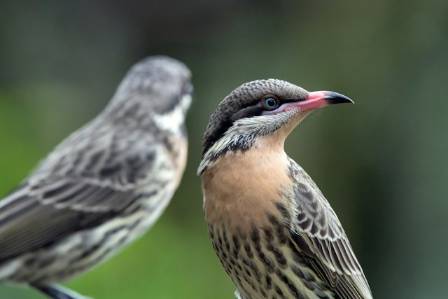
Their plumage is equally diverse. Some honeyeaters, including male Scarlet Honeyeaters, display striking combinations of bright red and black. Others, such as Brown Honeyeaters, have much more understated olive-brown and cream coloration. Many species can be recognized by distinctive markings around the face, including patches near the eyes, ear tufts, or areas of brightly colored bare skin. Wattlebirds are particularly recognizable because of the fleshy wattles or lappets that extend from their cheeks.
Notable Species
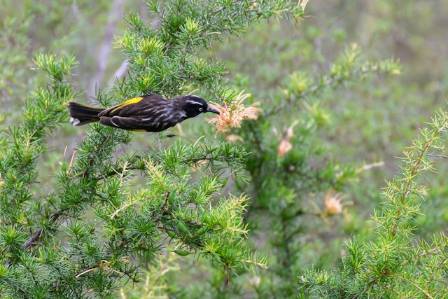
The New Holland Honeyeater is among the family's most easily recognized members. Its striking black-and-white plumage and prominent white eye patch make it distinctive. These energetic birds commonly inhabit heathlands and coastal scrub in southeastern and southwestern Australia. They can be highly territorial and frequently drive much larger birds away from preferred feeding locations.
The Noisy Miner has become increasingly widespread in towns and suburbs, although its expansion can negatively affect smaller bird species. These confident grey-brown honeyeaters have a noticeable yellow patch behind the eye and live in cooperative groups. Their persistent and loud vocalizations are a familiar feature of their habitats. Although they are a native species, their numbers have increased substantially in human-altered environments, where they can dominate bird communities and prevent other species from accessing resources.
The Blue-faced Honeyeater is a relatively large honeyeater recognized by its vivid blue bare facial skin and olive-green body. It occurs across northern and eastern Australia and is frequently observed in small family groups. These birds have also adapted successfully to urban gardens and parks. Despite their common name, young birds have yellow facial skin, which gradually becomes blue as they mature.
Wattlebirds are among the largest members of the honeyeater family. The Red Wattlebird, Yellow Wattlebird, and Little Wattlebird are all substantial and assertive birds that actively defend areas containing abundant nectar. Their harsh, noisy calls are characteristic sounds of Australian bushland, especially in places where eucalypts and banksias are flowering.
The Regent Honeyeater is one of Australia's most endangered bird species. Once broadly distributed throughout southeastern Australia, its numbers have fallen to fewer than 400 wild individuals as a result of habitat loss and competition from more aggressive birds. Conservation programs, including captive breeding and habitat restoration, are being used in an effort to prevent the species from disappearing.
Ecology and Behavior
Honeyeaters are important pollinators within Australian ecosystems. As they travel between flowers while feeding on nectar, pollen becomes attached to their bodies and is transferred to other flowers. This helps many native plants reproduce. Eucalypts, banksias, grevilleas, and numerous other Australian plants have developed relationships with honeyeaters, producing large quantities of nectar and forming flowers that suit the birds' feeding techniques.
This interaction is one of Australia's most significant pollination relationships. In many other parts of the world, insects such as bees perform much of the pollination work, while Australian ecosystems often depend substantially on birds. Some native plants are so closely associated with honeyeaters that their ability to reproduce can be reduced when honeyeater populations decline.
Honeyeaters are typically energetic and vocal, and many species have complicated social systems. Territorial behavior is especially common around areas with plentiful food. During breeding periods, males may establish and protect territories, using aerial displays and aggressive pursuits to challenge intruders. Their vocalizations vary greatly, ranging from pleasant warbling notes to rough chatter and unusual mechanical sounds.
Breeding generally takes place during spring and summer, when flowering resources are abundant. Most species construct small cup-shaped nests using materials such as grass, bark, and spider webs. These nests are commonly positioned among the outer branches and foliage of trees or shrubs. In most species, both parents participate in incubating eggs and feeding chicks. Some species, including the Noisy Miner, use cooperative breeding systems in which several adults assist in raising the young.
Seasonal Movements and Migration
A number of honeyeater species are nomadic or partly migratory, moving through the landscape in response to flowering conditions. This strategy is particularly noticeable among species living in inland Australia, where rainfall and flowering events can be highly unpredictable. The Yellow-faced Honeyeater is responsible for one of the country's most impressive seasonal movements, with thousands of birds traveling from mountain breeding areas toward coastal regions for the winter each autumn.
These movements are more flexible than the fixed migrations associated with many other birds. Honeyeaters respond directly to the availability of food resources. An area may attract large numbers of birds during a year with favorable flowering conditions, yet have very few honeyeaters the following year. This nomadic lifestyle reflects the irregular distribution and unpredictable availability of nectar-producing plants throughout much of Australia.
Conservation Challenges
Although many honeyeater species continue to be widespread and relatively common, others are facing serious conservation pressures. The clearing of natural vegetation for agriculture and urban expansion has been one of the most significant threats. Species dependent on extensive continuous habitats or particular vegetation communities have been especially vulnerable.
The Regent Honeyeater provides a clear example of these problems. It once occurred widely throughout the box-ironbark forests and woodlands of southeastern Australia. Extensive habitat destruction, together with competition from more aggressive species, has brought the bird close to extinction. Its social behavior has created an additional concern because young birds normally learn songs from adults, and this cultural transmission can be disrupted when populations become extremely small and fragmented.
Climate change represents another developing concern. Changes in flowering schedules could interfere with the timing of nectar availability, while altered rainfall patterns and increasingly frequent droughts may reduce food resources. Such changes could disturb the close ecological relationship between honeyeaters and the plants on which they depend.
Introduced and expanding species can also create difficulties. Aggressive birds such as Common Mynas and Noisy Miners may prevent smaller honeyeaters from using high-quality habitat. Feral cats and foxes can prey on species that spend time feeding on or near the ground. At the same time, changes to vegetation that favor aggressive native species such as Noisy Miners can indirectly increase competition for other honeyeaters.
Cultural Significance
Honeyeaters have an important place in the cultures of Indigenous Australians. Different species appear in Dreamtime stories and traditional practices across Australia. Indigenous communities have historically hunted some honeyeaters for food, used their feathers in ceremonial clothing, and paid attention to their behavior as signs of seasonal changes and the availability of natural resources.
In contemporary Australian culture, honeyeaters are also popular visitors to gardens and backyards. Many people deliberately grow native flowering plants to attract them. Their energetic behavior, sometimes combative personalities, and attractive appearance have also made them favorites among birdwatchers and wildlife photographers.
Creating Honeyeater-Friendly Habitats
People who want to encourage honeyeaters to visit their gardens can start by growing native plants that produce abundant nectar. Banksias, grevilleas, callistemons or bottlebrushes, eucalypts, and melaleucas are all valuable choices because their flowers provide food favored by honeyeaters. A garden containing several levels of vegetation, ranging from low ground cover to taller trees, can offer both feeding opportunities and shelter.
Access to water is especially valuable during periods of high temperatures and low rainfall. A shallow birdbath with a textured surface can provide a safer place for honeyeaters to drink and bathe. Avoiding pesticides is also important because many honeyeaters rely on insects as part of their diet, and reducing chemical use helps maintain a healthy supply of natural prey.
Dense shrubs can provide additional nesting opportunities and protection from predators. Many honeyeater species build their nests in the outer foliage of shrubs, where they can maintain a clear view of their surroundings and detect approaching threats.
Conclusion
Honeyeaters are among Australia's most successful and distinctive bird families, with a remarkable range of adaptations that allow them to take advantage of the continent's specialized plant life. Their contribution as pollinators makes them vital to Australian ecosystems, while their striking appearances and lively behavior have made them popular with people throughout the country. As Australia's natural landscapes continue to experience change, protecting honeyeaters will depend on continued conservation programs, preservation of suitable habitat, and restoration of damaged ecosystems. Greater knowledge and appreciation of these remarkable birds can help safeguard the complex ecological relationships that give Australian environments their unique character and value.
COVER · en

Robots for Fabricated Metals and Manufacturing
FANUC America is a global leader in robotic solutions for metal fabrication, excelling in applications such as arc welding, laser welding and cladding, thick-section resistance welding, friction spot joining, plasma cutting, and laser cutting. Their offerings include both ready-made solutions and fully customized turnkey systems.
COVER · en

6 of the Most Breathtaking Sunset Spots Around the Globe
Sunsets are nature’s spectacular performance, occurring daily across the globe. Whether you're on a tight budget or traveling in style, the beauty of a sunset is always within reach. It doesn’t matter if you’re atop a mountain or relaxing by the shore of a remote beach, each sunset is a unique show. Even in the midst of a desert or at the foot of an ancient ruin, sunsets offer a magical way to end your day. Here’s a list of the most unforgettable sunsets I’ve experienced, and I hope this collection grows to 1,000 incredible sunsets someday!
COVER · en
How Long Is a Tamandua’s Tongue?
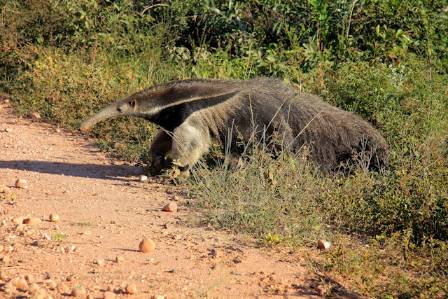
Tamanduas, also known as lesser anteaters, are smaller relatives of the giant anteater. They inhabit a wide range of environments, including tropical forests, scrublands, grasslands, and wetlands, and they are frequently found close to rivers and streams.
COVER · en

The Pasta Shapes We Always Come Back To
At Serious Eats, pasta inspires strong feelings. Everyone has favorite noodle shapes, strong dislikes, and very specific reasons behind their choices.
COVER · en
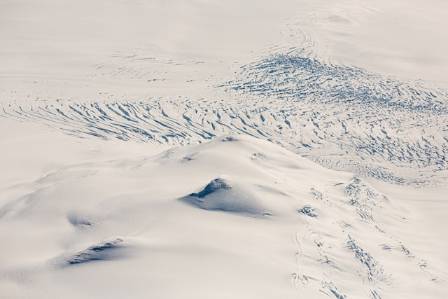
Earth’s Largest Deserts: From Ice to Sand
Deserts are landscapes defined by extreme dryness—typically receiving less than 250 mm of precipitation annually—and often losing more moisture via evaporation than they gain from rainfall. While many imagine deserts as endless seas of sand, dunes actually cover only around ten percent of desert terrains. Deserts can be classified into four main types: hot and dry (aka subtropical), semi arid, coastal and cold (polar) environments. Below is a portrayal of the ten largest deserts on Earth by total area, following the same order as in the original piece, with each section heading freshly worded.
COVER · en
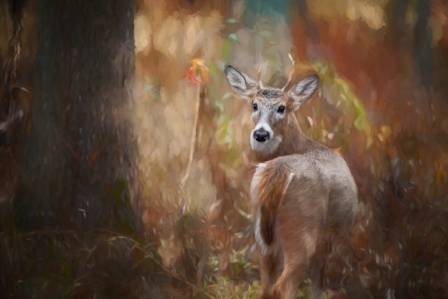
Deer Paintings – 10 Renowned Masterpieces
Deer have long been a favored subject for artists, featuring in paintings across history and diverse cultures. Admired for their beauty, elegance, and symbolic meaning, they’ve been portrayed in countless styles and mediums—from lifelike representations to abstract interpretations.