Shelf read
How Long Is a Tamandua’s Tongue?
Tamanduas, also known as lesser anteaters, are smaller relatives of the giant anteater. They inhabit a wide range of environments, including tropical forests, scrublands, grasslands, and wetlands, and they are frequently found close to rivers and streams.
Seren Blake
Library note
Reading tip
The full chapter continues below on the soft reading shelf.
Stack
Pocket Library
Tamanduas, also known as lesser anteaters, are smaller relatives of the giant anteater. They inhabit a wide range of environments, including tropical forests, scrublands, grasslands, and wetlands, and they are frequently found close to rivers and streams.
Southern tamanduas, scientifically known as Tamandua tetradactyla, are native to South America, with a range extending from Venezuela southward to northern Argentina. Northern tamanduas, Tamandua mexicana, occur from southern Mexico to northwestern Peru.
Tamanduas Have Remarkably Long, Sticky Tongues
The tamandua's specialized tongue is an excellent tool for collecting insects. It can reach nearly 16 inches in length, allowing the animal to probe deep inside narrow passages within termite mounds and ant colonies.
Tamanduas belong to the anteater suborder Vermilingua. The name Vermilingua means “worm-tongue,” a reference to the unusually long tongues shared by these insect-eating mammals.
They Can Consume Thousands of Insects Every Day
Tamanduas use their powerful claws to rip apart decaying logs and other structures where insects hide. Once they expose their prey, they use their long, sticky tongues to gather it.
Although they are called anteaters, their diet is not limited to ants. They also consume termites, mealworms, bees and honey, as well as the occasional piece of fruit.
Their mouths are extremely small and open to only about the width of a pencil eraser. Since tamanduas have no teeth, food is processed with the help of a muscular gizzard inside the stomach.
Their Tails Help Them Move Through Trees
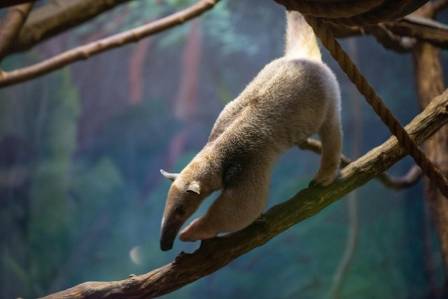
Tamanduas are arboreal animals, meaning that they spend much of their lives in trees. Their prehensile tails are particularly useful when climbing because they can wrap around branches and provide additional support and balance.
The lower surface of the tail is hairless, which gives the animal a better grip when holding onto branches high above the ground.
Tamanduas Are Not Suitable Pets
Tamanduas may look unusual and fascinating, but they are highly specialized wild animals and are not appropriate household pets. They require specific care and living conditions that are difficult to provide in a normal home.
In certain places, keeping a tamandua without the appropriate license is illegal. Unfortunately, some animals die during illegal transportation associated with the exotic pet trade.
They Have a Powerful and Smelly Defense
Tamanduas can become targets for predators such as harpy eagles and large cats, including ocelots and jaguars. However, these small anteaters have several ways to defend themselves.
Their large claws and strong forelimbs can be used to resist an attacking predator. When threatened, tamanduas can also hiss and release a strong-smelling substance from their anal glands, creating an unpleasant deterrent that may cause predators to back away.
They Walk on the Sides of Their Feet
The enormous claws on a tamandua's feet make ordinary flat-footed walking difficult. Instead, these animals walk on the outer sides of their paws, keeping their large claws elevated as they move across the ground.
Although tamanduas generally remain on land when traveling outside trees, they are capable of swimming. In 2010, researchers documented an unusual observation of a northern tamandua swimming in the Panama Canal.
Mothers Carry Their Young on Their Backs
Tamanduas are sometimes mistaken for marsupials because mothers carry their young, but they are not related to marsupials such as koalas and wallabies. Tamanduas do not have pouches.
Instead, a mother carries her young pup directly on her back during the first few months of its life. Outside the breeding period, tamanduas are generally solitary animals.
Young tamanduas remain with their mothers for approximately one year. After becoming more independent, they eventually leave their mothers and begin living on their own.
COVER · en

Building the Sky: The Engineering Marvels of Megatall Skyscrapers
In the contemporary architectural landscape, we find ourselves on the brink of the "megatall" era, a term coined by the Council on Tall Buildings and Urban Habitats (CTBUH) for structures surpassing 1,968 feet. Currently, only three such giants grace our skylines: the Burj Khalifa in Dubai, standing proudly at 2,717 feet since its completion in 2010; the Shanghai Tower, soaring to 2,073 feet in Shanghai, China, finalized in 2015; and the Makkah Royal Clock Tower in Mecca, Saudi Arabia, reaching 1,972 feet, concluded in 2012.
COVER · en
Get to know toucans!
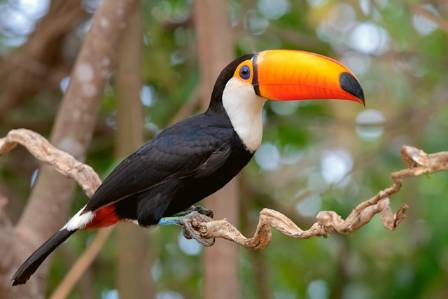
For the first time in more than 30 years, the San Diego Zoo successfully hatched toco toucan chicks—two healthy babies at once. The young toucans left their nest in July 2017 after spending almost two months growing and developing inside. Today, the pair can be seen living in the Parker Aviary habitat at the Zoo.
COVER · en
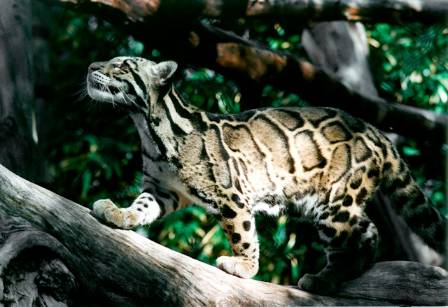
Meet the acrobatic clouded leopard
It may look a little like a tiger, but the clouded leopard is a completely different kind of cat. This remarkable animal moves through the trees of Southeast Asia’s rainforests with incredible agility. It can race up tree trunks, support its body while hanging from a branch with a single paw, and even move while hanging upside down. Its climbing abilities are truly extraordinary.
COVER · en

The Ultimate Guide to Hibiscus Care
Hibiscus is much more than an attractive tropical blossom. It serves as the state flower of Hawaii, the national flower of South Korea, and is widely regarded as a symbol of affection, appreciation, and resilience.
COVER · en

8 Fascinating Facts About Kyiv’s Motherland Monument
Kyiv's Motherland Monument, towering over the city, is one of Ukraine's most iconic landmarks, symbolizing strength and resilience. The monument has sparked numerous discussions, particularly with the ongoing change of its Soviet-era symbolism to something more reflective of modern Ukraine. Here are eight intriguing facts about this colossal structure that might surprise even the locals.
COVER · en

5 Best Classic Pickup Trucks of All Time
It would be difficult to imagine anything more deeply tied to American culture than the traditional pickup truck. For generations, these vehicles have been essential to the country’s growth and daily life. They continue to work alongside people on farms, construction sites, and as dependable personal transportation.