Shelf read
Mastering the Depths: A Comprehensive Guide to Underwater Art
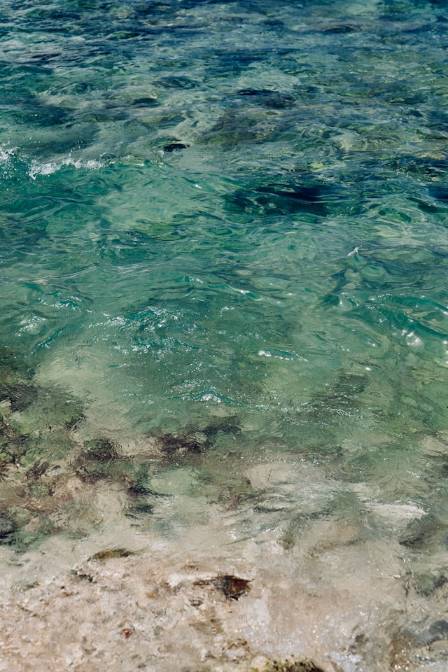
Rendering underwater scenes requires a specialized approach to perspective and light. To create a convincing aquatic environment, an artist must often depict two worlds simultaneously: the atmospheric background above the surface and the submerged reality in the foreground. This transition creates a "window" effect that invites the viewer into the water.
Stephen Andrew Thornton
Library note
Reading tip
The full chapter continues below on the soft reading shelf.
Stack
Pocket Library
Rendering underwater scenes requires a specialized approach to perspective and light. To create a convincing aquatic environment, an artist must often depict two worlds simultaneously: the atmospheric background above the surface and the submerged reality in the foreground. This transition creates a "window" effect that invites the viewer into the water.
Imagine observing a lake from a boat. When looking toward the horizon, your eyes catch the surface of the water, reflecting the sky or nearby foliage. However, as you look directly downward near the hull, that surface reflection vanishes, revealing the world beneath. The challenge for the painter lies in successfully balancing these two distinct visual states.
The Fundamental Principle of Water Painting
The most critical rule to remember when painting water is that horizontal surfaces primarily reflect what is above, while vertical views (or looking directly down) reveal what is beneath. The appearance of water changes based on the observer's viewing angle.
When you view water at an acute angle—anything less than 90 degrees—you see a reflection of the surroundings. This is why water often appears blue, as it mirrors the sky. However, as your viewing angle becomes steeper and approaches a perpendicular (90-degree) orientation, the reflection disappears. This creates a clear view through the surface to submerged fish, coral, or the lakebed.
Applying Atmospheric and Underwater Perspective
In traditional landscapes, atmospheric perspective dictates that distant objects become paler and bluer because particles in the air scatter light. In an underwater context, this principle shifts. While receding objects still become bluer, they actually grow darker rather than paler. This occurs because light originates from above the surface; the deeper an object sits or the further it recedes into the distance, the less light can reach it.
To create a believable sense of depth in an aquatic scene, you must adjust three elements as objects move away:
-
Hue: Shift the colors toward a deeper blue or teal.
-
Tone: Gradually darken the values to simulate light loss.
-
Contrast: Reduce the tonal range. Fewer details are visible in deep or murky water, so the difference between highlights and shadows should decrease.
Water clarity also dictates the intensity of these shifts. In a clear tropical reef, the changes may be subtle. In a sediment-heavy pond, objects might disappear into a dark green void within just a few feet.
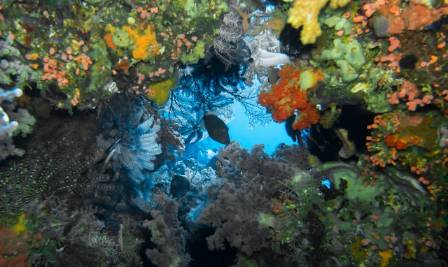
Examples of Underwater Perspectives
Different viewing angles require unique artistic strategies to maintain realism.
Surface-to-Depth Transitions
In scenes like a lily pond, the background should feature clear reflections of the sky and flowers. As the view moves toward the foreground, the angle becomes steeper, and the surface reflections should be faded out using a "glaze"—a thin, transparent layer of paint. This reveals the submerged stems and lakebed. Objects under the water are identified by their cooler, bluer tones and reduced contrast compared to those on the surface.
The Cross-Section View
This perspective acts like a glass-walled aquarium, showing the world both above and below the waterline. Above the water, colors remain warm (leaning toward reds and yellows). Below the surface, the palette shifts immediately to cooler blues. For a subject like a whale, the portion of the body extending into the depths should be significantly darker and bluer than the portion breaking the surface.
Viewing from Beneath
When the viewer is entirely submerged and looking upward, the underside of the water's surface acts as a mirror. Because it is being viewed at an angle from below, it reflects the world beneath the water (like the sea floor or a shark's belly) rather than the sky above. To make a creature appear to be swimming toward the viewer, its distant tail must be considerably darker and bluer than its head.
Core Techniques for Realistic Results
The secret to mastering this subject is to paint what you actually see rather than what you assume an object looks like. Human brains often simplify colors; we think of a whale as "gray" or a plant as "green," but underwater, those colors are radically transformed by light and depth.
By observing how light is filtered by the water and how the viewing angle dictates reflection, you can move beyond simple "blue water" and create a sophisticated, believable environment. Focus on maintaining high contrast and warmth in the foreground, while allowing the background to recede into a dark, low-contrast blue.
COVER · en

Effective Indoor Attire for Maintaining Body Heat
High energy costs often make heating an entire residence impractical. A more cost-effective strategy involves maintaining personal warmth while moving through cooler areas of the home. By focusing on personal insulation, you can remain comfortable without relying on expensive central heating.
COVER · en

The Japanese Sika Deer: Ecology, Culture, and Conservation
The Japanese sika deer (Cervus nippon nippon) stands as one of the most adaptable and biologically significant subspecies of sika deer, native to the forested landscapes of Japan. Renowned for its striking appearance and complex behavioral patterns, this small deer has not only shaped the ecosystems of its native habitat but also left a lasting mark on human culture and global conservation efforts. While its population thrives in Japan, its introduction to other continents has sparked both ecological challenges and innovative conservation solutions, making it a species of great interest to biologists, ecologists, and cultural historians alike.
COVER · en

Vietnamese Fresh Spring Rolls
These light Vietnamese fresh spring rolls offer a refreshing alternative to the traditional deep-fried version and have become a beloved dish for many households. They make an excellent light appetizer, especially when paired with one or both dipping sauces included in the recipe. They are also ideal for gatherings since they can be prepared in advance.
COVER · en
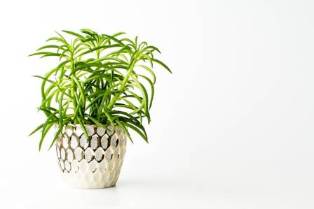
Expert Strategies for Integrating Greenery and Planters into Your Interior
Incorporating vegetation is a sophisticated method for making a home feel both modern and ecologically conscious. However, selecting the right species and containers requires an understanding of both aesthetics and biology. This guide combines the perspectives of interior design and phyto-design to help you curate the perfect botanical environment for your home.
COVER · en
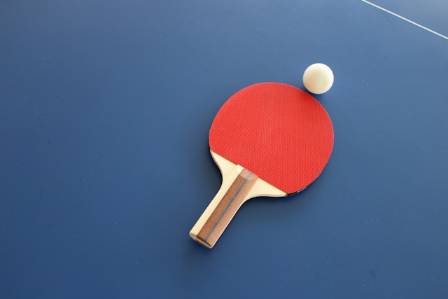
Exploring the Advantages of Playing Table Tennis
Table tennis, often referred to as ping pong, enjoys widespread popularity across the globe. While the exact number of active players is unknown, it's clear that the sport is embraced by millions—whether for casual play or in a competitive setting. Especially prominent in Asia and Europe, table tennis continues to grow, with the sport governed internationally through numerous associations across more than 200 countries and regions.
COVER · en
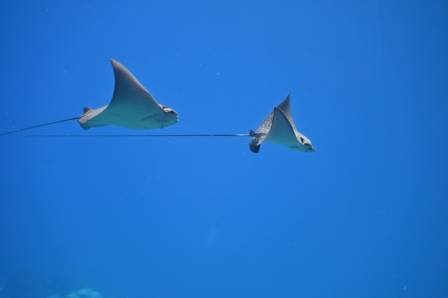
Sting Rays at California State Beaches
Stingrays are bottom-dwelling fish that are often found partially hidden beneath the sand in shallow coastal waters. Their bodies are broad and flattened, with their eyes and nostrils positioned on the upper surface, while their mouths and gill openings are located underneath.