PL
pipilandbook.com
Famous Animal Paintings You Need to Know

Shelf read

Famous Animal Paintings You Need to Know

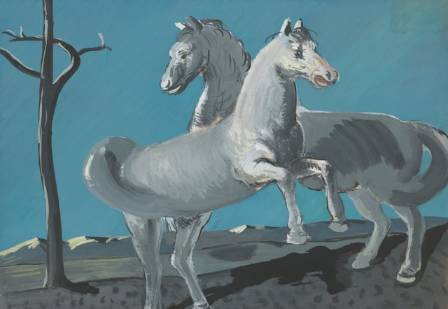
Animal-themed artworks have always played a significant role in the history of art. There is even a specialized category known as equine art, which focuses on portraying horses. Animals existed on Earth long before humans, so it is no surprise that they have fascinated artists since prehistoric times. Early cave paintings found in southern France and Spain often depict hunting scenes. The meaning behind these images—especially those of predators and large prey—remains widely debated.

T

Theodore Mason

Library note

Reading tip

The full chapter continues below on the soft reading shelf.

Stack

Pocket Library
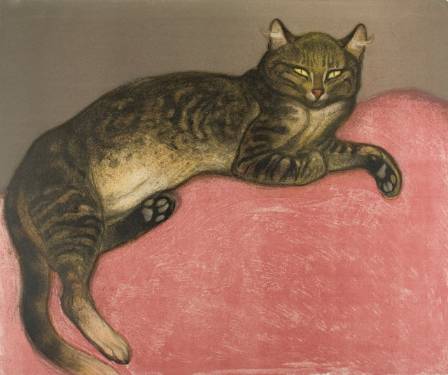
Animal-themed artworks have always played a significant role in the history of art. There is even a specialized category known as equine art, which focuses on portraying horses. Animals existed on Earth long before humans, so it is no surprise that they have fascinated artists since prehistoric times. Early cave paintings found in southern France and Spain often depict hunting scenes. The meaning behind these images—especially those of predators and large prey—remains widely debated.
Charcoal drawings of animals such as horses, bison (Altamira), reindeer (La Pasiega), lions and rhinos (Chauvet), and mammoths (Rouffignac) may have been connected to ritualistic or spiritual practices. Some images are believed to symbolize fertility or successful hunts, while others may have been created to invoke supernatural forces. This symbolic relationship between humans and animals continued in tribal and folk art across the world. Since survival depended heavily on hunting, animals became central subjects in early artistic expression.

Animal Art in Ancient Civilizations

In early societies such as those in Ancient Egypt, India, and China, animals were closely tied to religious beliefs, particularly in polytheistic traditions. Archaeological discoveries reveal numerous depictions of both domesticated and wild animals. While many were essential food sources, others were considered sacred and revered.
In Egypt, tomb paintings often featured beloved animals like cats and dogs. Cats, in particular, were associated with goddesses such as Bastet and Mafdet, and were sometimes mummified after death. In China, both real creatures (such as dogs, monkeys, and snakes) and mythical ones (including dragons, phoenixes, and unicorns) played important roles in artistic traditions.
Similarly, in Hindu culture, animals hold equal importance to humans due to beliefs in reincarnation. Many deities combine human and animal features—for example, Ganesha, who has the head of an elephant. In contrast, early Hebrew and Arabic cultures gradually shifted toward symbolic representations of animals, eventually influencing monotheistic traditions such as Judaism, Christianity, and Islam. Meanwhile, Greek and Roman thought introduced the idea of a natural hierarchy, placing humans at the top.

Animals in Monotheistic Art Traditions
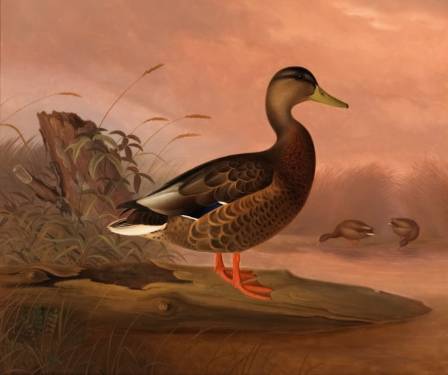
With the rise of monotheism, the concept of a supreme, human-like deity dominating the natural world became central. This belief influenced how animals were represented in art, particularly within Judeo-Christian traditions.
Animal symbolism remained important in Christian art, appearing in early catacomb paintings, medieval manuscripts, Gothic and Romanesque sculptures, Renaissance decorations, and tapestries. During the Middle Ages, a unique genre known as the “bestiary” emerged—illustrated collections describing both real and mythical animals along with their symbolic meanings according to Christian teachings.

Animal Paintings in More Recent History

From the 17th century onward, artists increasingly depicted animals within scenes of hunting or domestic life. These images often explored the tension between humans and animals, symbolizing untamed nature or human instincts.
In the 18th century, scientific curiosity about the natural world grew, and artists began to focus more on accurately portraying animals and their environments. By the 19th century, especially in Victorian society, animals were commonly shown as part of aristocratic life.
Modern and contemporary art of the 20th and 21st centuries has combined earlier traditions, treating animals both symbolically and realistically. Today, many artists draw inspiration from ancient cultures while exploring the anatomy and presence of animals in new ways. Additionally, contemporary art often reflects concerns about animal rights, addressing issues related to exploitation and ethical treatment.

Pech-Merle Cave – Ice Age Mammoth

The Pech-Merle cave in southern France contains artwork dating back between 25,000 and 16,000 BC. Located deep within the cave, these paintings include vivid depictions of mammoths and other large animals. Created during the Ice Age, the images follow the natural contours of the cave walls, forming striking compositions such as the frieze in the “Chapel of the Mammoths.”

Ancient Egypt – Bronze Cat (c. 600 BC)

In ancient Egyptian culture, Bastet was a goddess represented as both a domestic cat and a powerful lioness. A well-known bronze sculpture from around 600 BC, often called the Gayer-Anderson Cat, reflects both divine symbolism and realistic animal form. The statue was originally decorated with gold and gemstones and later restored before being placed in the British Museum.

Albrecht Dürer – The Rhinoceros (1515)

Albrecht Dürer created a famous woodcut of a rhinoceros without ever seeing one in person. Instead, he relied on written descriptions. The resulting image appears almost mechanical, yet it served as an important early example of scientific illustration. Even after Europeans eventually saw real rhinos, Dürer’s work remained influential as an educational and artistic reference.

Diego Velázquez – Head of a Stag (c. 1634)

This Baroque painting by Diego Velázquez, created during his time at the Spanish royal court, depicts a stag with remarkable realism. While Velázquez is best known for royal portraits, this work highlights his ability to capture the vitality and strength of an animal. It is believed to be connected to royal hunting traditions.

Carel Fabritius – The Goldfinch (1654)

Carel Fabritius, a student of Rembrandt, painted The Goldfinch, a small but strikingly realistic image of a chained bird. With minimal brushstrokes, he achieved a lifelike effect while also experimenting with perspective and light. The painting demonstrates both technical skill and artistic innovation.

George Stubbs – Whistlejacket (c. 1762)

George Stubbs was renowned for his depictions of horses. In Whistlejacket, he painted a life-sized portrait of a racehorse owned by the Marquess of Rockingham. The horse is shown without a rider, emphasizing its elegance, strength, and natural beauty.

Edwin Landseer – The Monarch of the Glen (1851)

Edwin Landseer created this iconic image of a stag in the Scottish Highlands. The painting became extremely popular and came to symbolize the majesty of nature. It has since been widely used in branding and advertising due to its powerful imagery.

Henri Rousseau – Surprised! (1891)

Henri Rousseau’s jungle scene, also known as Tiger in a Tropical Storm, presents a dramatic and somewhat surreal vision of nature. Influenced by imagination and exotic imagery, the painting explores the wild and instinctive side of both animals and human nature.

Pablo Picasso – Bull Series (1945)

Pablo Picasso’s series of lithographs depicting a bull demonstrates the evolution of artistic abstraction. Across eleven stages, he gradually simplifies the form from a detailed representation to a minimal, linear design. This work reflects the development of art history, from prehistoric imagery to modern abstraction.

Damien Hirst – Away from the Flock (1994)

Damien Hirst’s controversial installation features preserved animals displayed in formaldehyde. In Away from the Flock, a sheep is presented as both a physical object and a symbol. The work raises questions about life, death, and humanity’s attempt to control or preserve living beings, often sparking debate about ethics in contemporary art.

More on this shelf

CV

COVER · en

5 Fascinating Secrets Behind Paris’ Icon: Notre Dame Cathedral

5 Fascinating Secrets Behind Paris’ Icon: Notre Dame Cathedral

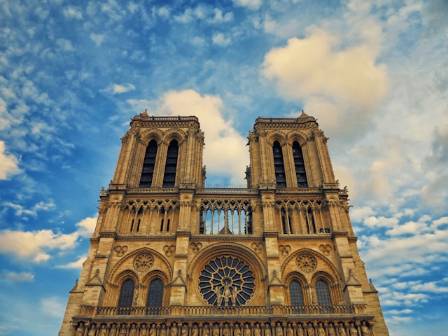
Notre Dame Cathedral is more than just a Gothic masterpiece; it is the beating heart of Paris and one of the most recognized landmarks in the world. Construction spanned nearly two centuries, from the 12th to the 14th, and its soaring towers, intricate sculptures, and stained-glass windows have inspired millions of visitors for over 850 years. Yet behind its grandeur lie surprising tales that many travelers overlook. Here are five little-known stories that reveal a different side of this legendary monument.

CV

COVER · en

Create a Cozy and Inviting Living Room

Create a Cozy and Inviting Living Room

The living room is often the central gathering place in a home—a room for relaxing after a busy day, spending time with family, welcoming guests, or simply enjoying some quiet time. Designing this space to feel comfortable and inviting can make the entire home feel warmer and more pleasant.

CV

COVER · en

Next-Generation Surface Metrology: The Evolution of Autonomous Spherometry

Next-Generation Surface Metrology: The Evolution of Autonomous Spherometry

Advanced spherometers represent the pinnacle of precision instrumentation, engineered to quantify the microscopic curvature of spherical topographies. These systems have become indispensable in high-tech sectors such as aerospace optics, semiconductor lithography, and advanced material science, where sub-micron surface fidelity dictates mission-critical performance. By leveraging ultra-sensitive hardware and intelligent processing, modern spherometry platforms allow researchers to achieve unprecedented levels of quality control and surface characterization.

CV

COVER · en

Purse Styles for Every Occasion

Purse Styles for Every Occasion

No matter how carefully you put together your wardrobe, the handbag you choose can completely transform your overall appearance. Whether you are heading out for daily errands, attending a professional meeting, or dressing up for a special occasion, the right bag can elevate your outfit and complete your style.

CV

COVER · en

Best Classic British Cars in History

Best Classic British Cars in History

From Sean Connery’s unforgettable drives in the legendary Aston Martin DB5 as James Bond, to the timeless Mini and the elegant curves of the Jaguar E-Type, British automotive history is filled with iconic machines. These remarkable vehicles easily earn a place among the greatest classic cars ever produced in the UK. Let’s explore the top 10—see which legends made the cut and which ones didn’t. The choices are tough…

CV

COVER · en

Meet the acrobatic clouded leopard

Meet the acrobatic clouded leopard

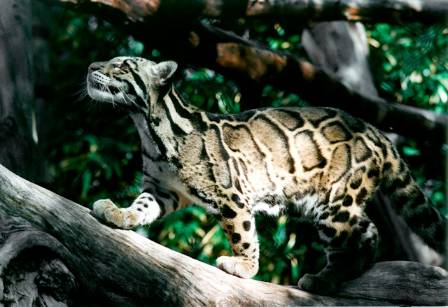
It may look a little like a tiger, but the clouded leopard is a completely different kind of cat. This remarkable animal moves through the trees of Southeast Asia’s rainforests with incredible agility. It can race up tree trunks, support its body while hanging from a branch with a single paw, and even move while hanging upside down. Its climbing abilities are truly extraordinary.