Shelf read
Little known facts about giraffe in the wild
To celebrate the upcoming World Giraffe Day, let’s explore some fascinating facts about giraffes and see how much you really know about these incredible animals. Did you know that a group of giraffes is called a tower? Have you ever heard that giraffes can make sounds similar to horses, cows, and even humans? Did you know World Giraffe Day is celebrated on June 21 because it often falls on the longest day of the year?
Evan Turner
Library note
Reading tip
The full chapter continues below on the soft reading shelf.
Stack
Pocket Library
To celebrate the upcoming World Giraffe Day, let’s explore some fascinating facts about giraffes and see how much you really know about these incredible animals. Did you know that a group of giraffes is called a tower? Have you ever heard that giraffes can make sounds similar to horses, cows, and even humans? Did you know World Giraffe Day is celebrated on June 21 because it often falls on the longest day of the year?
If some of these facts are new to you, there is no need to worry. Discovering new information is part of the fun, and learning more about wildlife helps us appreciate the amazing creatures that share our planet. Let’s play Truth or Tall Tale and uncover some surprising facts about the tallest animal on Earth.
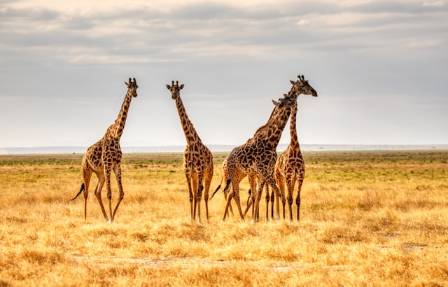
Every giraffe has a one-of-a-kind spot pattern.
Every giraffe has its own unique coat pattern. Much like human fingerprints, no two giraffes have exactly the same arrangement of spots. These markings are not only beautiful but also serve an important purpose.
Giraffe spots work as natural temperature-control systems. Beneath each spot is a network of blood vessels that helps the animal release excess heat and maintain a comfortable body temperature in hot environments. Their dark brown markings against their golden coats also help them blend into the grasslands, providing camouflage from potential threats.
With all those patterns helping them hide, do you think you could find a giraffe standing among the savanna trees?
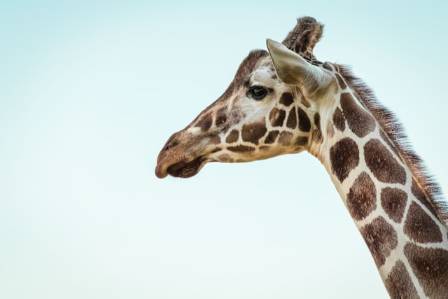
Giraffes have more neck bones than people.
Although a giraffe’s neck can stretch up to eight feet long and weigh hundreds of pounds, it contains the same number of vertebrae as a human neck: seven.
The difference is that each giraffe neck vertebra is much larger, with some measuring up to 10 inches long. These oversized bones connect together to create the famous long neck that makes giraffes so recognizable.
Their impressive necks provide several advantages. They allow giraffes to reach leaves high above the ground, reducing competition for food with other herbivores. Their elevated viewpoint also helps them detect approaching predators, and other animals often pay attention to giraffes because they can spot danger from farther away.
Male giraffes also use their long necks during battles with rivals. This behavior, known as “necking,” involves swinging their necks against one another to establish dominance. It may look fascinating, but it is definitely not something humans should try.
A giraffe’s tongue works like an opossum’s tail.
Giraffe tongues and opossum tails have one interesting feature in common: they are both prehensile, meaning they can grab and hold objects.
A giraffe’s tongue is one of the most impressive in the animal kingdom. It can grow to around 18 inches long, while the average human tongue is only about three to three and a half inches long.
This powerful, flexible tongue allows giraffes to carefully pick leaves from trees, even when those leaves are surrounded by sharp thorns. Their tongues are also protected by a thick, sticky saliva coating that helps defend their mouths from scratches and injuries caused by rough plants.
With such a remarkable tongue, giraffes might just win the competition for the coolest animal mouth accessory.
Male and female giraffes cannot be distinguished.
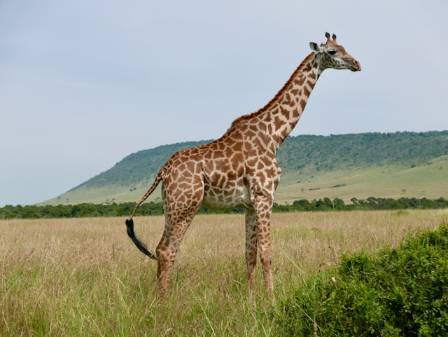
Adult male and female giraffes can be identified by differences in both their size and behavior.
Male giraffes are usually larger, reaching heights of up to 19 feet and weighing more than 4,000 pounds. They can stand taller than some two-story buildings and weigh more than many vehicles. Females are slightly smaller, typically growing up to around 16 feet tall and weighing about 2,500 pounds.
Their horns, called ossicones, also provide clues. Males usually have thicker ossicones with additional bumps and larger structures on top, while females tend to have thinner ones.
Their personalities differ as well. Females are generally more social and often live in groups, while males are more likely to travel alone. If you encounter a solitary giraffe in the wild, there is a good chance it is a male.
The name “giraffe” comes from other animals.
The giraffe’s original scientific name was Giraffa camelopardalis. This name came from the belief that giraffes looked like a combination of two familiar animals: a camel because of their body shape and a leopard because of their spotted coat.
Modern scientists have since identified four distinct giraffe species. The name Giraffa camelopardalis is now used for the Northern giraffe. The other three species are the Reticulated giraffe (Giraffa reticulata), Southern giraffe (Giraffa giraffa), and Masai giraffe (Giraffa tippelskirchi).
Genetic research shows that these species are significantly different from one another, with differences comparable to those between polar bears and grizzly bears. It may sound surprising, but these giraffe relatives are more unique than many people realize.
Cleveland Metroparks Zoo supports giraffe conservation.
Efforts to protect giraffes in the wild require cooperation between conservation organizations, researchers, and zoos. Cleveland Metroparks Zoo works with the Giraffe Conservation Foundation (GCF), founded by Dr. Julian Fennessy, to support giraffe protection efforts.
The Zoo contributes to projects involving population surveys, educational programs, and scientific research focused on giraffe ecology, genetics, and conservation.
GCF collaborates with governments in East Africa to strengthen giraffe conservation programs. Their work includes monitoring Northern giraffe populations in Uganda and studying a mysterious skin condition affecting giraffes that currently has no confirmed cause.
Everyone can help protect wild giraffes.
Protecting giraffes is not only the responsibility of scientists and conservation groups. Individuals can also make a difference.
Visiting zoos that support conservation programs, learning about giraffe protection, and contributing to wildlife conservation campaigns are all ways people can help. When communities work together, we can support efforts to preserve giraffes and ensure these extraordinary animals continue to thrive in the wild.
Every action, big or small, can contribute to a safer future for giraffes.
COVER · en
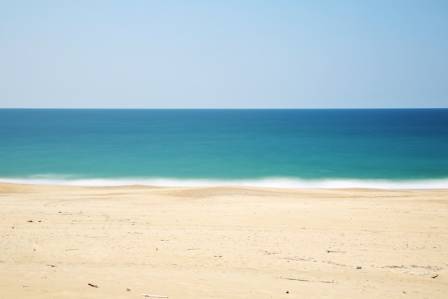
How Coastal Deposition Forms Wonderful Sandy Beaches Across Our Shorelines
Coastal landscapes feature unique geographical areas known as beaches, which develop through the steady accumulation of sediment in the zones fluctuating between the daily high and low tides. These landforms typically emerge within protected environments such as inlets or sheltered coastal pockets nestled safely between prominent headlands. Whenever a significant alteration in the shape of the shoreline occurs, it slows down moving water, allowing various sediments to become trapped and gradually accumulate over long periods. When these sandy accumulations happen specifically at the innermost curve of a bay, geographers refer to them as bay head beaches.
COVER · en

Japanese Landscape Art
Dive into the world of Japanese landscape art, where nature, seasons, and tradition come alive through timeless prints and paintings.
COVER · en

The Most Enduring Bridge: Seven Essentials About the Golden Gate Landmark
Few structures captivate the imagination like the Golden Gate Bridge. An engineering marvel born from the hardship of the Great Depression, it has become a symbol not only of San Francisco but of American ingenuity and ambition. This refreshed look explores seven reasons why the Golden Gate Bridge remains a landmark in history, culture, and design.
COVER · en

Rediscovering 5 Joy of Family Road Trips
In an age where airports often buzz with vacationers heading for sun-soaked resorts, many families overlook the enchanting experience of hitting the open road. Road trips invite adventure, spontaneity, and unforgettable memories, offering a distinctly enriching alternative to the cookie-cutter vacations that dominate today’s travel landscape.
COVER · en

What Is Ice Cream?
How Ice Cream is Made and How to Store It
COVER · en

Tokyo Tower: A Nation Reborn, Standing 333 Meters Tall
Tokyo Tower, a 333-meter symbol of Japan's post-war rebirth, was the nation's tallest structure from 1958 until 2012 and remains a beloved landmark, broadcast antenna, and registered cultural property. The article explores its history, engineering secrets, night illuminations, observation decks, and the ongoing maintenance that keeps this "Japanese brother of the Eiffel Tower" alive.