Shelf read
Learn how to weave a raffia basket
Basket weaving has been part of human life for countless generations. It began with people gathering natural fibers from their surroundings and transforming them into objects that were useful, durable, and beautiful. Over time, countless approaches to basket making have developed, with different materials, stitches, patterns, techniques, and construction methods creating an incredible variety of designs.
Declan Marlowe
Library note
Reading tip
The full chapter continues below on the soft reading shelf.
Stack
Pocket Library
Basket weaving has been part of human life for countless generations. It began with people gathering natural fibers from their surroundings and transforming them into objects that were useful, durable, and beautiful. Over time, countless approaches to basket making have developed, with different materials, stitches, patterns, techniques, and construction methods creating an incredible variety of designs.
Sometimes I find myself looking closely at the baskets around my home. There are the beautiful ones I take with me when I visit the farmers market, the baskets I use to store yarn and fabric, and an old, slightly damaged basket that remains a favorite sleeping spot for my cat beside the fireplace.
I also remember the washing basket my parents once used, as well as a particularly beautiful basket made by a local artist and craftswoman for my parents when my sister was a baby. That basket was created around 40 years ago and still carries a special meaning.
Looking at these handmade pieces always amazes me. They are detailed, thoughtful, and full of character, and I love knowing that every one of them came from someone's imagination, hands, and patience.
At first glance, some baskets can appear incredibly complicated. Their intricate patterns and carefully constructed shapes can make the craft seem far beyond the abilities of a beginner. But I believe one of the wonderful things about basket making is that anyone can learn to weave a basket of their own.
Starting with a small and simple project is a great way to learn. Once you become fascinated by the process, however, basket weaving can become surprisingly addictive. There is something familiar and satisfying about working with natural fibers, and before long, it can feel almost like returning to something you already knew.
How Can You Make Your Own Basket?
You may already have many of the materials needed to begin at home, so you don't necessarily have to purchase specialized supplies right away.
Whenever possible, I encourage beginners to start by using what they already have. Experimenting with available materials is an excellent way to discover whether you enjoy the craft before investing in new supplies.
Of course, the material you choose will influence both the construction process and the final characteristics of your basket. Different fibers have different levels of flexibility, strength, thickness, and structure, so the same weaving technique can produce very different results depending on what you use.
Working With Raffia
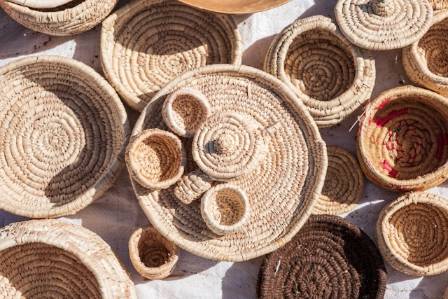
The baskets shown here are made using raffia, a natural fiber harvested from a type of palm tree. I like to dye my raffia with natural plant-based dyes, which allows me to create different colors while maintaining the natural character of the material.
Raffia has enough strength to provide structure, but it remains soft and flexible while you're working with it. This makes it quite different from something like stiff willow, which produces a much more rigid form.
Because raffia is relatively pliable, baskets made with it are generally softer and less structured than the sturdy baskets traditionally used for carrying laundry. Instead, raffia works beautifully for decorative and lightweight objects such as fruit bowls, lampshades, small trinket dishes, or baskets designed to hang on a wall.
What Exactly Is Raffia?
Raffia is a natural leafy fiber obtained from palm trees. It is available in several grades, with differences in length, thickness, quality, and overall structure.
Longer raffia strands are particularly useful when you're working with wrapping techniques because they allow you to continue around the basket without having to join pieces as frequently.
Shorter or lower-grade raffia can also be useful. Rather than using it as the visible wrapping material, you can build it into the interior of the basket as a core, providing volume and helping form the basic structure.
What About Paper and Plastic Raffia?
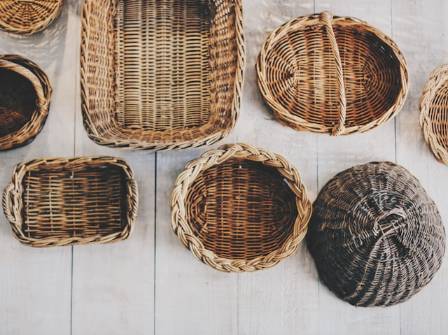
You may also come across synthetic raffia at yarn and craft stores. Plastic raffia is often sold as a continuous spool, which makes it possible to work with a crochet hook rather than a traditional weaving needle.
Natural raffia can actually have a slightly plastic-like texture, but there is an important difference between the two. Genuine raffia is a plant-based natural fiber that will eventually break down and return to the environment, while synthetic raffia is made from plastic.
Paper raffia is another possibility. It isn't quite as strong as natural raffia, but it can be an interesting substitute if genuine raffia isn't available where you live.
The material you choose ultimately depends on your preferences, availability, and the type of basket you want to create.
Where Can You Find Raffia?
I usually purchase my raffia from String Harvest because I know Cass sources and imports fair-trade materials.
However, you don't necessarily need to order it from a specialty supplier. Natural raffia can also be found at many art and craft stores, fabric shops, and some floral supply stores. Florists commonly use raffia to secure bouquets and bunches, so floral suppliers can sometimes be a surprisingly good source.
Online marketplaces such as Etsy are another option. Buying from a seller located in your own country can also make shipping simpler and potentially less expensive.
You Don't Have to Use Raffia
If you aren't ready to purchase raffia because you're not sure whether basket weaving will become a hobby you enjoy, don't let that stop you from experimenting.
Fabric strips, ordinary string, twine, embroidery floss, ribbon, and many other similar materials can all be used for basket making.
The same basic weaving method can create completely different results when you change the fiber, thickness, texture, weight, or combination of materials. This is one of the things I love most about the craft. You can explore countless visual effects without having to learn an entirely new construction method every time.
Making Baskets From Fabric
Another simple approach is to take pieces of fabric and cut them into long strips. You can then use thread, string, or another fiber to weave, stitch, or wrap around those fabric strips.
Fabric produces a noticeably softer basket with less inherent structure. However, you can increase its stability by wrapping the fabric around a thicker cord or rope.
This creates a stronger internal framework while still allowing the fabric to provide color, texture, and softness on the outside.
Experimenting With Different Fibers
There are countless ways to approach basket weaving, and every material produces its own character. Some fibers create firm, structured baskets, while others result in soft and flexible forms.
With enough practice, patience, and experimentation, you gradually learn how to manipulate different fibers with your hands. Eventually, you become more comfortable controlling the tension, shape, and density so the material behaves the way you want it to.
That process of learning how a particular fiber responds is one of the most rewarding parts of basket making.
Learning Basic Basket Weaving Techniques
The basic stitches and techniques used in basket weaving can provide plenty of inspiration for beginners. Once you understand the fundamentals, you can begin experimenting with different combinations and patterns.
From there, you can progress into more advanced techniques, including creating decorative designs, introducing multiple colors, changing the shape of your basket, and developing your own weaving patterns.
The possibilities become much broader once you understand the basic structure of the craft.
Learning From the Beginning
My online raffia basket weaving course is designed to take beginners through the process step by step. It begins with the most basic questions, including what raffia actually is and how to work with it, before gradually moving into more advanced techniques.
The lessons cover the foundations of basket construction and continue into creating patterns, combining colors, and shaping different types of baskets.
The goal is to make the process approachable even if you've never woven anything before.
A Hands-On Learning Experience
The step-by-step videos are designed to feel as though you're working right alongside me in my forest studio.
Instead of simply explaining the techniques from a distance, the videos walk through the process in detail so you can follow each stage as you work.
Surrounded by the sounds of birds and the peaceful atmosphere of nature, you can learn the basics of raffia weaving at your own pace and gradually develop the confidence to create baskets of your own.
What begins as a simple experiment with natural fibers can eventually become a deeply satisfying creative practice, opening the door to your own collection of handmade baskets, patterns, colors, and designs.
COVER · en

Bamboo rafting at Nine-bend River of Wuyi Mountain
Located in northern Fujian Province, Wuyi Mountain is widely recognized as one of the most spectacular mountain landscapes in southeastern China. In 1999, it was officially added to the UNESCO World Heritage List for its outstanding natural beauty and rich cultural significance. Among all the attractions in the area, the Nine-Bend River is considered the heart and spirit of Wuyi Mountain. Taking a bamboo raft ride along this famous river is one of the most unforgettable experiences and a highlight that should not be missed during a visit to Wuyi Mountain.
COVER · en
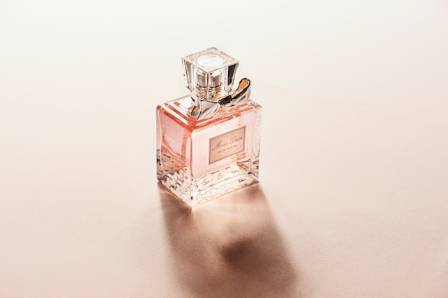
Perfume Review – Le Labo Lys 41: A Fairytale of Dancing White Florals
Every great fragrance tells a story, and Le Labo’s Lys 41 unfolds like a modern Grimm’s tale—one of three ethereal princesses who steal away each night to dance until dawn on a magical tropical isle. Lily, the eldest and most commanding, glides in a white gown, her green-and-red-streaked hair hinting at the spicy warmth beneath her delicate exterior. Her twin sisters, Tuberose and Jasmine, complete the trio: Tuberose, tall and elegant in white, bears mint-and-black tresses that mirror her cool, faintly smoky menthol scent; Jasmine, short and sweet, is draped in gossamer white-and-yellow velvet, her presence as soft as her aroma. Escorting them is Vanilla, a husky, swarthy boatman whose skin carries the faint, buttery coconut scent of his Tahitian travels—dominant yet gentle, his mood shifting as he watches the sisters dance, their movements light as floating petals, fading from bold vitality to muted exhaustion as the night wears on. This is the world of Lys 41: a celebration of femininity that balances delicacy with diva-like power, a dance of florals and warmth that lingers in the imagination long after the last notes fade. For Le Labo, this scent is more than a blend of ingredients; it’s a narrative in a bottle, one that unfolds uniquely on every wearer’s skin.
COVER · en
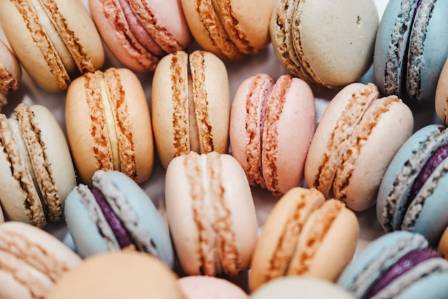
The Cultural Significance of Macarons in France
Picture a delicate, jewel-toned confection: crisp yet chewy, with a burst of flavor that balances sweetness and sophistication. This is the French macaron—more than a cookie, it’s a cultural touchstone that has captivated palates worldwide while holding sacred status in its homeland. In France, macarons weave through daily life and milestone moments alike, blending edible artistry with social meaning. They are testaments to French culinary rigor, symbols of refinement, and vessels of joy, bridging centuries of tradition with modern allure. To bite into a macaron is to taste the essence of France—precision, creativity, and joie de vivre.
COVER · en
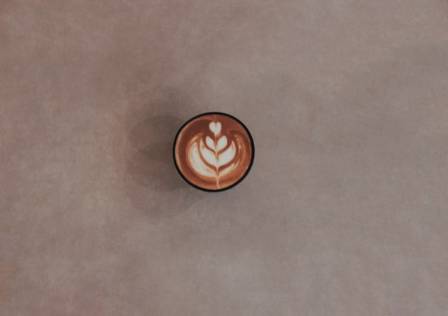
Caffeine and Psychological Well-being
The advantages and disadvantages of caffeine intake are frequently discussed. While moderate caffeine consumption is typically viewed as harmless, excessive intake may lead to undesirable effects. Individuals with mental health conditions such as clinical depression, bipolar disorder, anxiety disorders, or psychotic disorders should be aware of how caffeine influences their psychological state and consult with a healthcare professional regarding any concerns.
COVER · en

The World’s Most Beautiful Cities After Dark
A city can transform completely once the sun goes down. Streets that appear ordinary during the day often become magical when illuminated by streetlights, architectural lighting, and reflections on rivers and canals. From historic capitals to vibrant modern metropolises, these destinations reveal some of their most captivating scenery after dark.
COVER · en
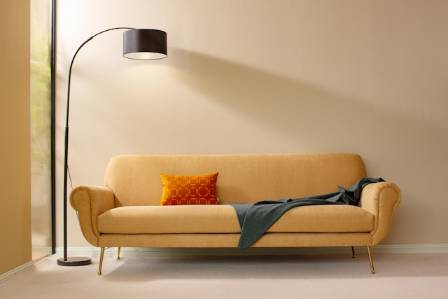
Choosing a Floor Lamp
A floor lamp is one of those home accessories that combines practicality with style. It can provide useful lighting while also serving as an attractive decorative feature that complements the rest of a room. Since floor lamps come in countless shapes, sizes, and designs, it’s easy to find an option that works with almost any decorating style.