Shelf read
Paint Watercolor Sunflowers In Easy Steps
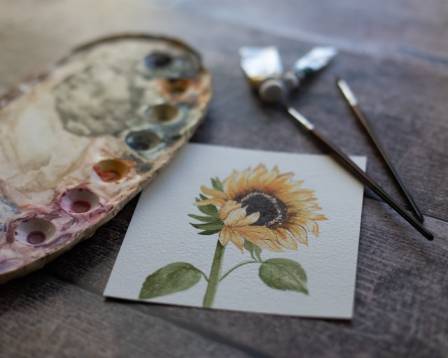
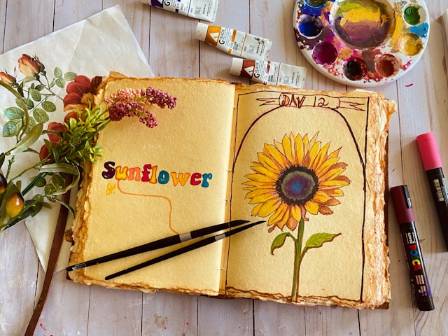
Vincent Van Gogh’s abstract sunflower paintings from the 1880s remain iconic and continue to inspire artists around the world. In this guide, we’ll explore how to capture the vibrant energy of sunflowers in a loose, expressive watercolor style using just a few essential colors.
Skyler Quinn
Library note
Reading tip
The full chapter continues below on the soft reading shelf.
Stack
Pocket Library
Vincent Van Gogh’s abstract sunflower paintings from the 1880s remain iconic and continue to inspire artists around the world. In this guide, we’ll explore how to capture the vibrant energy of sunflowers in a loose, expressive watercolor style using just a few essential colors.
Tools & Supplies
Brushes:
Princeton Round Detail Brush 9650R-2
Princeton Heritage Series 4050 Round Brush
Watercolor Essentials:
Watercolor palette
Binder clips (to secure individual sheets)
Adjustable desktop easel
Paint Colors:
Ultramarine Blue (Winsor & Newton / Daniel Smith)
New Gamboge (Winsor & Newton / Daniel Smith)
Burnt Umber (Winsor & Newton / Daniel Smith)
Paper:
Arches Cold Press Watercolor Block, 9” x 12”, 140 lb
Step-by-Step: Painting Abstract Sunflowers
Step 1: Lay Down the Base Shapes
For a lively and spontaneous effect, work quickly. Pre-mix your colors and keep them in separate wells for convenience.
Mix a soft mid-green: 70% New Gamboge + 30% Ultramarine Blue, diluted to a thin, tea-like consistency.
Prepare a warm neutral for the sunflower centers: Burnt Umber + a touch of Ultramarine, cream consistency.
Tilt your paper about 30 degrees. Using the larger round brush, loosely paint three sunflower heads in New Gamboge. Focus on the general shapes, not individual petals. A springy synthetic brush works well for these organic forms.
Step 2: Paint the Stems
Using some of the pre-mixed green, add the stems. Allow the yellow flower to slightly blend with the green—natural color merging creates a lively effect. Avoid overworking the paint; a few confident strokes are enough.
Step 3: Add Leaves
Create a few leaf shapes along the stems, offset from each other rather than perfectly symmetrical. Connect them to the stems with thin lines.
Step 4: Build Up Stems and Leaves
Repeat the process for additional stems and leaves. Introduce darker green touches in some areas for depth and tonal variation.
This technique is called a variegated wash, where slight variations in hue mimic the natural diversity of color found in plants. It adds realism and visual interest.
Step 5: Paint the Flower Centers
Ensure the previous layers are mostly dry before moving on. Check the paper by lightly touching the back of your hand—if it feels cool, it’s still slightly wet.
Switch to a smaller detail brush and paint the seed clusters using the Burnt Umber + Ultramarine mix. The Ultramarine cools the brown slightly, giving a warm neutral that contrasts beautifully with the yellow petals.
Step 6: Shade the Petals
Once the centers are complete, glaze the petals with thin layers of New Gamboge to add dimension. Watercolor is transparent, so each glaze deepens the color of the underlying layer naturally.
By following this approach, you’ll create a lively, abstract sunflower painting that captures the essence of the flower without getting lost in minutiae. Loose shapes, wet-on-wet blending, and subtle variegated washes combine to make a dynamic and vibrant watercolor piece.
COVER · en

The Beauty of Crevice Gardens
Who hasn’t been amazed by a dandelion pushing through a small sidewalk crack or a tree surviving on a rocky cliff? These examples remind us that plants can adapt to environments that seem impossible for growth. Many species have evolved to live in harsh conditions, and the combination of delicate foliage and flowers against rugged stone creates a unique visual effect. Crevice gardening gives gardeners the opportunity to recreate these natural scenes while experimenting with an unusual and artistic style of planting.
COVER · en

Harnessing AI To Elevate Safety Performance and Culture
In today’s rapidly evolving technological landscape, many organizations are turning to artificial intelligence (AI) as a powerful tool to drive change across industries. One particularly impactful area is safety management, where AI offers new ways to enhance performance and foster a stronger safety culture. Below are several key ways AI can be used to improve safety standards and promote a culture of continuous safety improvement.
COVER · en

Why Mountain Lakes are Canaries in the Coal Mine
The isolation of mountain lakes is precisely what makes them so valuable to scientists. Positioned high in watersheds, they receive inputs primarily from the atmosphere, making them perfect natural laboratories for studying the far-reaching effects of human activity. Their ecological simplicity means that disturbances are not diluted by complex interactions, allowing researchers to clearly trace cause and effect. The program is designed to track the impacts of several pressing threats.
COVER · en

8 Productive Ways to Utilize Your Free Time
Leisure time is a valuable asset, and making the most of it is crucial. While it's tempting to spend hours mindlessly scrolling through social media or binge-watching TV shows, there are more constructive ways to enjoy your free time. In this article, we'll explore eight ways to spend your leisure time productively and meaningfully, ranging from volunteering to learning new skills, exercising to spending quality time with loved ones. Let's dive into these constructive activities to enrich your leisure hours.
COVER · en

Jellyfish Can Learn from Mistakes—Even Without a Brain: A Breakthrough in Cognitive Biology
The idea that an animal can learn from experience without a brain sounds like science fiction, yet new research on the Caribbean box jellyfish (Tripedalia cystophora) proves it’s a biological reality. For decades, scientists assumed learning—even basic forms of associative learning—required a centralized nervous system, typically a brain or complex ganglia. Jellyfish, however, defy this fundamental assumption: they lack any concentrated nerve center, relying instead on a diffuse network of neurons spread across their bodies. This discovery not only reshapes our understanding of what it means to “learn” but also raises profound questions about the origins of cognition, suggesting that complex behaviors may have evolved earlier in the animal kingdom than previously thought.
COVER · en

Achieving Greatness: Insights from Top Cricketers
Here are a few tips from them for young cricketers looking to follow in their footsteps.