Shelf read
Beautiful Gemstone Brooches
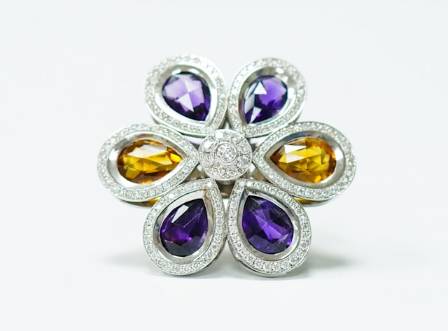
A brooch is a type of jewelry designed to be attached to clothing with a clasp, fastening mechanism, or pin. For this reason, brooches are often simply called “pins.” They may serve a decorative role or have a practical function when used to secure fabric.
Evander Rhodes
Library note
Reading tip
The full chapter continues below on the soft reading shelf.
Stack
Pocket Library
A brooch is a type of jewelry designed to be attached to clothing with a clasp, fastening mechanism, or pin. For this reason, brooches are often simply called “pins.” They may serve a decorative role or have a practical function when used to secure fabric.
Most brooches are crafted from metal and embellished with enamel, inlay, or precious and semiprecious gemstones. Some people distinguish pins as smaller pieces or suggest that pins are suitable for everyone while brooches are traditionally associated with women. In everyday use, however, the two terms are frequently treated as synonyms. Decorative brooches have existed for thousands of years, with examples dating as far back as the Bronze Age.
A brooch can be an effective way for its wearer to express personality, taste, or even mood. These pieces come in countless forms and sizes, ranging from tiny and understated designs to oversized, unusual, playful, traditional, or highly elaborate creations. Their prices can vary just as dramatically, with some being extremely valuable while others remain quite accessible. Younger people sometimes associate brooches with old-fashioned costume jewelry, but the right design can add character and elegance to almost any modern outfit. Brooches and pins generally look best when used thoughtfully rather than scattered across clothing and accessories. They can also transform handbags and other accessories. When placed on garments, they may sit on the left or right side or be positioned in the center of a collar. Even a simple everyday ensemble can gain an eye-catching touch of sophistication from a well-chosen brooch.
Among the notable brooches in existence is a substantial silver and gold piece featuring the celebrated Logan Sapphire. This remarkable jewel contains a 423-carat cushion-shaped blue sapphire surrounded by 20 brilliant-cut white diamonds. Mrs. Polly Logan donated the brooch to the Smithsonian Institution in 1960. Another particularly famous and valuable brooch belongs to Queen Elizabeth II. Affectionately called “Granny’s Chips,” it was inherited from her grandmother, Queen Mary, and incorporates the Cullinan III and Cullinan IV diamonds.
The Ancient Origins of Brooches
The development of brooches provides an interesting reflection of the evolution of jewelry throughout history. Early examples from the Bronze Age were commonly referred to as fibulae. They were generally manufactured from bronze or iron, although silver and gold were also occasionally used. At first, these early fastening ornaments were primarily practical, helping people hold garments together. Over time, many were decorated with gemstones, coral, and other ornamental materials.
Brooches were worn by numerous ancient civilizations and cultures, including the Greeks, Scythians, Romans, Vikings, and Celts. Their designs and construction methods varied between cultures, but their combination of usefulness and decoration helped them remain an important part of dress and personal adornment.
Brooches During the Victorian Era
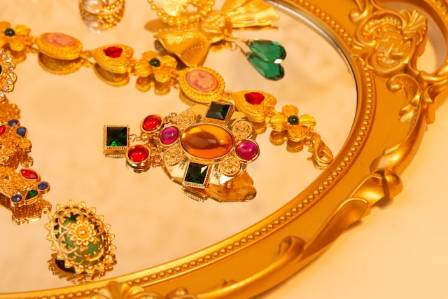
Brooches reached exceptional popularity during the Victorian period. Expanding international trade and industrial development encouraged designers to draw inspiration from many different cultures, resulting in an extraordinary variety of jewelry styles. Queen Victoria herself famously wore a blue sapphire brooch at the center of her wedding dress. The oval gemstone, framed by round diamonds, was presented to her by Prince Albert on the day before their wedding and became known as the Prince Albert Brooch.
Victorian fashion also provided an ideal setting for brooches. High collars and relatively restrictive garments meant that jewelry was frequently positioned around the chest or neck. Cameos were especially fashionable during this period and were often carved from materials such as agate and mother-of-pearl.
Following the death of Prince Albert, mourning jewelry became fashionable as well. Mourning brooches were created from dark materials including jet and onyx, and some incorporated the hair of the deceased as a deeply personal remembrance.
Art Nouveau Brooches
Advances in jewelry-making techniques eventually made it possible to produce remarkably detailed and imaginative brooches. The Art Nouveau movement was particularly influential, with designers taking inspiration from flowers, insects, leaves, and other elements of the natural world. Advanced enameling techniques allowed artists to reproduce delicate details such as flower petals and the translucent wings of dragonflies.
One celebrated example is René Lalique’s “Dragonfly Woman” brooch. The design features remarkably realistic wings surrounding a tiny female bust made from chrysoprase. Colored gemstones such as opal and moonstone also became increasingly popular during the Art Nouveau period. Some of the most elaborate and technically impressive brooches ever produced originated during this era.
Art Deco and Innovative Gemstone Settings
The Art Deco period introduced a very different aesthetic, favoring bold geometric forms, luxurious materials, and a strong sense of glamour. Jewelry designers experimented with innovative techniques that allowed gemstones to become the dominant visual feature of a piece.
Van Cleef & Arpels developed its famous “Mystery-Set” technique, which uses extremely small gold rails to hold gemstones tightly together. Because the supporting metal and prongs are largely hidden, the surface appears to consist of an uninterrupted field of brilliant gemstones.
Another related approach can be seen in the intricate pavé jewelry created by Joel Arthur Rosenthal, better known as JAR. In pavé settings, gemstones are positioned exceptionally close together, while the metal framework is made so delicate that it is barely visible. The result places the focus almost entirely on the colors and brilliance of the stones rather than on the setting itself.
Modern Brooch Designs
Today, obtaining very large gemstones such as sapphires can be extremely expensive because high-quality examples of substantial size are increasingly difficult to find. As a result, reproducing some of the spectacular historic brooch designs described above can require a significant investment.
At the same time, modern technology has opened up new opportunities for jewelry designers. Techniques such as 3D printing have expanded the range of shapes, structures, and concepts that can be produced. Designers are no longer limited by many of the traditional manufacturing constraints, giving them greater freedom to experiment.
As a result, contemporary brooches and pins are more diverse than ever. Whether someone prefers a classic gemstone design, an artistic statement piece, a playful pin, or a modern minimalist style, there is now a brooch suited to virtually every personality and taste.
COVER · en

Effective Indoor Attire for Maintaining Body Heat
High energy costs often make heating an entire residence impractical. A more cost-effective strategy involves maintaining personal warmth while moving through cooler areas of the home. By focusing on personal insulation, you can remain comfortable without relying on expensive central heating.
COVER · en

5 Journey Through the Majestic Snow-Capped Mountains of the World
Nature's grandeur is often epitomized by the towering peaks of snow-capped mountains, where breathtaking landscapes meet rich cultural histories. In this article, we embark on an exhilarating expedition to unveil the top five snow-covered mountain ranges across the globe. Each range presents its own allure, biodiversity, and intriguing past, inviting adventurers and dreamers alike to explore their majestic beauty.
COVER · en

Dorayaki: Exploring the Heritage and Flavors of Japan’s Iconic Sweet
Traveling to a new country often comes with a set of unspoken guidelines: honor the local traditions, explore as many landmarks as possible, and—perhaps most importantly—indulge in the local cuisine until you are fully satisfied. In Japan, one of the most essential culinary experiences is discovering the world of traditional sweets, known as wagashi. Among these, the dorayaki stands out as a masterpiece of texture and flavor, offering a cloud-like softness that melts upon the first bite.
COVER · en

Top 10 New Convertibles
In an age dominated by SUVs, electric performance cars, and practical crossovers, the appeal of a convertible remains uniquely emotional. These are not vehicles chosen purely for logic or efficiency—they exist for experience.
COVER · en

Canton Tower is Now the Tallest Tower in China
We have already discussed the Oriental Pearl Tower, which remained China’s tallest tower until 2007. So which structure took its place? That distinction went to the Canton Tower.
COVER · en

Harnessing AI To Elevate Safety Performance and Culture
In today’s rapidly evolving technological landscape, many organizations are turning to artificial intelligence (AI) as a powerful tool to drive change across industries. One particularly impactful area is safety management, where AI offers new ways to enhance performance and foster a stronger safety culture. Below are several key ways AI can be used to improve safety standards and promote a culture of continuous safety improvement.