Shelf read
Red-Headed Vulture: The Guardian of Nature’s Cleanup Crew
The Peregrine Fund played an important role in identifying the serious threat that the veterinary drug diclofenac poses to vultures. The organization was also the first conservation group to establish “vulture restaurants” in South Asia. At these sites, biologists provide carcasses that have never been treated with diclofenac, giving vultures a safe source of food.
Rhys Calloway
Library note
Reading tip
The full chapter continues below on the soft reading shelf.
Stack
Pocket Library
The Peregrine Fund played an important role in identifying the serious threat that the veterinary drug diclofenac poses to vultures. The organization was also the first conservation group to establish “vulture restaurants” in South Asia. At these sites, biologists provide carcasses that have never been treated with diclofenac, giving vultures a safe source of food.
The Peregrine Fund carries out several other conservation efforts to protect vultures. The organization supports local students, works with communities to raise awareness about the important role vultures play, and continues monitoring vulture populations to determine whether their numbers are stable, increasing, or declining.
Where They Live
The Red-headed Vulture is distributed across much of the Indian subcontinent and other areas of southern Asia. Its range includes countries such as Pakistan, China, Tibet, Laos, and Vietnam.
This medium-sized vulture occupies a variety of open habitats. It can be found in broad open landscapes, wooded hills, dry deciduous forests, river valleys, deserts, wetlands, and foothill regions. It generally occurs at elevations below approximately 2,500 to 3,000 meters above sea level.
What They Look Like and Do
There is an old joke asking, “What is black and white and red all over?” The usual answer is a newspaper. However, the Red-headed Vulture could also fit the description, although it might not make quite as amusing a punchline.
As its name suggests, the Red-headed Vulture has a red head, but its bare neck, wattle, thighs, and legs are also strikingly red. These areas are especially noticeable because they contrast strongly with its dark black bill, wings, and back. White markings on the thighs and breast provide another distinctive feature, making this species relatively easy to recognize.
A large gathering of vultures feeding together is known as a “wake of vultures.” The Red-headed Vulture, however, generally prefers not to participate in such large feeding groups. It is primarily a solitary species, except when individuals come together to roost. At a carcass, it is common to see only one or two Red-headed Vultures feeding.
Like most vultures, this species is generally quiet. It often spends its time perched or soaring silently while observing its surroundings or searching for food. When competing with another vulture for access to a carcass, however, it can produce croaking and hissing sounds.
Why They Need Our Help
Vultures were once among the most abundant large birds of prey throughout South Asia. During the mid-1990s and early 2000s, however, biologists began documenting dramatic declines in several vulture species, including the Red-headed Vulture. One survey recorded a population reduction of more than 90 percent.
It took researchers some time to determine what was driving this rapid decline. Once the main cause became clear, conservationists realized that immediate action was necessary to prevent these important birds from disappearing.
The Threat of Diclofenac
One of the greatest threats facing the Red-headed Vulture and many other vulture species in southern Asia is the veterinary drug diclofenac.
Diclofenac is a medication used to treat livestock such as cattle and donkeys when they become sick. Although the medicine may temporarily improve an animal's condition, treated livestock can eventually die while traces of the drug remain in their bodies.
When vultures consume the carcasses of animals that have been treated with diclofenac, they unknowingly ingest the contaminated tissues along with their meal. The drug is highly toxic to vultures and can cause severe illness and kidney failure, often resulting in death.
In 2003, The Peregrine Fund identified the devastating connection between diclofenac and the collapse of vulture populations in South Asia. India, Pakistan, and Nepal subsequently prohibited the veterinary use of diclofenac in 2006, while Bangladesh introduced a similar ban in 2010.
Despite these restrictions, diclofenac continues to be available in some areas of these countries, and other veterinary drugs with comparable harmful effects remain on the market. Researchers and conservation organizations continue working to protect the species, but significant challenges remain.
The Peregrine Fund also promotes vulture conservation around the world through International Vulture Awareness Day, which takes place on the first Saturday of September each year. People can participate by observing vultures in their local area and encouraging family members, schools, and communities to learn more about these important birds.
What They Eat
Like many other vultures, the Red-headed Vulture primarily feeds on carrion, meaning animals that have already died. Its diet mainly consists of the remains of large livestock, along with animals such as deer and even jackals.
The species has also been observed killing already injured birds and feeding on fish that have become stranded along shorelines.
Red-headed Vultures, like other vultures, have very few feathers on their heads. This adaptation is especially useful because feeding often requires them to push their heads deep inside the cavities of decaying carcasses. With fewer feathers, there is less opportunity for pieces of rotting meat and potentially harmful microorganisms to become trapped around the head.
Although some people may find vultures unattractive, their bare heads actually help them remain healthy. Their role is extremely valuable because vultures and other scavengers consume dead and decomposing animals that can contain organisms harmful to people and the environment. By removing this material, they serve as nature's clean-up crew.
Courtship and Nest Building
The Red-headed Vulture has a particularly impressive courtship display. According to Naoroji's Birds of Prey of the Indian Subcontinent, pairs may soar together in an agile, eagle-like performance, with one bird sometimes gliding closely above the other. Mates may chase one another through the air while diving and twisting, and on occasion they lock talons and tumble downward in a brief cartwheeling motion before separating.
Red-headed Vultures usually construct their nests in the crowns of tall trees. Where suitable tall trees are unavailable, they may instead build nests in thorny acacia trees or shrubs.
Both members of a pair participate in nest construction, using sticks and twigs to create the main structure. Once the nest is built, they add softer materials such as grass, fur, wool, and similar materials to line the interior.
A newly constructed nest is generally fairly small. Over the years, however, the same pair may repeatedly repair and enlarge it. Eventually, the nest can become an enormous structure measuring more than 1 meter, or about 3 feet, across.
The birds may also take advantage of an existing nest built and later abandoned by another vulture or bird of prey. They can repair the old structure and use it as their own.
Eggs and Raising the Chick
When breeding conditions are suitable, the female normally lays a single large white egg. Both parents share incubation duties, taking turns sitting on the egg for nearly two months.
After the chick hatches, the male and female continue to alternate responsibilities while caring for the young bird. They brood the chick for as long as another two months, using their bodies to maintain an appropriate temperature so that the youngster remains neither too hot nor too cold as it develops.
The growing chick also requires a substantial amount of food. The parents must make frequent efforts to provide enough nourishment.
Unlike eagles and falcons, which tear fresh meat into small pieces before giving it to their young, vultures feed their chicks in a very different way. A young vulture receives a diet made entirely of regurgitated food until it becomes capable of feeding itself.
The adults first consume food themselves and then return to the nest. There, they regurgitate partially digested food directly for the nestling to eat. Although this may seem unpleasant to humans, it is an efficient and relatively safe method of transporting food back to the nest.
Around four weeks after the chick hatches, the parents begin regurgitating food directly into the nest for their offspring.
After approximately four to five months, the young Red-headed Vulture becomes a fledgling and leaves the nest for its first flights.
Red-Headed Vultures and the World Center for Birds of Prey
The World Center for Birds of Prey provides visitors with a variety of opportunities to learn about raptors and their conservation. Educational experiences include interactive activities, tours, informative videos, and a children's area featuring coloring pages, quizzes, costumes, and a touch table.
Several species of birds of prey are also displayed throughout the year, including California Condors and Turkey Vultures. These exhibits provide visitors with an opportunity to observe different vulture species at close range.
Visitors can also speak with knowledgeable staff and volunteers who can answer questions about the Red-headed Vulture and other birds of prey. During the beginning of September, people visiting Boise can also contact the education team at the Velma Morrison Interpretive Center to learn about activities associated with International Vulture Awareness Day.
COVER · en
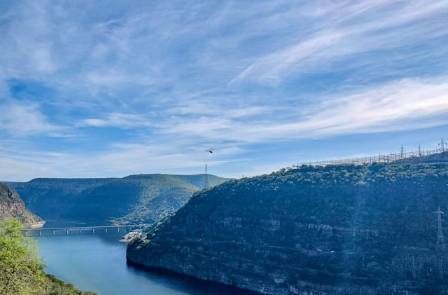
Topp 3 utfordrende sykkelruter rundt om i verden
Å legge ut på en sykkeltur er en glede, som kan sammenlignes med en svært effektiv måte å gå på. For noen ligger tiltrekningen i de dramatiske, naturskjønne, avsidesliggende og strabasiøse turene som utfolder seg over forskjellige hjørner av verden. Her er tre ekstraordinære sykkelruter som strekker seg fra én dag til flere måneder, og som lover uforglemmelige eventyr:
COVER · en
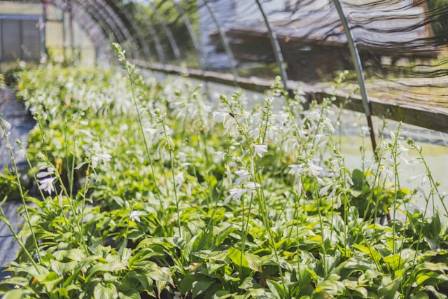
Hosta Plantaginea: A Shade Garden Favorite
Hosta plantaginea is a perennial flowering plant belonging to the Asparagaceae family and the Hosta genus. It is commonly known by names such as Plantain Lily, Fragrant Hosta, Jade Hairpin, White Crane Flower, and White Jade Lily.
COVER · en

Amazing Places to See Along the Washington Coast
Wild, rugged, and wonderfully isolated, the Washington Coast offers a breathtaking journey with every mile traveled along U.S. Route 101, from the mouth of the Columbia River to the farthest reaches of the Olympic Peninsula. Unlike many popular coastal destinations, this region remains largely untouched, with only a handful of small communities scattered along the shoreline. The lack of development allows visitors to enjoy true solitude, peaceful landscapes, and the dramatic beauty of the Pacific Northwest.
COVER · en
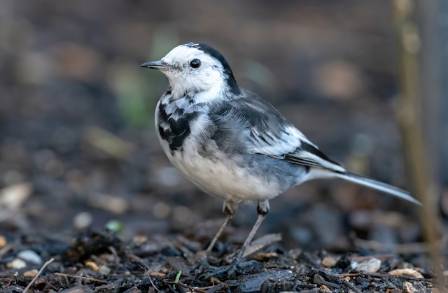
The ubiquitous White Wagtail
As temperatures drop sharply across northern Spain, increasing numbers of wintering birds arrive in the Serranía de Ronda. This seasonal movement happens every year, with many species seeking shelter in the milder landscapes around the southernmost edge of the Baetic mountain system.
COVER · en

The Remarkable Impact of Indoor Plants on Psychological Wellness
Cultivating a private collection of indoor greenery serves as an accessible and highly effective strategy for elevating daily psychological health. A vast body of scientific literature confirms that integrating living flora into residential and occupational environments yields profound psychological rewards, including a measurable decline in tension, a heightened sense of joy, sharpened mental clarity, and a mitigation of anxious feelings. Rather than acting as mere aesthetic ornamentation, these living organisms function essentially as a natural support system for human neurological wellness.
COVER · en

What is a Technological Device
A technological device is any piece of equipment or tool developed using scientific principles to carry out specific tasks, boost productivity, or address problems. These devices have become a central part of everyday life, affecting how we work, communicate, and enjoy leisure activities.