Shelf read
Eurasian Tree Sparrows and House Sparrows
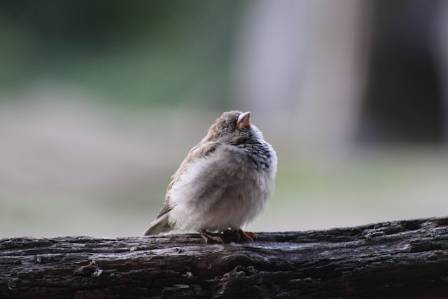
Cleon and I live in central Illinois, and older field guides and online range maps, especially those created before 2012, usually do not show this area as part of the Eurasian Tree Sparrow’s distribution. Unlike many local birds, the Eurasian Tree Sparrow is not originally from North America. It was introduced near St. Louis and gradually established populations throughout the city and surrounding suburbs.
Ryan Ellis
Library note
Reading tip
The full chapter continues below on the soft reading shelf.
Stack
Pocket Library
A New Sparrow in Central Illinois
Cleon and I live in central Illinois, and older field guides and online range maps, especially those created before 2012, usually do not show this area as part of the Eurasian Tree Sparrow’s distribution. Unlike many local birds, the Eurasian Tree Sparrow is not originally from North America. It was introduced near St. Louis and gradually established populations throughout the city and surrounding suburbs.
More than two decades ago, a small group of these sparrows appeared in Petersburg, Illinois. I know this because one of my cousins, who lives near Petersburg, noticed them visiting her bird feeders. Around five years ago, I began seeing them at our own feeders as well. At first, only a few individuals appeared, usually two or three birds. Over time, their numbers increased, and now we seem to have a stable population of roughly 15 to 20 Eurasian Tree Sparrows living around our property.
These birds remain in the area throughout the year, meaning they are breeding locally and surviving the winter months here. Interestingly, their arrival seems to have coincided with a decline in the number of House Sparrows in our yard.
Possible Impact on House Sparrows
We have lived at our current home for nearly 20 years, and House Sparrows were present from the very beginning. Their population grew quickly, increasing from a small group of around six birds to more than 30 individuals.
However, after Eurasian Tree Sparrows appeared about five years ago, the number of House Sparrows gradually dropped. Eventually, we were seeing only two breeding pairs in our backyard. By the middle of summer 2023, even those pairs disappeared from our feeders, bird baths, and yard.
During an especially cold period in January 2024, when temperatures dropped to around 0°F or lower, about eight House Sparrows returned briefly to the feeders. Once temperatures warmed back into the 20s, they vanished again.
Did the Eurasian Tree Sparrows force the House Sparrows away? Did they compete more successfully for nesting areas? Did they take over feeding territories? At this point, we simply do not know. House Sparrows are already known for their aggressive behavior and determination, so the idea that another sparrow species could outcompete them seems surprising. However, it may be exactly what is happening.
Identifying Eurasian Tree Sparrows Among House Sparrows
If you have House Sparrows near your home or in a favorite birding location, do not automatically assume every sparrow in the group is a House Sparrow. Eurasian Tree Sparrows appear to be expanding their range, and they may be present in places where people do not expect them.
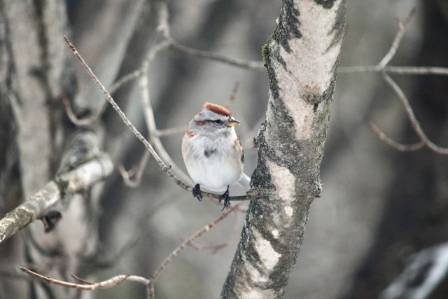
One of the easiest ways to identify them is by examining the male birds. Eurasian Tree Sparrows have a noticeable black patch on their cheeks. If you see this marking, you are looking at a Eurasian Tree Sparrow rather than a House Sparrow.
Some bird references suggest that Eurasian Tree Sparrows and House Sparrows do not mix in the same groups, but that has not been true in our yard. We regularly see both species together on our platform feeder and on the ground beneath the feeders.
This creates a challenge for birdwatchers because real-life bird behavior does not always match what is written in field guides.
Differences Between Eurasian Tree Sparrows and House Sparrows
Male and female Eurasian Tree Sparrows have nearly identical appearances, unlike House Sparrows, where males and females look very different. The Eurasian Tree Sparrow can easily be confused with a male House Sparrow because of their similar coloring and markings.
When viewing them from behind, I find it nearly impossible to distinguish the two species. The best identifying feature is the dark cheek spot found on Eurasian Tree Sparrows.
There are several other differences as well. House Sparrows have a gray stripe on the head, while Eurasian Tree Sparrows do not. Eurasian Tree Sparrows have a black chin but never develop the large black throat patch known as a bib.
House Sparrows also have a black chin, but their bib is mainly visible during spring and summer. In autumn and winter, the bib becomes much smaller or may disappear almost completely.
A Changing Sparrow Population
Many bird species around the world are experiencing population declines, and the House Sparrow is one example. At the same time, some species are expanding their numbers and moving into new areas.
The Eurasian Tree Sparrow demonstrates how bird populations can shift over time. Its growing presence in areas outside its traditional range shows that nature is constantly changing, and careful observation can reveal unexpected developments happening right in our own backyards.
COVER · en

How to Style a Trench Coat
A true wardrobe essential, the trench coat remains one of the few fashion pieces that continues to stay relevant through changing trends. Thanks to its recognizable silhouette, practical design, and long-standing fashion history, it has become a symbol of effortless elegance. Combining refined tailoring with everyday comfort, the trench coat adds a sophisticated touch to almost any outfit.
COVER · en

Types of small boats
Small boats attract many people because they are practical, flexible, and accessible. They can be used for a wide range of activities, including fishing, exploring waterways, enjoying water sports, and spending quality time with family and friends.
COVER · en

2025 Men’s Business Casual Guide: 14 Styles & Essential Rules for the Modern Workplace
Business casual remains one of the most misunderstood yet ubiquitous dress codes in men’s fashion—an oxymoron that balances professionalism with comfort, formality with personality. Coined as a middle ground between stiff suits and overly casual loungewear, it has evolved dramatically since its Silicon Valley origins in the 1980s, adapting to shifting workplace cultures, remote work trends, and the blurring lines between office and off-duty style. In 2025, business casual is less about rigid rules and more about intentionality: dressing appropriately for your industry while embracing pieces that reflect your personal taste. Whether you work in a creative startup, a traditional law firm, or a hybrid office, this guide breaks down the key pieces, styling tips, dos and don’ts, and FAQs to help you master business casual with confidence—proving that you don’t have to sacrifice style for comfort, or professionalism for individuality.
COVER · en

Why Hockey Reigns as the Greatest Sport on the Planet
Countless sports deliver thrills and passion—but hockey? Hockey is in a league of its own.
COVER · en
Moss-backed Tanager
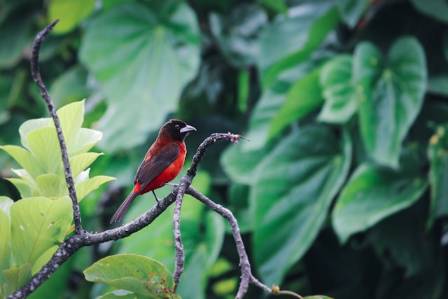
The Moss-backed Tanager is a classic member of the chunky-bodied Bangsia tanager group. It has a relatively large head covered in violet-blue feathers, which creates a strong contrast with its mostly muted green body. A bright yellow patch in the center of the upper breast adds another distinctive feature to its appearance.
COVER · en

Whipped Cream Vodka Cocktails for Bars & Cafés: Menu-Worthy Recipes & Profit Tips
Whipped cream vodka cocktails are standout menu items for bars, cafés, and dessert shops—they blend playful nostalgia, visual appeal, and high profit margins, while remaining easy to execute consistently. The key to their success lies in stable, picture-perfect whipped cream toppings (powered by professional dispensers and N₂O chargers) and strategic flavor pairings that cater to diverse guest preferences.