Shelf read
Beijing CBD: The Brightest Diamond on the Third Ring Road
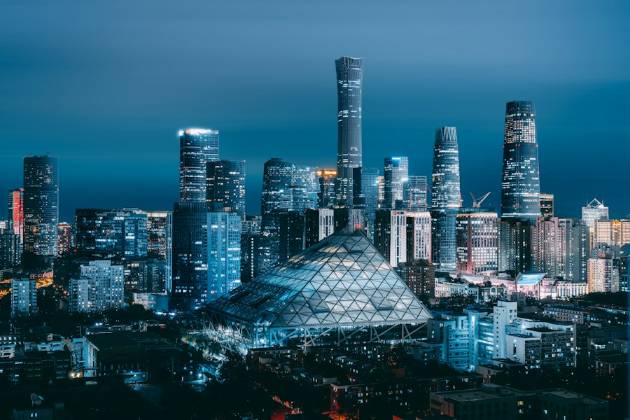
Beijing CBD was once an industrial zone on Beijing's eastern outskirts but has transformed into a world-class business district with over 10,000 foreign-funded enterprises and 110 regional headquarters of multinational corporations, now ranking 7th globally. The article traces its planning and development since the 1980s, its expansion to 7.04 square kilometers, and its ongoing efforts to attract investment and remain competitive. It also highlights the district's vibrant lifestyle, featuring top commercial complexes like SKP and Yintai Center, where work and life intertwine for the people who inhabit it.
Sarah Mitchell
Library note
Reading tip
The full chapter continues below on the soft reading shelf.
Stack
Pocket Library
If the Third Ring Road is a ring, then Beijing CBD is its most brilliant diamond.
This was once an industrial zone on Beijing's eastern outskirts. It wasn't until China's reform and opening-up that the area shed its industrial skin and became a hub for high-end business.
Today, over 10,000 foreign-funded enterprises have gathered here, and the number of regional headquarters of multinational corporations has reached 110—more than half of the city's total. This is now an international-grade business district on par with Manhattan, La Défense, and Central in Hong Kong.
Born of reform and opening-up, and thriving because of it, Beijing CBD has opened a window through which China and the world meet.
The Starting Point
Why did Beijing choose the East Third Ring for its CBD?
Ke Huanzhang, former president of the Beijing Municipal Institute of City Planning and Design, remembers how it began. In the early 1980s, Beijing was told to stop developing heavy industry. A consensus was reached: the capital would focus on high-tech industries and high-end services. Foreign enterprises had already poured in, and around Jianguomen, buildings like CITIC International Building, Jianguo Hotel, and the China World Trade Center rose, giving the area an early business district shape.
Ke led a team to inspect business districts in the US, Britain, France, and Japan, where they witnessed the power of wealth in skyscrapers. Back in Beijing, they chose a site called "Dabeiyao" at Chang'an Avenue and the East Third Ring Road—home to declining state-owned factories, easy to rebuild, with decent infrastructure, close to the embassy district and convenient for the airport.
In 1993, the State Council approved a business district between the East Second and East Third Ring Roads. The core area was later defined as 3.99 square kilometers.
Construction did not begin immediately. Around 1996, a survey found 22 million square meters of business facilities had been approved or planned—equivalent to five Lujiazui. In 1997, the mayor's office decided to fully launch CBD construction. But the Asian financial crisis broke out, foreign investment withdrew, and many projects stalled. Rapid development resumed only in 1999.
Global No. 7
In 2001, China won the Olympic bid and joined the WTO. Beijing CBD became the top choice for foreign capital entering China. One saying captured it well: "Rather rent one room in Guomao than a whole building elsewhere."
In 2004, PwC leased seven floors of Beijing Fortune Plaza as its largest Asia-Pacific office. That same year, Wei Shujing came from Hong Kong to work for New World Group. A one-month consulting trip became a permanent stay.
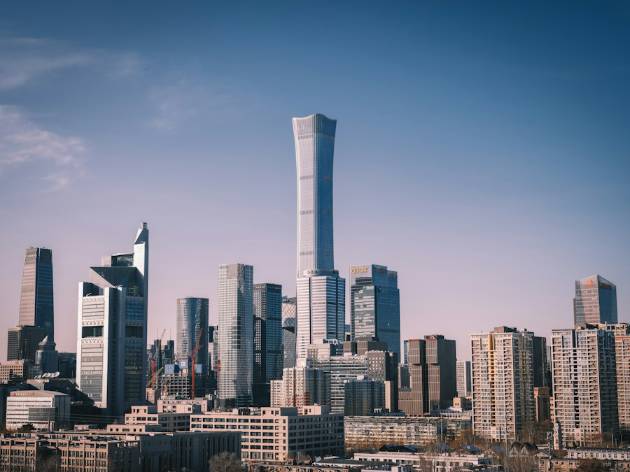
Enterprises swarmed in, and 3.99 square kilometers seemed cramped. In 2009, the area was expanded eastward to 7.04 square kilometers. Landmark buildings like China World Trade Center Phase III, China Central Place, Yintai Center, and Beijing IFC came into operation.
Today, over 10,000 foreign-funded enterprises gather here, with 110 regional headquarters of multinational corporations—both more than half of the city's total. In 2022, the CBD had 131 buildings generating over 100 million yuan in tax revenue. CITIC Tower became China's first 10-billion-yuan building. In the latest "Global Business District Attractiveness Report," Beijing CBD ranked 7th globally and 2nd in Asia.
No Progress Means Regression
In September 2020, Beijing CBD was included in the Pilot Free Trade Zone. Why should the world's top business district set off again?
"The development of a business district is like rowing upstream: either you advance or you fall behind," said an official from the CBD Management Committee.
A market-oriented investment promotion service center opened. In 2020, managers discovered that a foreign company called Halfen belonged to CRH, an Irish Fortune Global 500 company with over a dozen brands scattered across Beijing. If integrated, the product line would be richer. But the company believed this was too complex to achieve.
The CBD assigned a dedicated "corporate butler" to help with paperwork. In just over ten days, all licenses were complete. In 2021, over a dozen brands were integrated to form Leviat (China), becoming one of the city's nine new regional headquarters of multinational corporations that year.
Now, Beijing CBD is building a global investment promotion network with offices in Shanghai, Hong Kong, Singapore, Guangzhou, Shenzhen, and the Middle East. This year, it launched the "Headquarters Doubling Plan."
A Vibrant City
Over 30 years ago, Ke Huanzhang saw the limitations of established CBDs. In Manhattan, housing is scarce and expensive, and over 700,000 vehicles enter daily, causing staggering congestion.
So Beijing CBD emphasized multifunctionality from the start. Commercial office space slightly exceeds 50%, with the rest reserved for residential, commercial, transportation, and cultural facilities.
Today, Beijing CBD is both a wealth landmark and the city's top commercial area. China World Mall, SKP, and Yintai Center are scattered throughout.
Xu Dan's company is in Yintai Center. For her, the CBD is both a workplace and a part of life. There are malls, Michelin restaurants, cafes, and gyms. Works by Matisse, Dalí, Picasso, and Andy Warhol have been displayed in Yintai's atrium.
1.8 kilometers away, SKP ranks first among China's department stores in sales, crowned "China's Store King" for over a decade. In 2020, it surpassed Britain's Harrods to become the "World's Store King."
Xu Dan was born in the year reform and opening-up began. In the late 1990s, she came to Beijing for school. After graduation, she entered a foreign company in the CBD. Looking back, the imagination of business elites seems naive, but it pushed a young person into the tide of the times.
Recently, her college classmate came to Beijing, and they met at the sky restaurant on the 66th floor of Yintai Center. Through the bright windows, they overlooked the glittering city. It's hard not to feel hopeful about the future.
A slogan once appeared in the subway station near her company: "Beijing CBD, a place that influences the world." Xu Dan thinks it's apt. Every building here tells the story of reform and opening-up, and countless dreams have come true here.
COVER · en

The Stoat – A “Furry Venomous Snake”
Among the various animal remains preserved in magical object collections, there are several heads and dried bodies of stoats (Mustela erminea, known as “kärppä” in Finnish). While it is easy to understand why large and powerful animals, such as bears, were considered valuable in traditional magic, the reason a small predator like the stoat was viewed as meaningful may seem less obvious.
COVER · en
8 Wooden Chair Designs That Will Transform Your Home
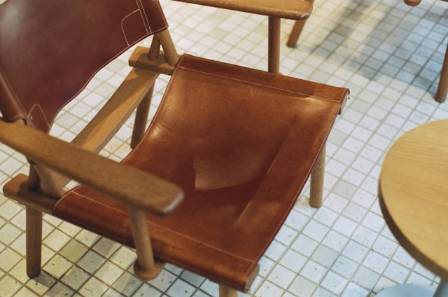
Wooden chairs are a classic addition to any home, bringing warmth, durability, and a natural touch to your decor. Whether you're looking to upgrade your living room, bedroom, or dining area, a wooden chair can elevate the overall aesthetic. From minimalist designs to rustic finishes, there’s a wide range of options to suit every style. Below, we explore some of the most popular wooden chair designs that can add personality and comfort to your home.
COVER · en
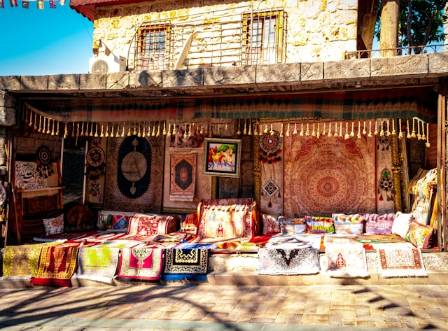
Elegant Woven Textiles are Returning to Modern Interior Decoration
Large fabric wall hangings are experiencing a major revival in contemporary home decoration. These woven pieces offer an abundance of history, rich color depth, and physical texture, making a room feel significantly warmer and more intimate than standard glass-framed artwork. Homeowners are turning to these fabric decorations to create spaces that feel carefully curated and welcoming. When integrated thoughtfully, these textiles act as stunning statement art, introducing dimension and character that flat interior paint or modern paper prints simply cannot replicate. However, successfully decorating with large fabric panels requires a strategic approach to prevent the space from looking old-fashioned.
COVER · en
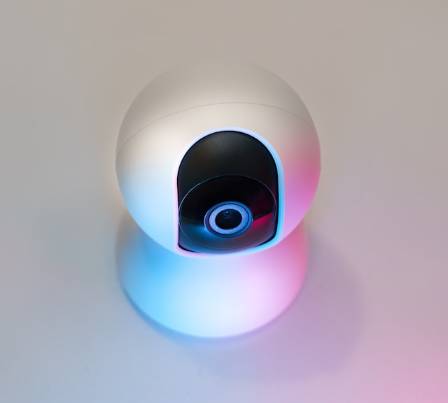
Next-Generation Surface Metrology: The Evolution of Autonomous Spherometry
Advanced spherometers represent the pinnacle of precision instrumentation, engineered to quantify the microscopic curvature of spherical topographies. These systems have become indispensable in high-tech sectors such as aerospace optics, semiconductor lithography, and advanced material science, where sub-micron surface fidelity dictates mission-critical performance. By leveraging ultra-sensitive hardware and intelligent processing, modern spherometry platforms allow researchers to achieve unprecedented levels of quality control and surface characterization.
COVER · en

Best American muscle cars of all time
American muscle cars have never truly captured the hearts of UK drivers. Their large dimensions aren’t ideal for narrow British roads, and the big engines guzzle fuel — a pricey prospect with our current fuel costs.
COVER · en

Mastering Coastal Scenery: A Guide to Atmospheric Painting
Capturing the essence of a coastal environment requires a focus on lighting effects and the subtle nuances of the atmosphere. This demonstration explores how to depict a seaside vista inspired by the rugged shores of Wellington, New Zealand. The techniques described are versatile and can be applied effectively using either oil or acrylic paints.